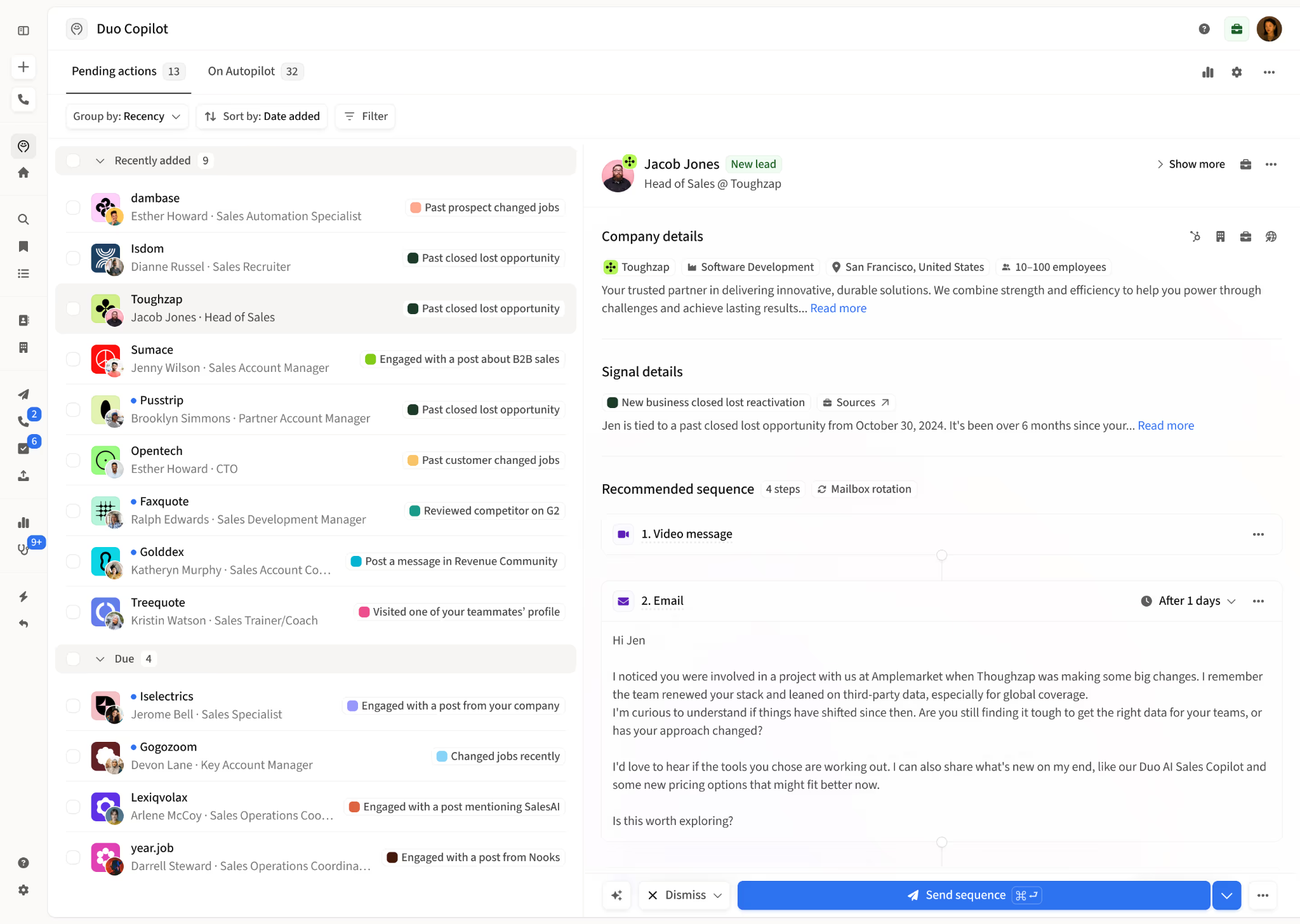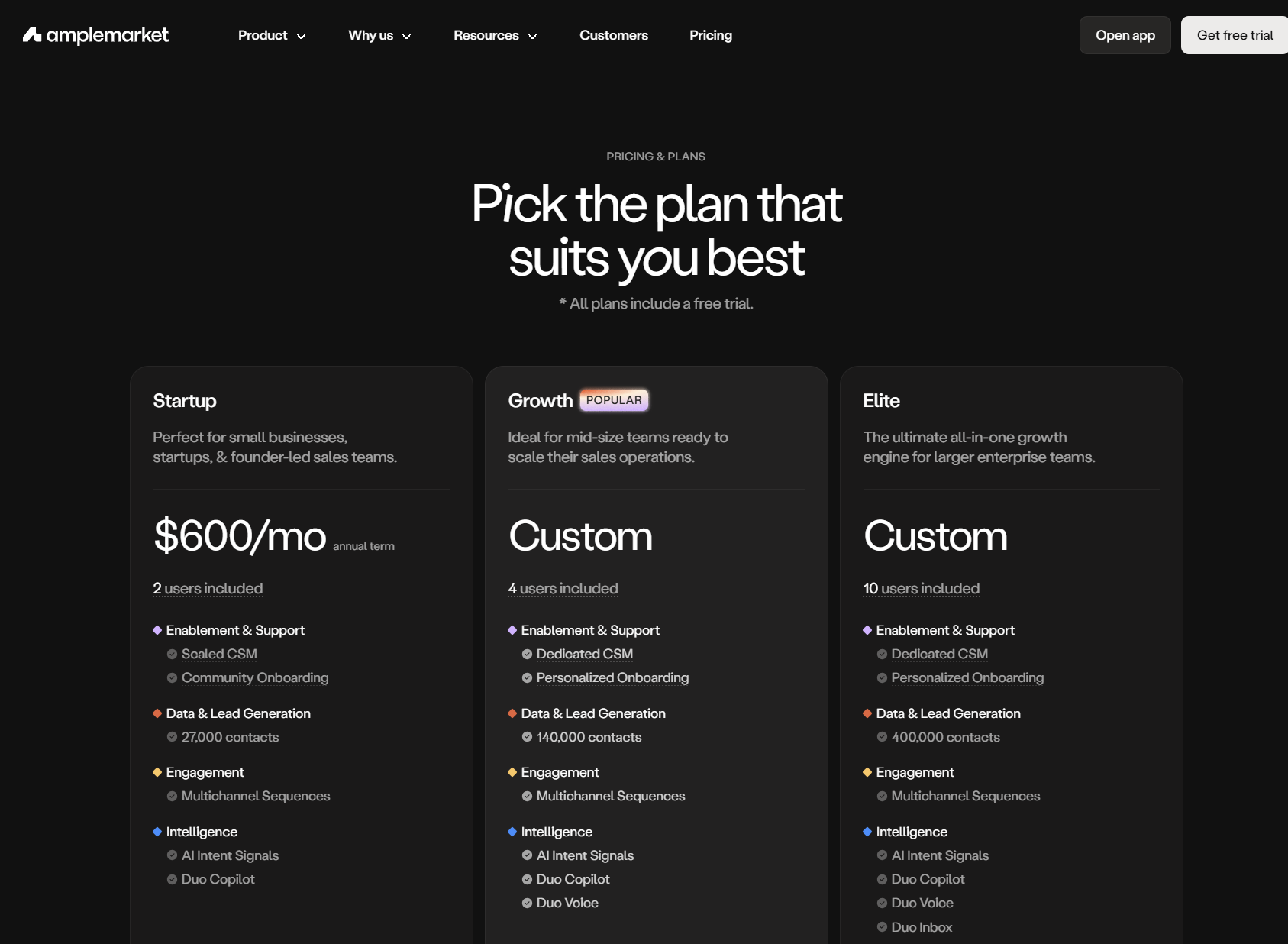
A GTM engineer is the person who builds, connects, and orchestrates the AI-powered infrastructure that turns buyer signals into revenue. Revenue intelligence is the data layer that makes it possible. This guide covers both.
Clay called it the GTM engineer. They were right about the role. Wrong about the scope.
The 2024 GTM engineer built Clay tables, ran enrichment waterfalls, sent cold email. That was it. A tool operator with a fancy title.
The 2026 GTM engineer builds the connective tissue layer across your entire go-to-market. Google Search Console, paid ads, landing pages, visitor identification, ad audiences, email sequences, LinkedIn outreach, content, SEO, AEO, CRM, enrichment, attribution. All connected. All feeding into one system. All running with AI that has full context to make autonomous decisions.
I know because I'm doing the job. I run product and marketing at Warmly. One person. Three months ago, pipeline was $500K. Last month, $1.4 million. This month, on track to triple again. All demand gen. All driven by the infrastructure I'm about to walk you through.
Revenue intelligence platforms are part of the stack. An important part. But they're not the whole story anymore.
This guide covers the full picture: what the GTM engineer role actually is in 2026, the revenue intelligence platforms they use, how the pieces connect, and how I 3x'd pipeline doing it solo.
Related reading: I Hired a GTM Engineer. Then I Built Software to Replace the Need. | Context Graphs for GTM | Autonomous GTM Orchestration
Quick Answer: Best Revenue Intelligence Platforms by Use Case
| Best For | Platform | Starting Price | Why |
|---|
| Conversation intelligence | Gong | $1,600/user/yr + platform fee | Best call recording + AI coaching |
| Pipeline forecasting | Clari | ~$100/user/mo | Strongest forecasting engine |
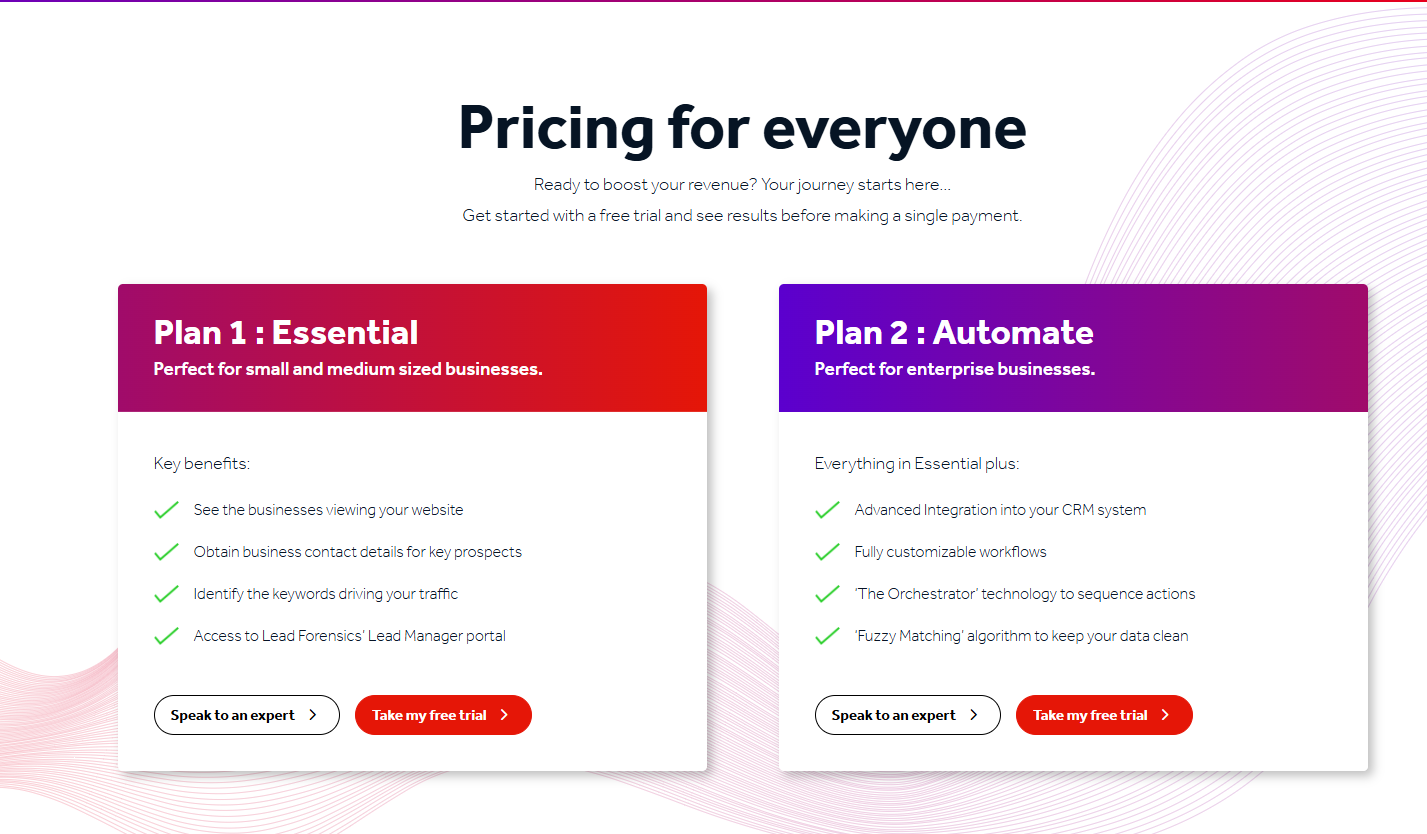
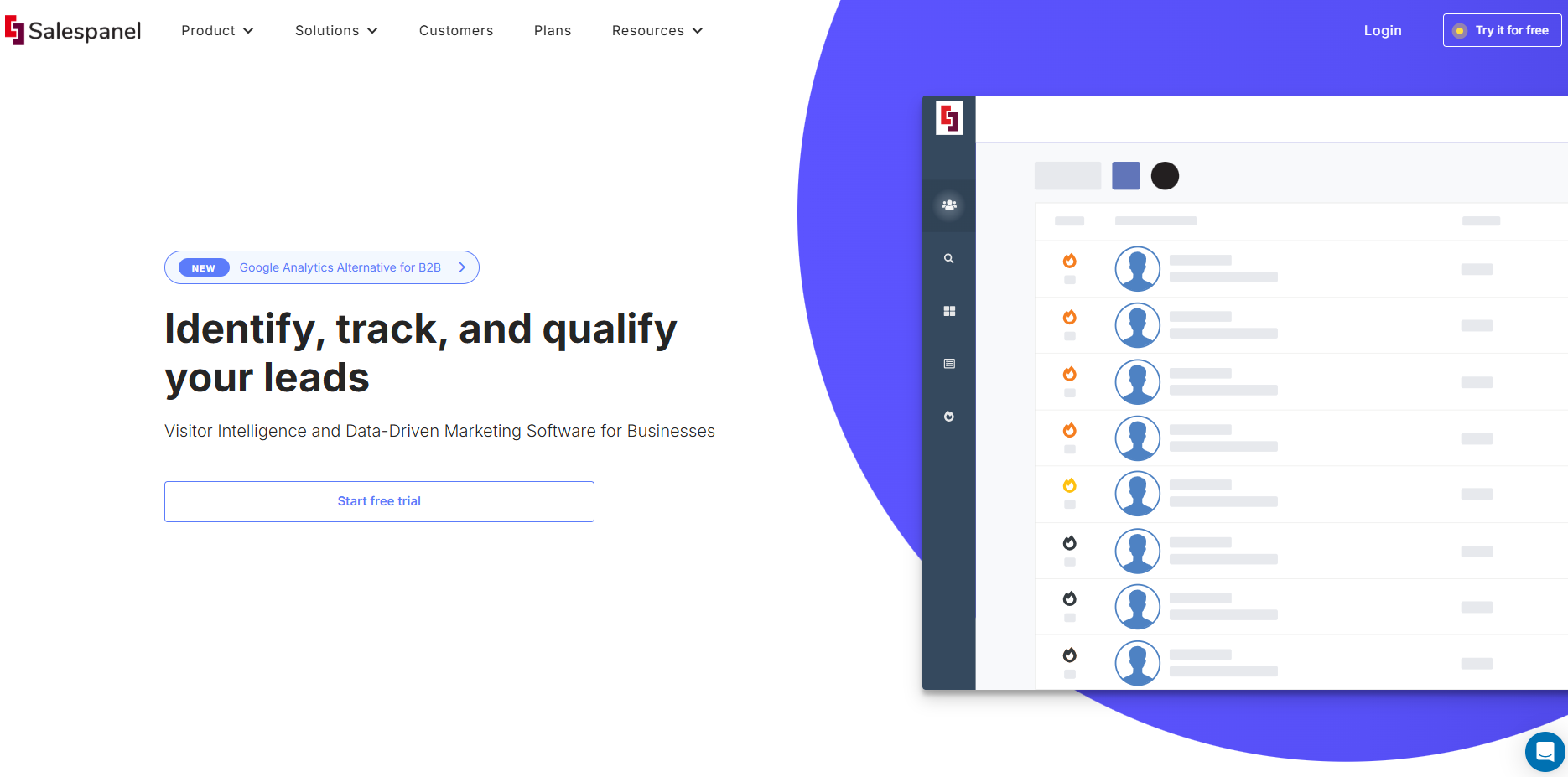
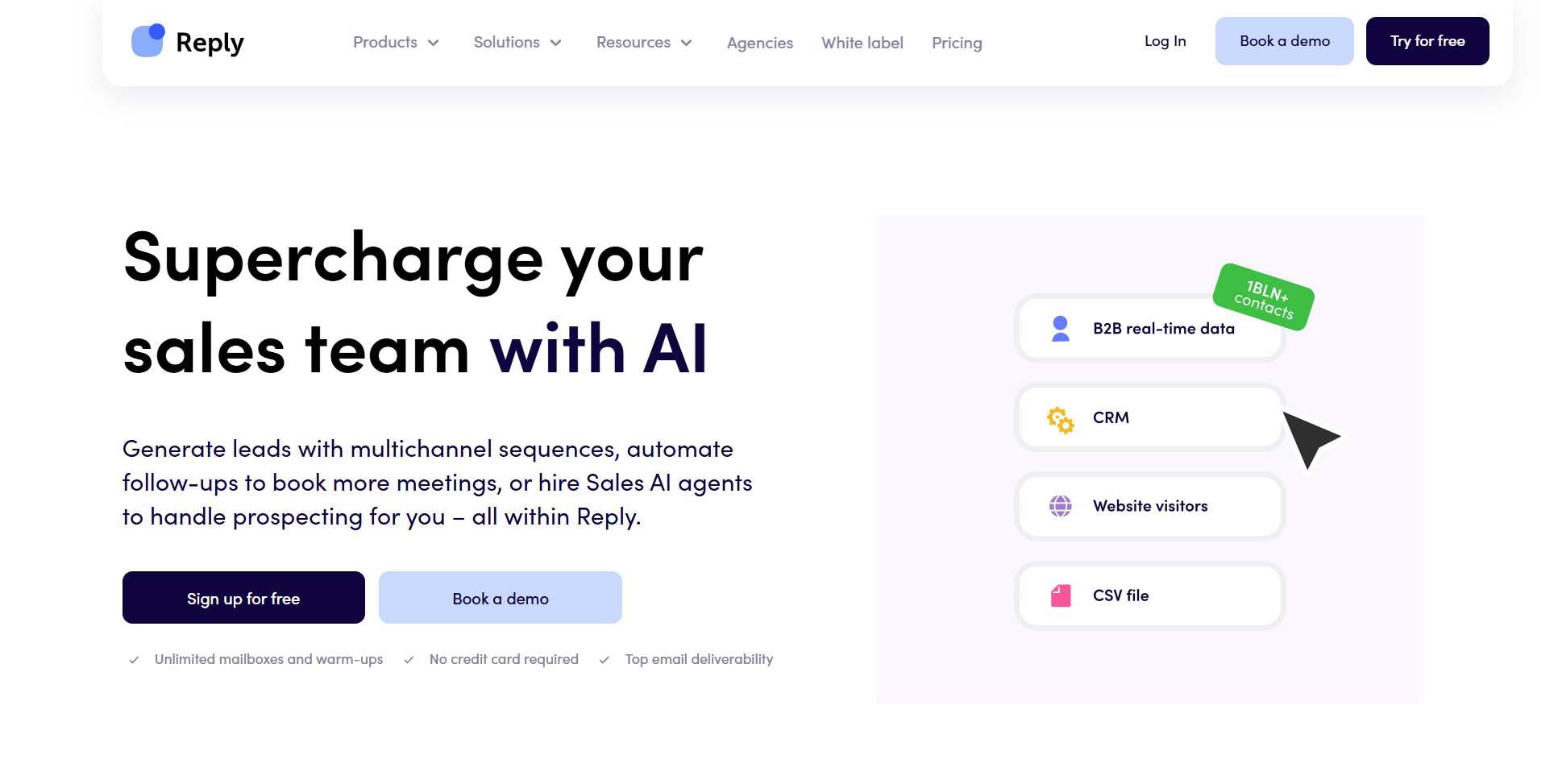
| Website intent + AI orchestration | Warmly | $10K/yr (TAM) / $12K/yr (Inbound) | Real-time visitor ID + AI agents that act |
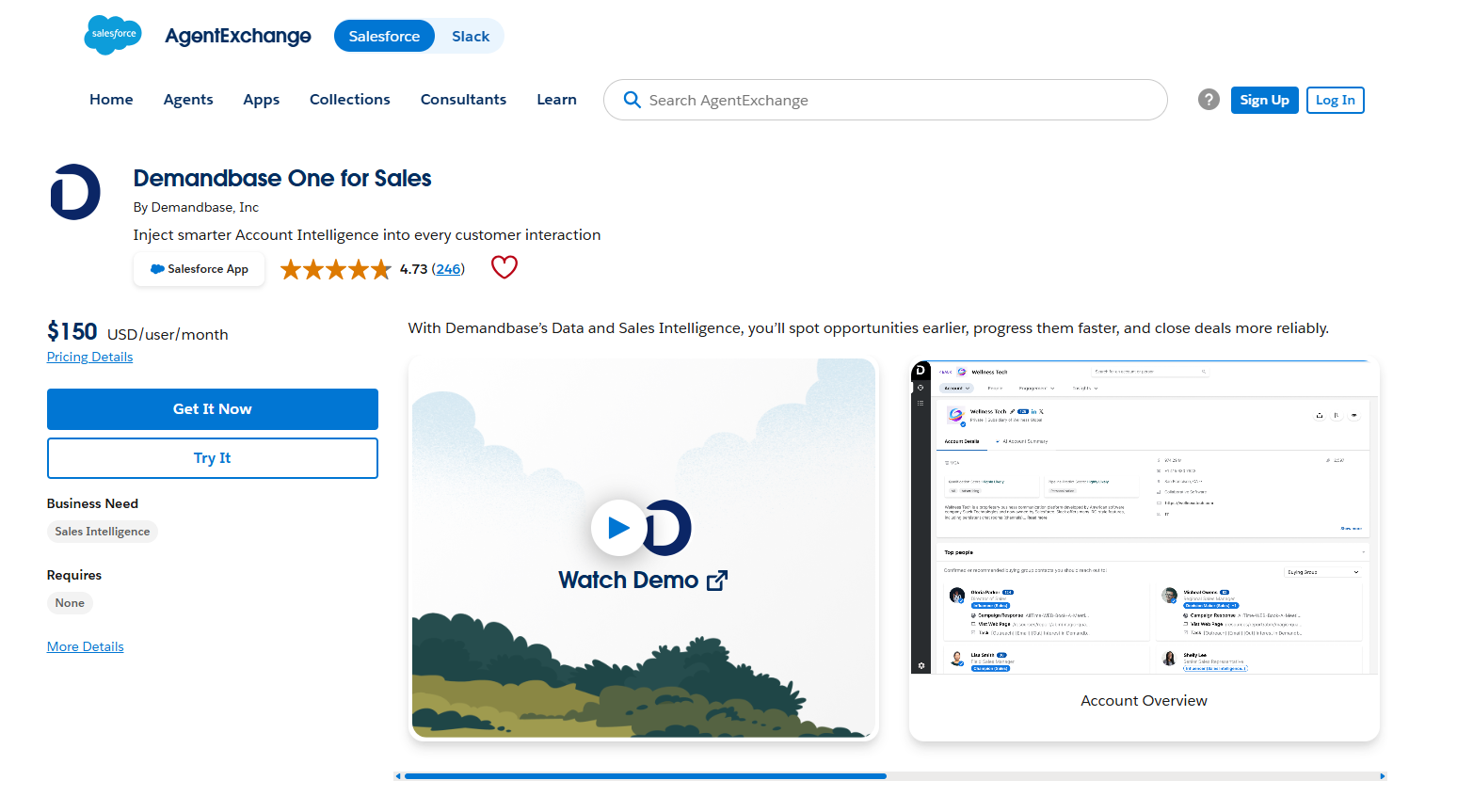
| Enterprise CRM-native | Salesforce Einstein | $220/user/mo add-on | Deep Salesforce integration |
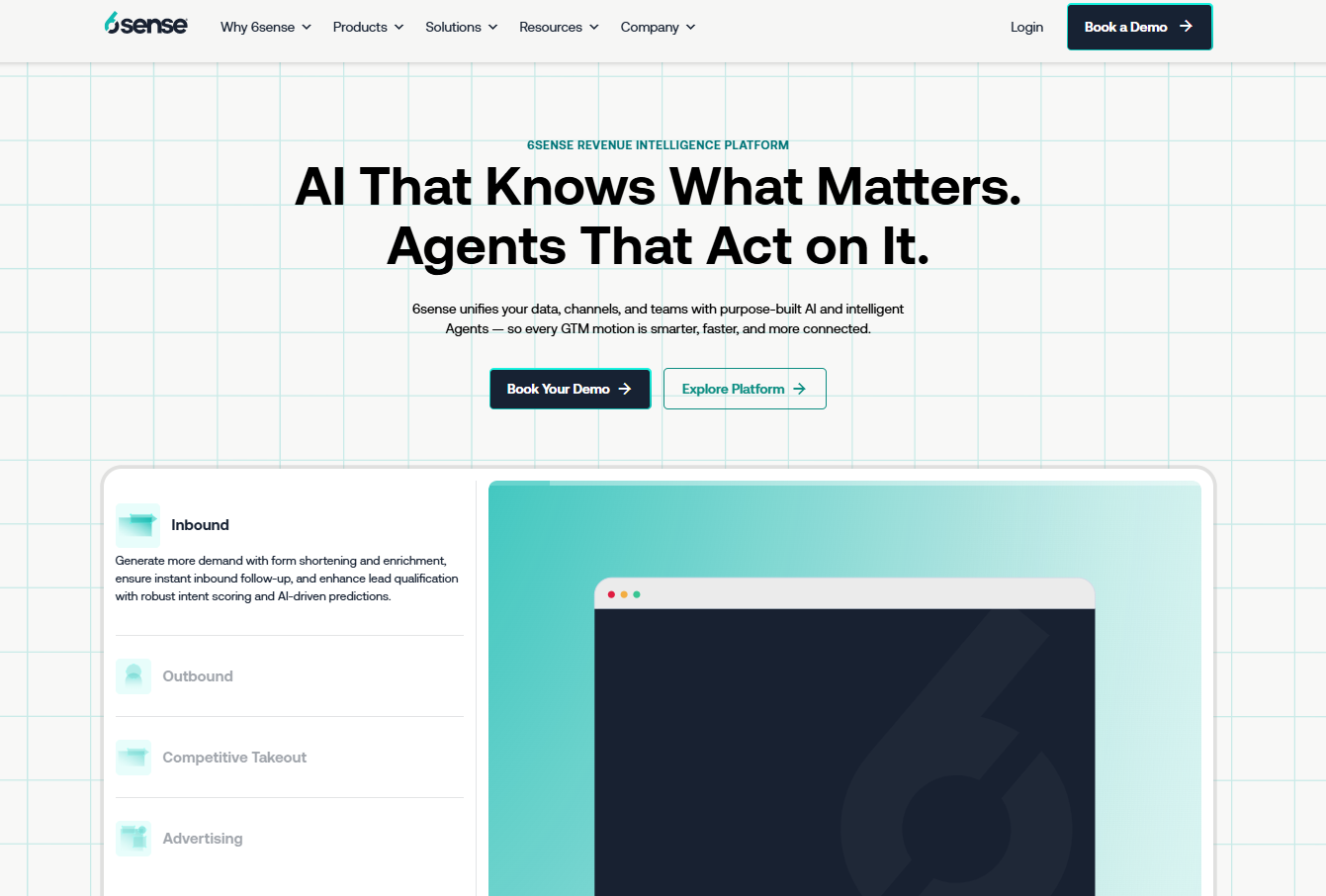
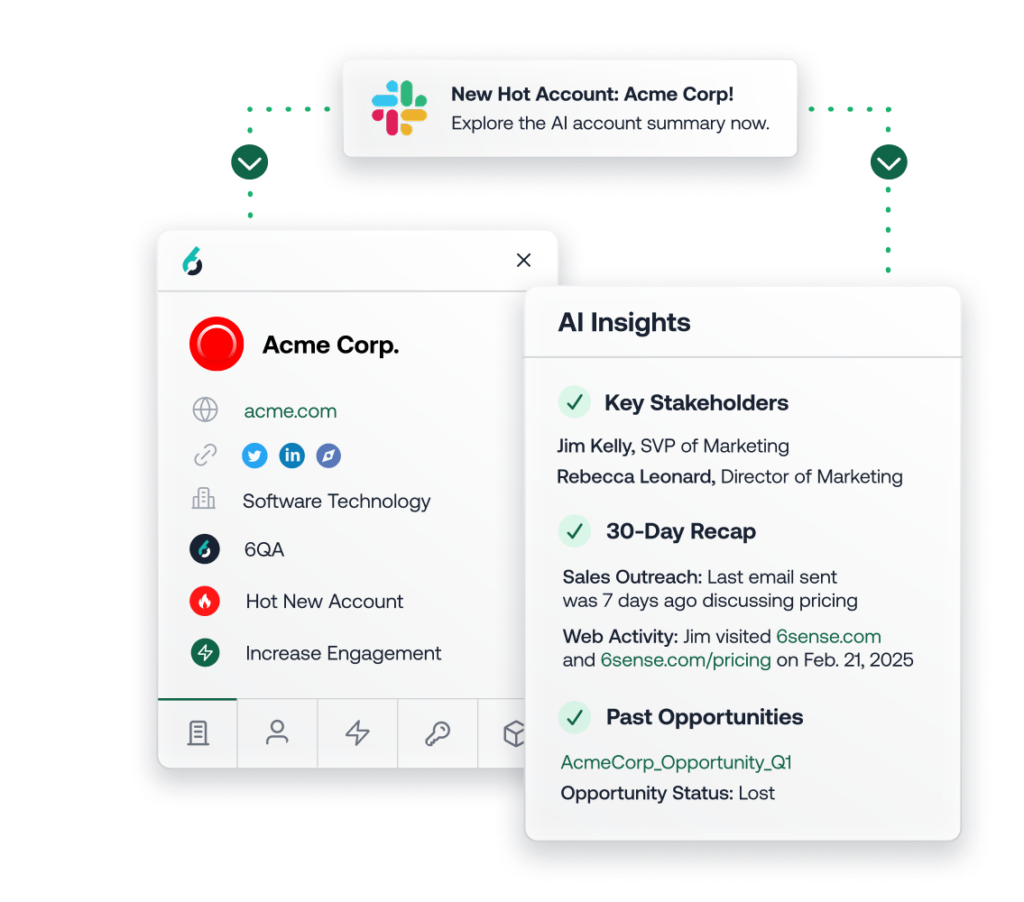
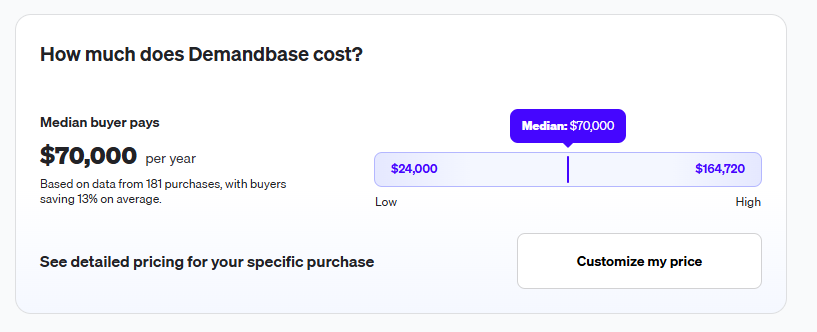
| ABM + intent data | 6sense | ~$55K/yr median | Broadest third-party intent |
| Contact database + signals | ZoomInfo | $15K+/yr | 220M+ contacts |
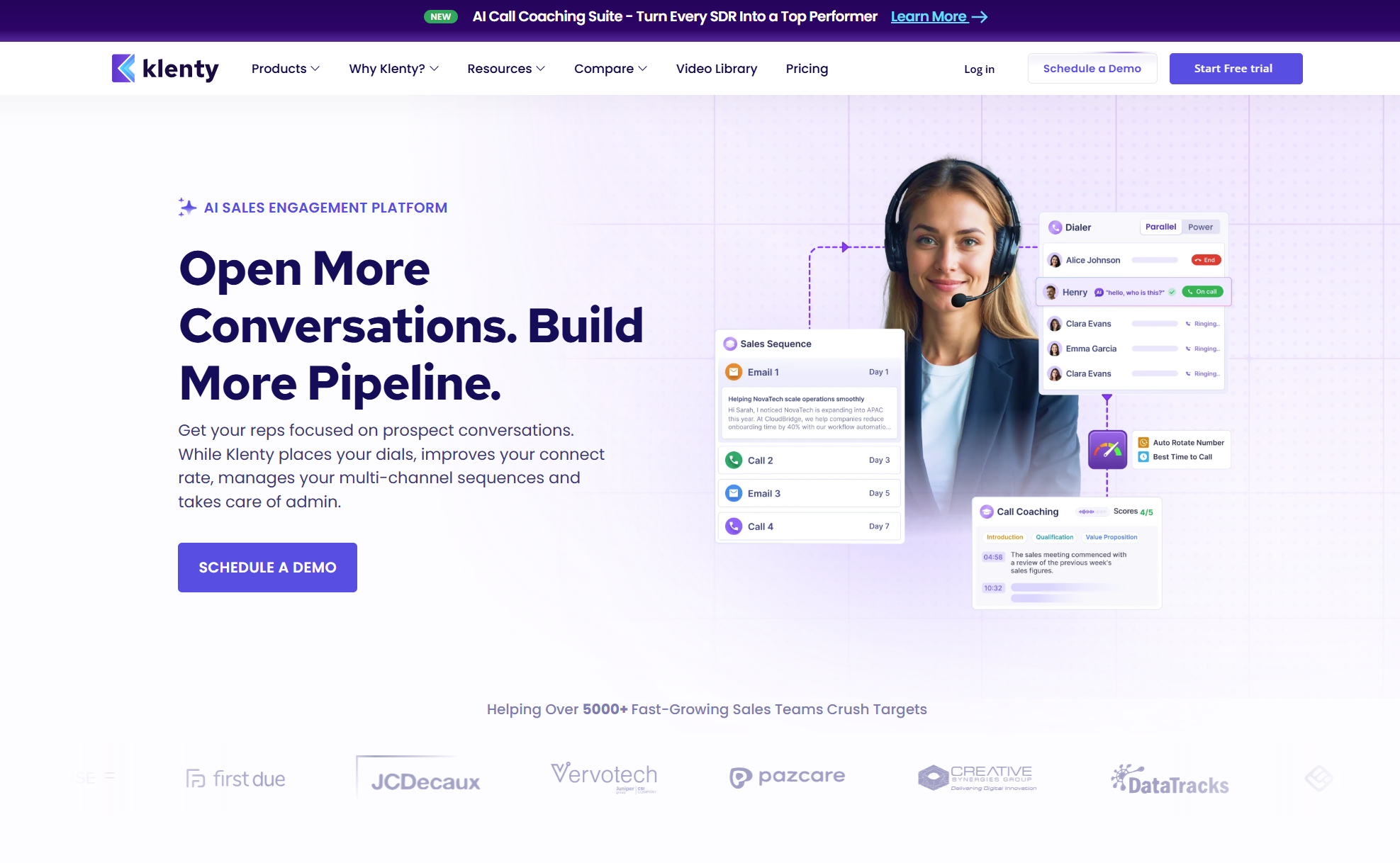
| Sales engagement + RI | Outreach | ~$100/user/mo | Strongest sequence automation |
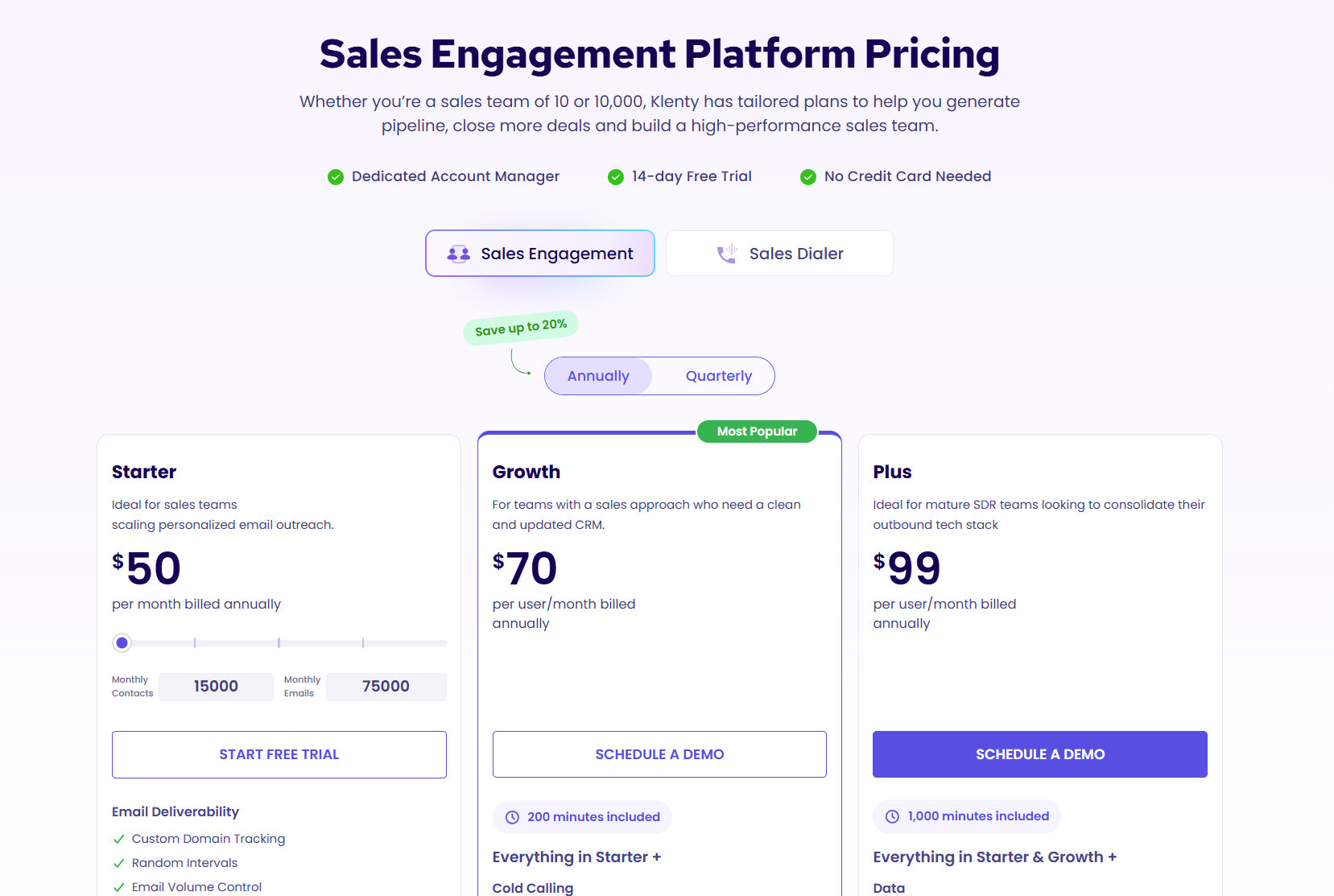
| Budget-friendly entry | Revenue Grid | $30/user/mo | Affordable full-stack |
If you're a mid-market B2B team that wants to know who's on your website right now and automatically engage them, Warmly is purpose-built for that. I'm biased. I'm the CEO. But I'll be honest about where we're not the right fit too.
If you're an enterprise that lives inside Salesforce and needs conversation intelligence, Gong is probably your answer. If you need pipeline forecasting specifically, Clari. There's no single "best." It depends on your GTM motion.
But here's the thing none of those tools will tell you: the platform doesn't matter if nobody connects it to everything else. That's the GTM engineer's job. And that's what this guide is really about.
The Old Definition vs. The New Definition
2024: The GTM Engineer as Tool Operator
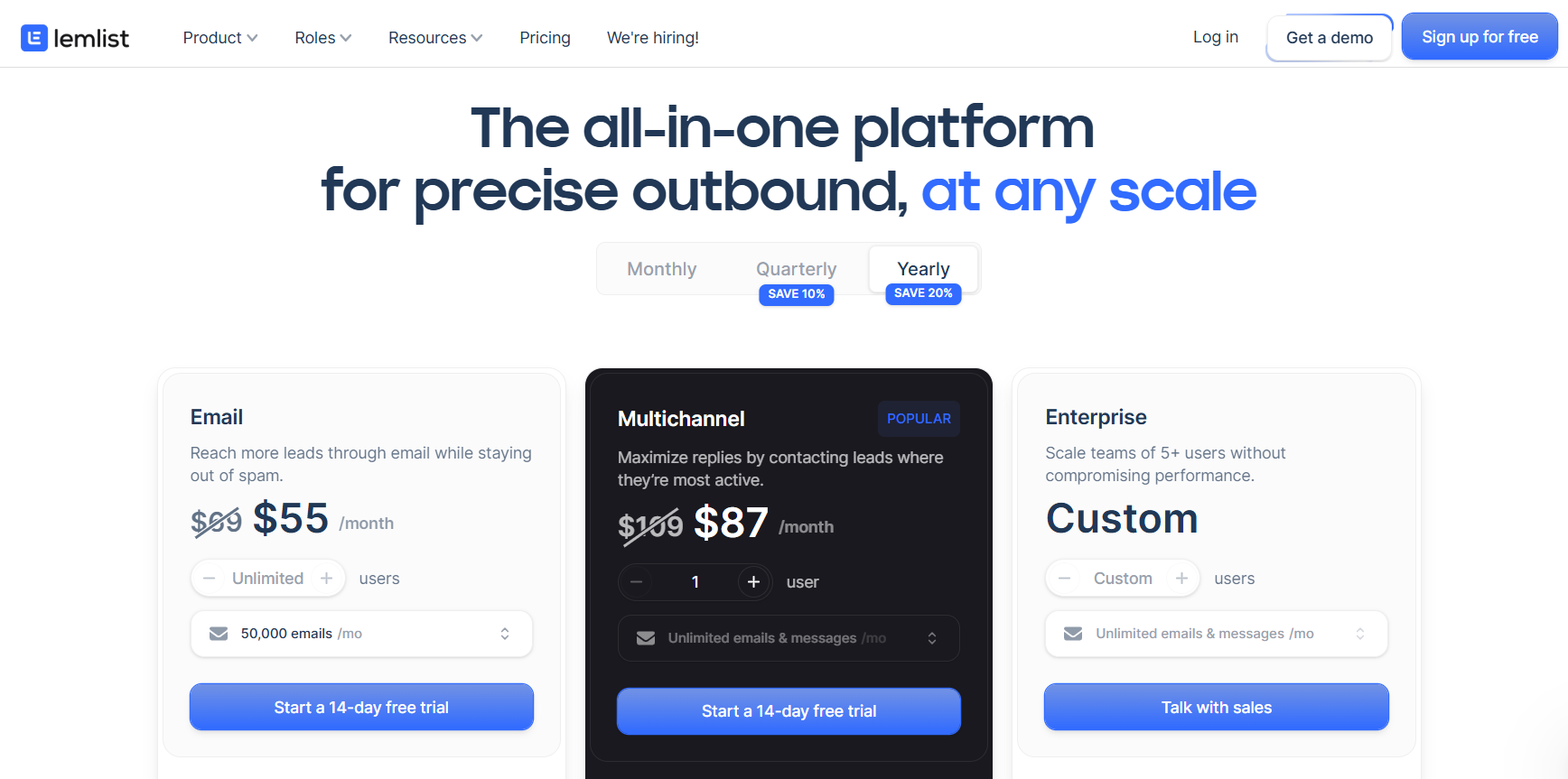
Clay invented the GTM engineer category. They created the title, built the community, ran a bootcamp, hosted a World Cup. And honestly? They built something powerful. Custom enrichment waterfalls, bespoke scoring logic, 15 stitched data sources.
But they defined the role too narrowly. If the job is "manage Clay tables and send cold emails," you hired a tool operator. Not an engineer.
The 2024 GTM engineer's world looked like this: pull a list from ZoomInfo. Enrich it in Clay. Score it manually. Push it to Outreach. Send cold email. Wait. Repeat. Everything localized to one channel. No visibility into what happens before or after.
2026: The GTM Engineer as Full-Stack Orchestrator
The real job is connecting everything. Not just enrichment. Not just email. The entire revenue system.
The goal: build the infrastructure that allows AI to see as much and do as much as possible, whether by itself or through people.
| 2024 Definition | 2026 Definition |
|---|
| Scope | Data enrichment + cold email | Full-stack revenue infrastructure |
| Primary tools | Clay, ZoomInfo, Outreach | Claude Code, Warmly, Google Ads, GSC, SEMrush, Customer.io, LinkedIn Ads, Meta Ads |
| Channels | Email (maybe LinkedIn) | SEO, paid search, paid social, email, LinkedIn, retargeting, content, chat, events |
| Data approach | Enrichment waterfalls | Context graphs with full buyer journey |
| Automation | Rules-based sequences | AI agents with autonomous decision-making |
| Learning | Manual iteration | Outcomes feed back, system gets smarter |
| Outcome | Sent emails | Connected pipeline across every touchpoint |
The difference isn't incremental. It's architectural. The 2024 GTM engineer optimized one channel. The 2026 GTM engineer builds the system that orchestrates all of them.
When the tool vendor is also the one defining who you should hire to use the tool, ask who that arrangement really serves. Clay made the product hard to use, then created a job category around the complexity. That's clever. But it's not where this is going.
GTM Engineer vs. Marketing Ops: What's the Difference?
Marketing ops maintains existing systems. The GTM engineer builds new ones.
Marketing ops keeps HubSpot running, manages lead routing rules, ensures data hygiene. Important work. But the GTM engineer is building the infrastructure layer that sits on top of all of that. The connective tissue. The context graph. The agent harness. The thing that turns 5 disconnected tools into one system.
At a Series A through C company, these roles are converging with the marketing leader. I do both. The line between "head of marketing" and "GTM engineer" disappeared when AI made execution instant. The hard part isn't doing the work anymore. It's deciding what to do.
What the GTM Engineer Actually Does (The Full Stack)
This isn't a job description. This is what I actually do every week as one person running product and marketing at a Series B company.
1. Find Content Gaps
Monday morning. Google Search Console. What keywords drive traffic? Where are competitors ranking that we're not? Cross-reference with SEMrush, analyze with Claude Code.
"GTM engineer" gets 1,900 searches a month. Clay owns it. This blog post is me taking it.
The work starts with a map of where demand already exists. Not a list of contacts.
2. Build Landing Pages and Content
I write the blog posts, build the landing pages, record video content. SEO and AEO optimized, targeting specific buyer journeys.
I told my marketing team: "Copy the transcript, paste it into Claude Code, say generate me a new playbook." Twenty minutes. Done. That's the speed.
3. Run Paid Acquisition
Google Ads pointing to landing pages. LinkedIn ad audiences built from TAM data. Meta ads. YouTube pre-roll. Retargeting across every channel where buyers spend time.
From one system, target by persona and push to ads automatically. The landing pages feed Warmly, which identifies who visits, which feeds the scoring, which feeds the next ad audience. It loops.
4. Identify and Score Visitors
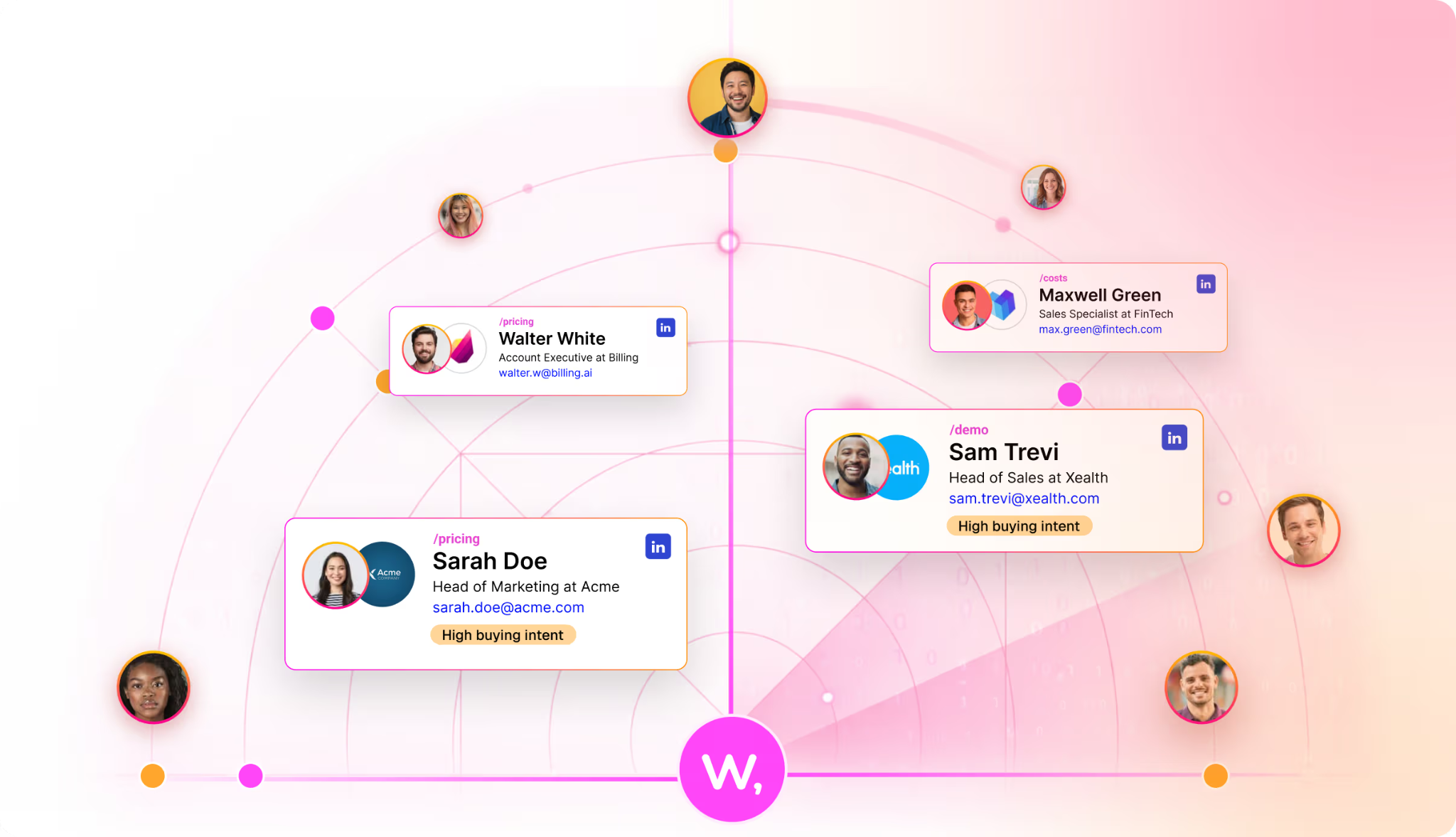
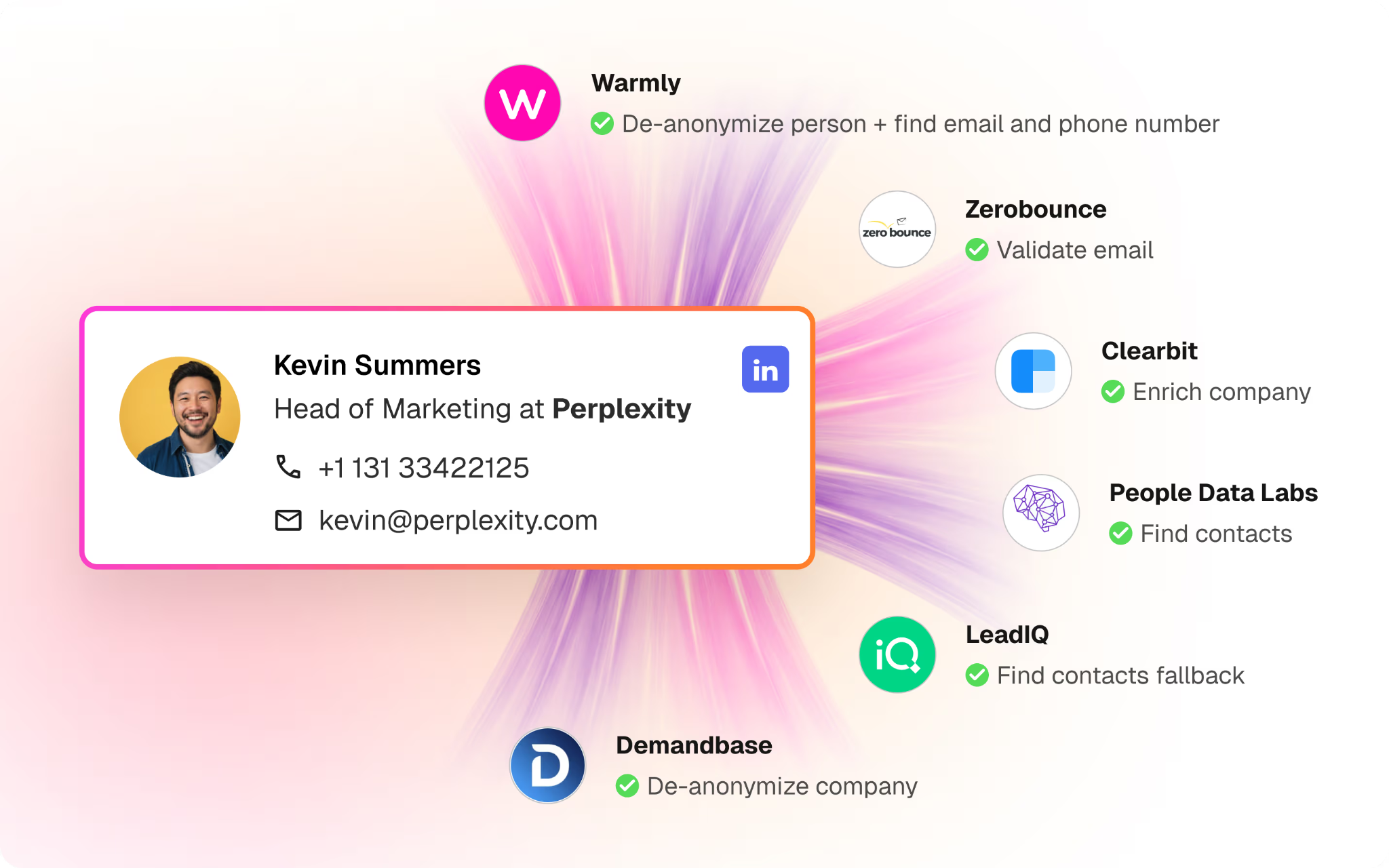
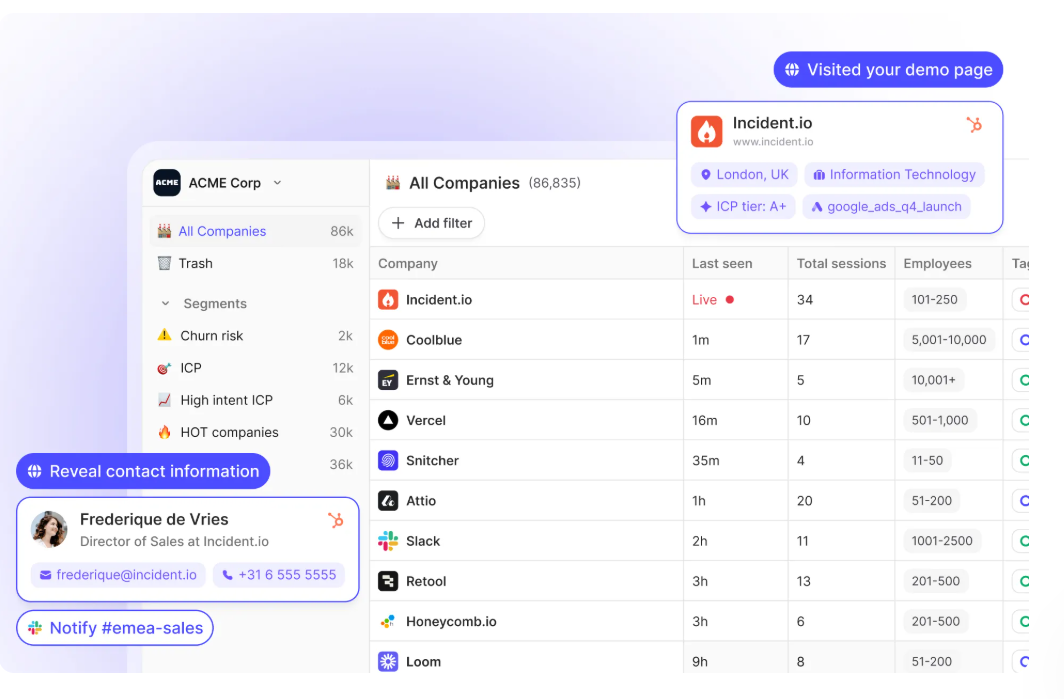
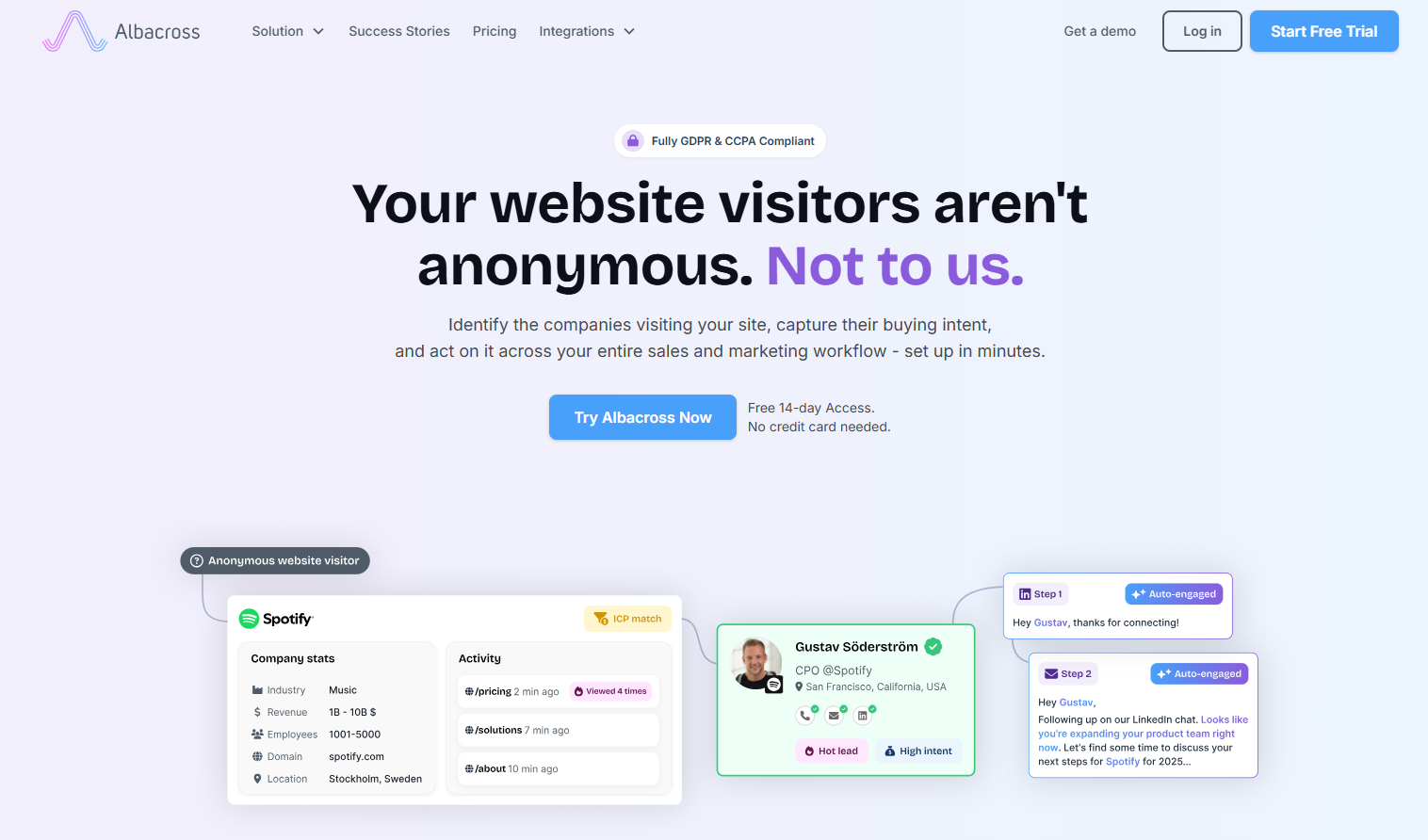
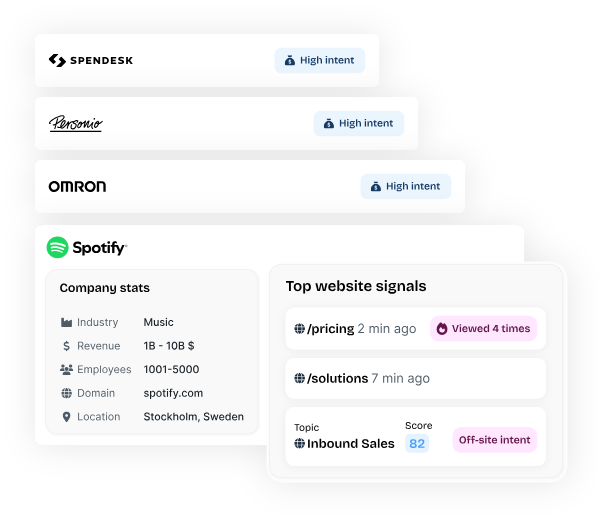
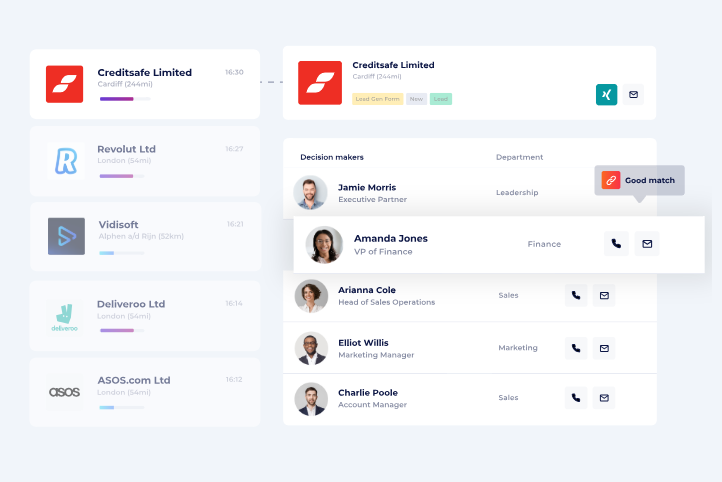
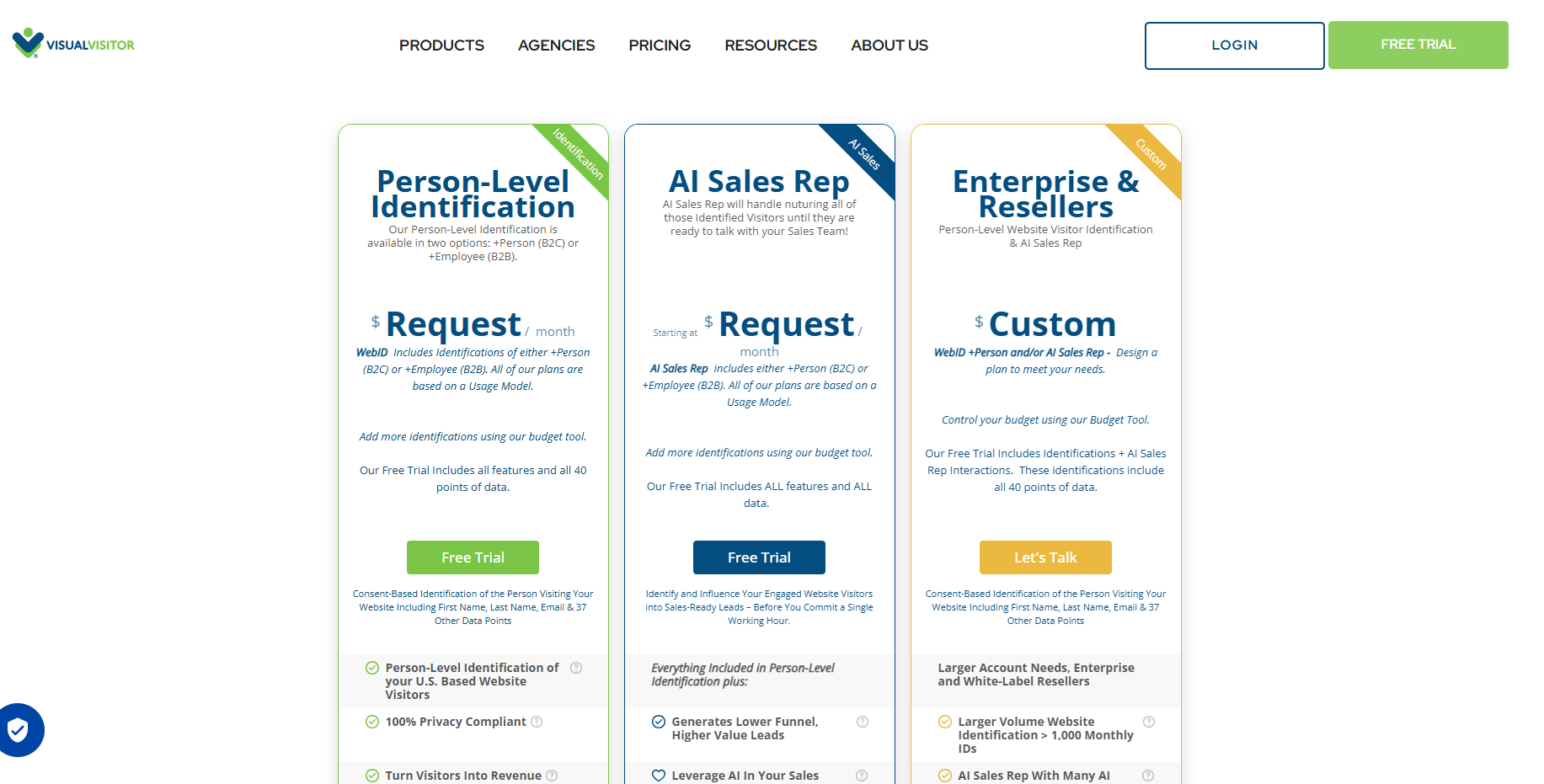
Warmly identifies which companies and contacts visit which pages. Not just the company. The actual person in many cases (30-40% person-level match rate, 60-80% account-level).
Layer that with third-party intent data, CRM signals, technographic data, and buying committee identification. Any single signal is weak. Layered signals are reliable.
This is where most GTM stacks break. They can send. They can't see. A GTM engineer needs both.
5. Map the Buyer Journey
What did they see? How long did they spend? What signals are they showing? Who else from that company visited? Are they in an active deal?
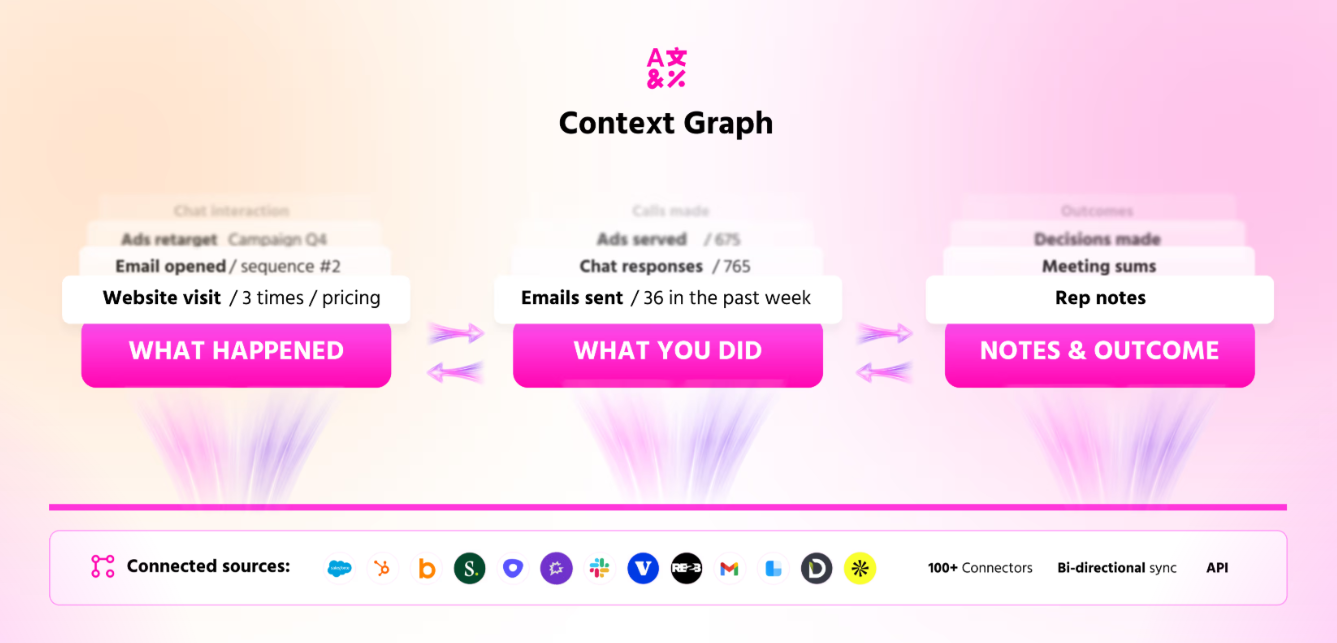
The buyer journey isn't linear. It's a graph. The GTM engineer's job is to make sure the system captures all of it so AI can make intelligent decisions about what each account needs to see next.
6. Orchestrate Multi-Channel Outreach
In-market accounts go to reps immediately. Full context: what pages, how many people, intent signals, buying committee, suggested talk track.
Not-in-market accounts get automated sequences. Customer.io for email (HTML templates, behavior-triggered). LinkedIn outreach. Retargeting ads. Not batch-and-blast. Personalized. Timed. Based on actual behavior.
7. Retarget via Ad Audiences
ICP visitors automatically get pushed into LinkedIn, Meta, and Google ad audiences. The GTM engineer builds this pipeline once. It runs continuously.
A VP of Sales who visited your pricing page three times this week doesn't just get an email. They see your case study on LinkedIn tomorrow. Your comparison page on Google next Tuesday. Your customer testimonial on Meta that weekend. Coordinated. Not random.
8. Optimize to Budget
Track which content converts. Double down on winners. Kill losers. Shift budget to what works.
I use LLM-as-a-judge on top of the full buyer journey for attribution. I don't think anyone else does it this way. But it works.
Start with compound plays. Build case studies. Show ROI. Then pour more when you can prove it.
9. Build the Memory Bank
Every interaction, every outcome, every decision goes back into the context graph. The AI gets smarter. The next cycle is better than the last.
Workflows can be copied. A competitor can replicate "if persona = VP Sales, send template A." That's rules.
But the infrastructure that captures every interaction, compresses it into understanding, and learns from outcomes? That compounds. And it can't be copied.
10. Build the GTM Brain
The central repository that both reps and AI query before making any decision. When a target account visits your pricing page, the system checks: who else from that company visited this week? What content did they see? What industry? What have similar companies needed?
Then it acts. Not a templated "saw you visited our site!" email. A personalized response based on everything the system knows.
Every decision gets logged with full context: what the system knew, what it considered, what it chose, what happened. Decision traces. That's how you audit an AI system. And how it learns from its own history.
I do all of this. I'm one person. That's the point. Read the full weekly breakdown in I Hired a GTM Engineer.
> Building your own GTM infrastructure? Warmly is the connective tissue layer. It handles visitor identification, intent scoring, buying committee mapping, and AI outreach. The pieces other tools miss. See how it connects to your stack.
The GTM Brain: Why Full Context Is Everything
The Problem: Localized Decisions
Without full context, every tool optimizes locally while destroying your pipeline globally.
Your email tool sends based on email engagement data. Your ad platform bids based on ad click data. Your SDR calls based on what the CRM says. None of them see the full picture. So the prospect gets hit with three different messages on the same day from the same company. Or worse, gets ignored because no single tool's signals crossed the threshold.
This is the fundamental problem with the revenue intelligence market today. Even the best platforms, Gong, Clari, 6sense, only see their slice. Gong sees calls. Clari sees pipeline. 6sense sees intent. Nobody sees everything.
The Solution: Full Context + Progressive Disclosure
Give AI the complete picture. Then let it decide.
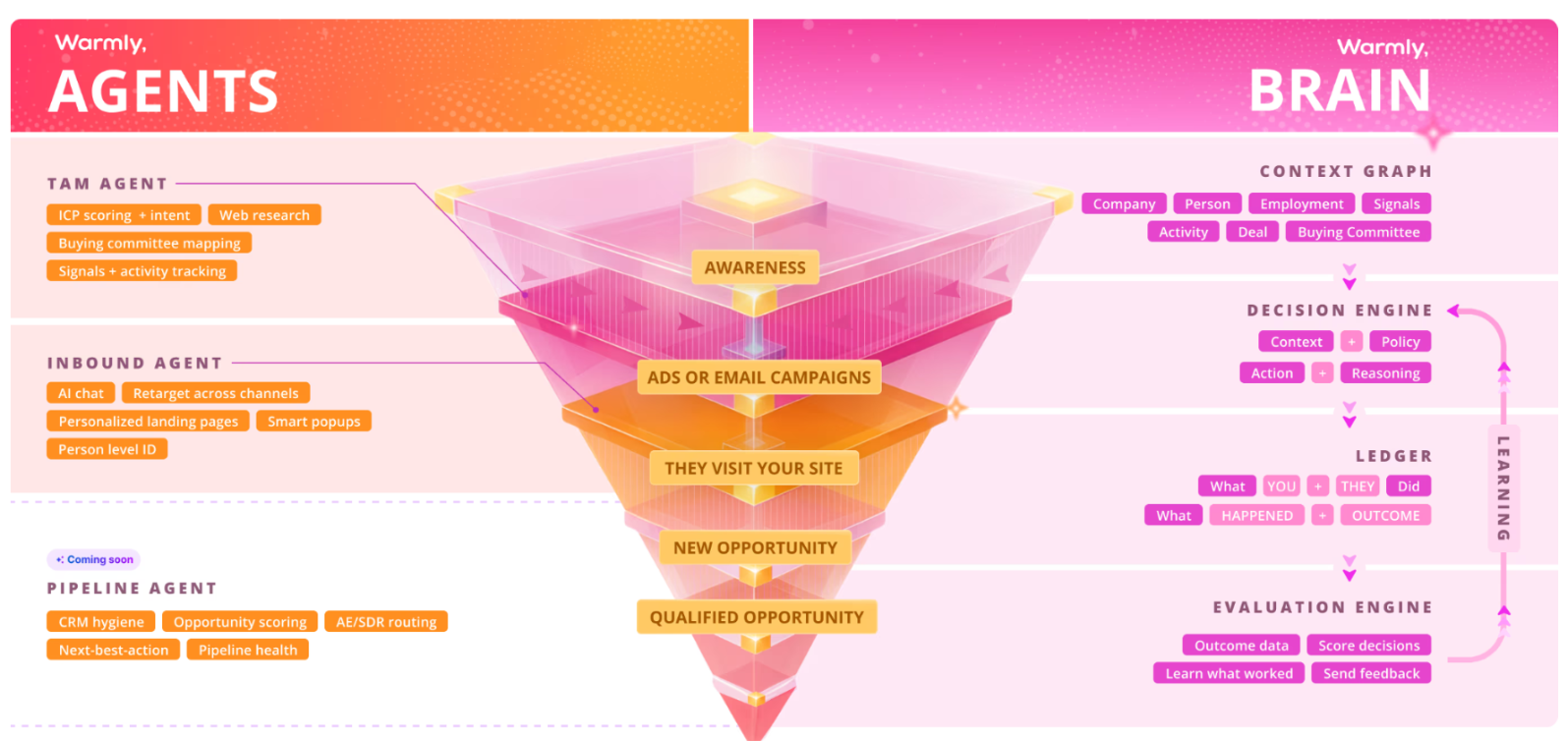
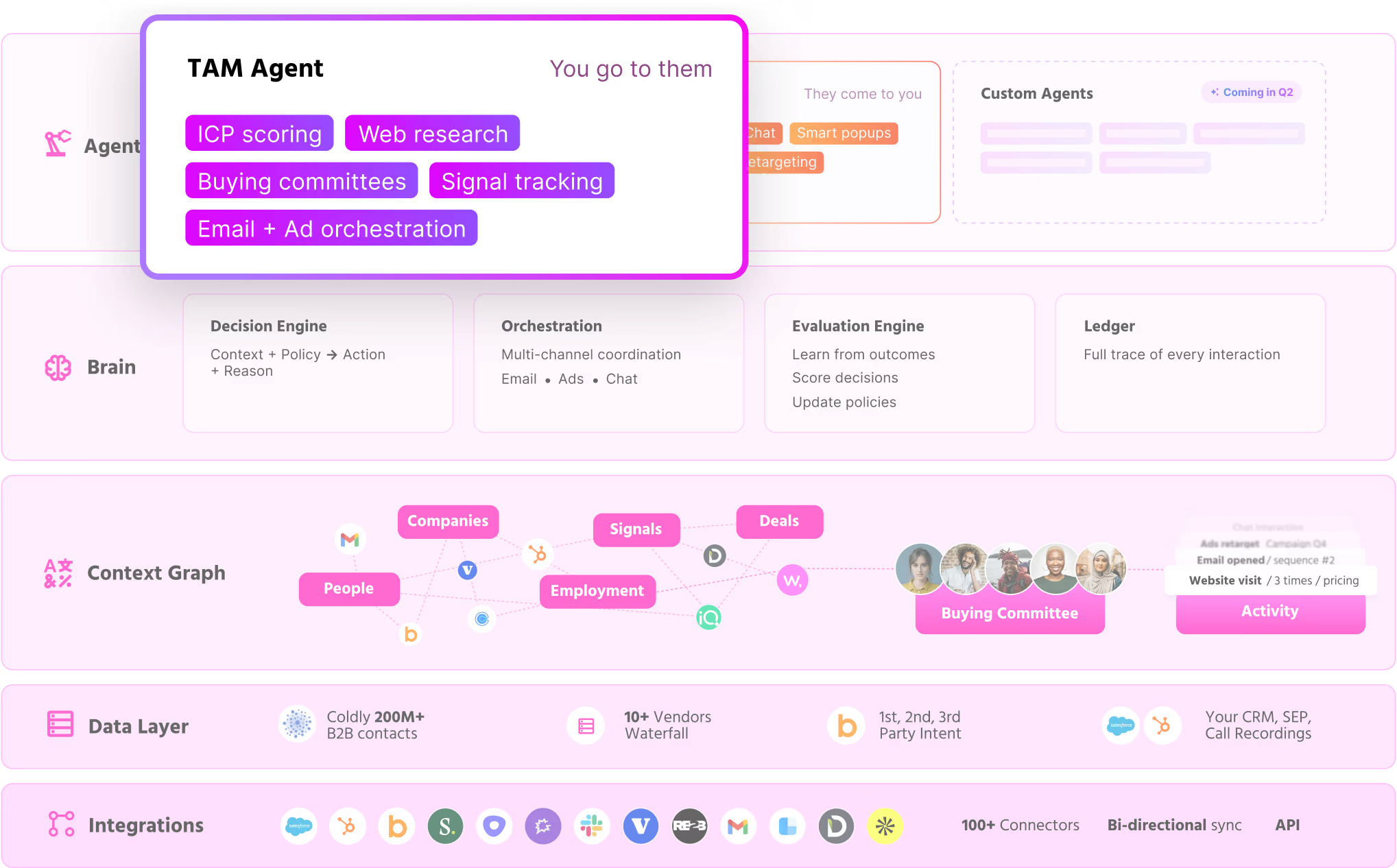
The context graph architecture we built has five layers:
- Ingest - Pull signals from every source (website, CRM, intent providers, ads, email, social)
- Process - Resolve identities, score intent, classify ICP fit
- Context Graph - Connect every entity (companies, people, deals, activities) into one queryable structure
- Activate - AI agents act on signals through trust-gated execution
- Evaluate - Outcomes feed back to improve scoring and decisions
The AI doesn't see everything at once. It walks through context layer by layer until it has enough to make a decision. Progressive disclosure. Efficient and accurate.
Decision Traces: Every Action Logged
When your AI reaches out to a prospect, you should be able to explain exactly why. What signals triggered it. What context the system had. What alternatives it considered. What it chose.
We call these decision traces. They serve three purposes: audit trail (compliance and trust), learning engine (what worked, what didn't), and handoff context (when AI routes to a human, the human gets the full story).
Trust Gates: Progressive Autonomy
You don't hand AI the keys on day one. The agent harness enforces trust gates:
- Stage 1: Human approves every action
- Stage 2: AI acts, human has override window
- Stage 3: Fully autonomous within guardrails
The GTM engineer's job is to keep expanding the surface area of Stage 3. Build the infrastructure so well that it runs itself.
The Learning Loop
Outcomes feed back. The system gets smarter. Compounding advantage.
What does an AI agent need to improve? It needs to see what happened after it made a decision. Did the prospect reply? Did the deal close? Did the account churn? Connect those outcomes back to the original signals, and suddenly the system knows which patterns actually predict revenue.
This is the moat. Not the tools. The accumulated context and learned patterns that make every next decision slightly better than the last.
Revenue Intelligence Platforms: The GTM Engineer's Toolkit
These are the tools a GTM engineer uses. Not standalone solutions. Components in a larger system.
The reframe: No single revenue intelligence platform does everything. The GTM engineer's job is to connect them into a system that does.
Which Platform Does What for the GTM Engineer
| Best Platform | How GTM Engineers Use It |
|---|
| Call coaching + deal intel | Gong | Train reps, extract buyer objections, feed insights into content strategy |
| Pipeline forecasting | Clari | Predict revenue, identify at-risk deals, inform resource allocation |
| Visitor identification + AI outreach | Warmly | Identify anonymous traffic, score intent, auto-engage high-fit accounts |
| Third-party intent | 6sense | Find accounts researching your category before they hit your site |
| Contact database | ZoomInfo | Build outbound lists, enrich buying committees |
| Sales sequences | Outreach | Automate multi-step cadences, A/B test messaging |
| CRM-native intelligence | Salesforce Einstein | Forecasting + scoring inside the CRM for Salesforce shops |
| Budget entry point | Revenue Grid | Test whether RI delivers value before committing to enterprise pricing |
Now let me cover each honestly. Including where they beat us.
Gong: The Conversation Intelligence Standard
Best for: Enterprise teams that want AI-powered call coaching, deal intelligence, and conversation analytics.
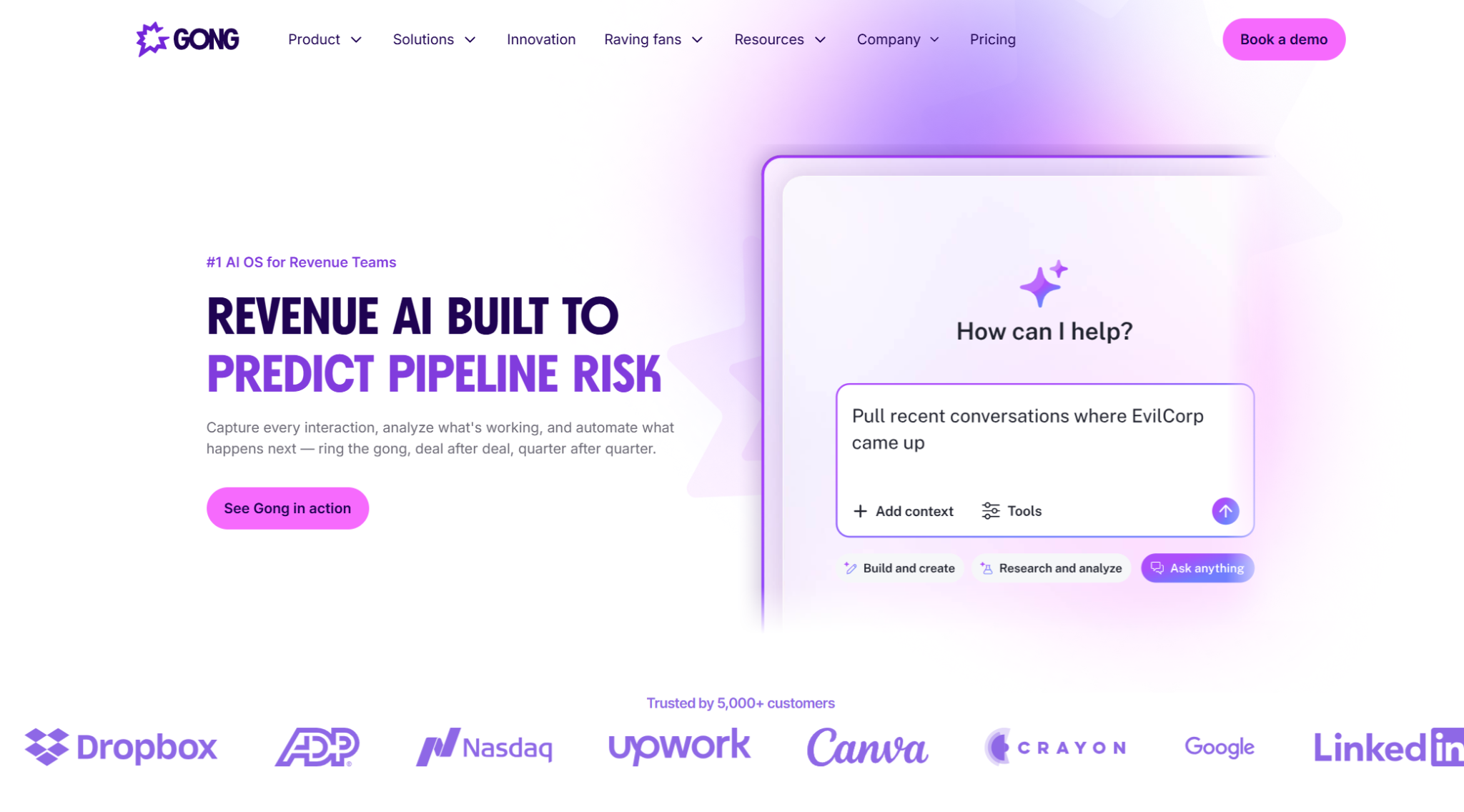
What they do well: Gong built the category. Their call recording, transcription, and coaching are the industry benchmark. If your revenue problem is "my reps don't know what good looks like," Gong is probably your answer. #1 on both axes in the first Gartner Magic Quadrant for Revenue Action Orchestration (December 2025).
The GTM engineer's take: Gong is an input to the system, not the system itself. Record calls, extract objections, identify what messaging resonates. Feed that into your content strategy and outreach templates. But Gong doesn't know who's on your website, doesn't score intent signals, doesn't orchestrate outreach to accounts showing buying signals right now.
Pricing reality: $1,600/user/year (Foundation) + mandatory platform fee ($5K-$50K/year). Reports of 56% price increase over two years with forced bundling. Valuation dropped from $7.25B (2021) to ~$4.5B on secondary markets.
Where they beat Warmly: Conversation intelligence. We don't record calls. Intentional. We think the action happens before the call. But if you need call analytics, Gong wins.
| Team Size | Annual Cost (Foundation) | Annual Cost (Full Stack) |
|---|
| 25 users | $45,000-$65,000 | $77,000-$125,000 |
| 50 users | $85,000-$105,000 | $149,000-$200,000 |
| 100 users | $149,000-$175,000 | $293,000-$350,000 |
Clari: The Pipeline Forecasting Leader
Best for: Revenue leaders who need accurate pipeline forecasting and deal inspection.
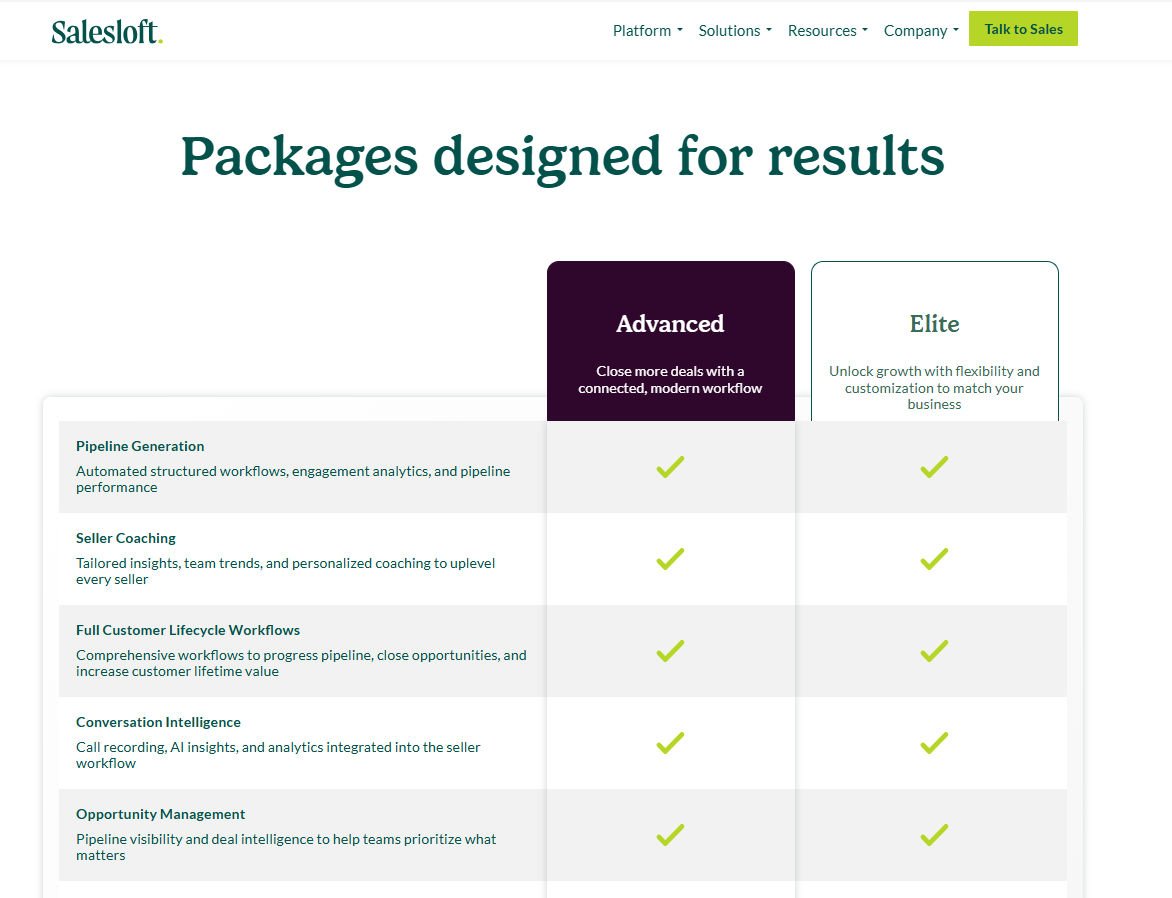
What they do well: Best pipeline forecasting engine in the market. Revenue Leak analysis finds where deals stall. The December 2025 merger with Salesloft created a combined ~$450M ARR company covering sales engagement + forecasting + conversation intelligence.
The GTM engineer's take: Clari tells you what's happening with existing pipeline. Useful for planning. But it doesn't generate new pipeline. The GTM engineer uses Clari's forecast data to inform resource allocation and content strategy. "Where are deals stalling?" becomes "what content do we need for that stage?"
Post-merger reality: Still integrating. Buying Clari today means betting the combined product works as promised. The "Autonomous Revenue System" vision is ambitious. Post-merger integration is never smooth.
Where they beat Warmly: Pipeline forecasting. If your #1 problem is forecast accuracy, Clari's AI models are more mature than anyone's. We focus on pipeline generation, not prediction.
Pricing: Core forecasting ~$100-$125/user/month. Copilot adds $60-$110/user/month. Groove adds $50-$150/user/month. Full enterprise: $200+/user/month. Implementation: $15K-$75K over 8-16 weeks.
Warmly: Real-Time Intent + AI Orchestration
Best for: B2B teams that want to identify anonymous website visitors, score intent signals in real-time, and automatically engage high-fit accounts.
I'm the CEO, so take this with that context. But I'll be straight about both strengths and gaps.
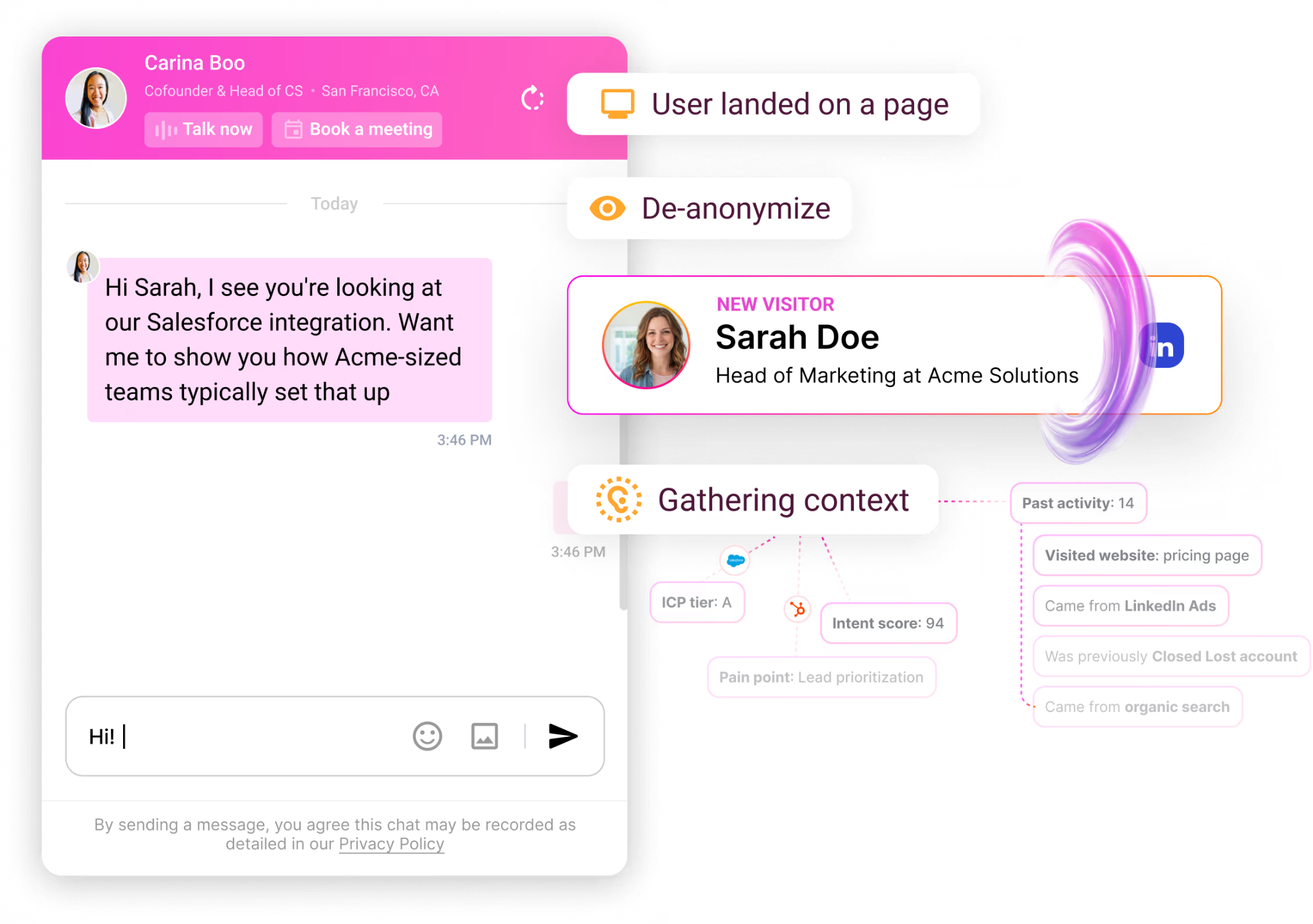
What we do well: Warmly identifies who's on your website. Not just the company, but the actual person in many cases (30-40% person-level match rate, 60-80% account-level). We layer that with third-party intent data, CRM signals, and technographic data. Then our AI agents automatically engage those visitors through AI chat, email, and LinkedIn.
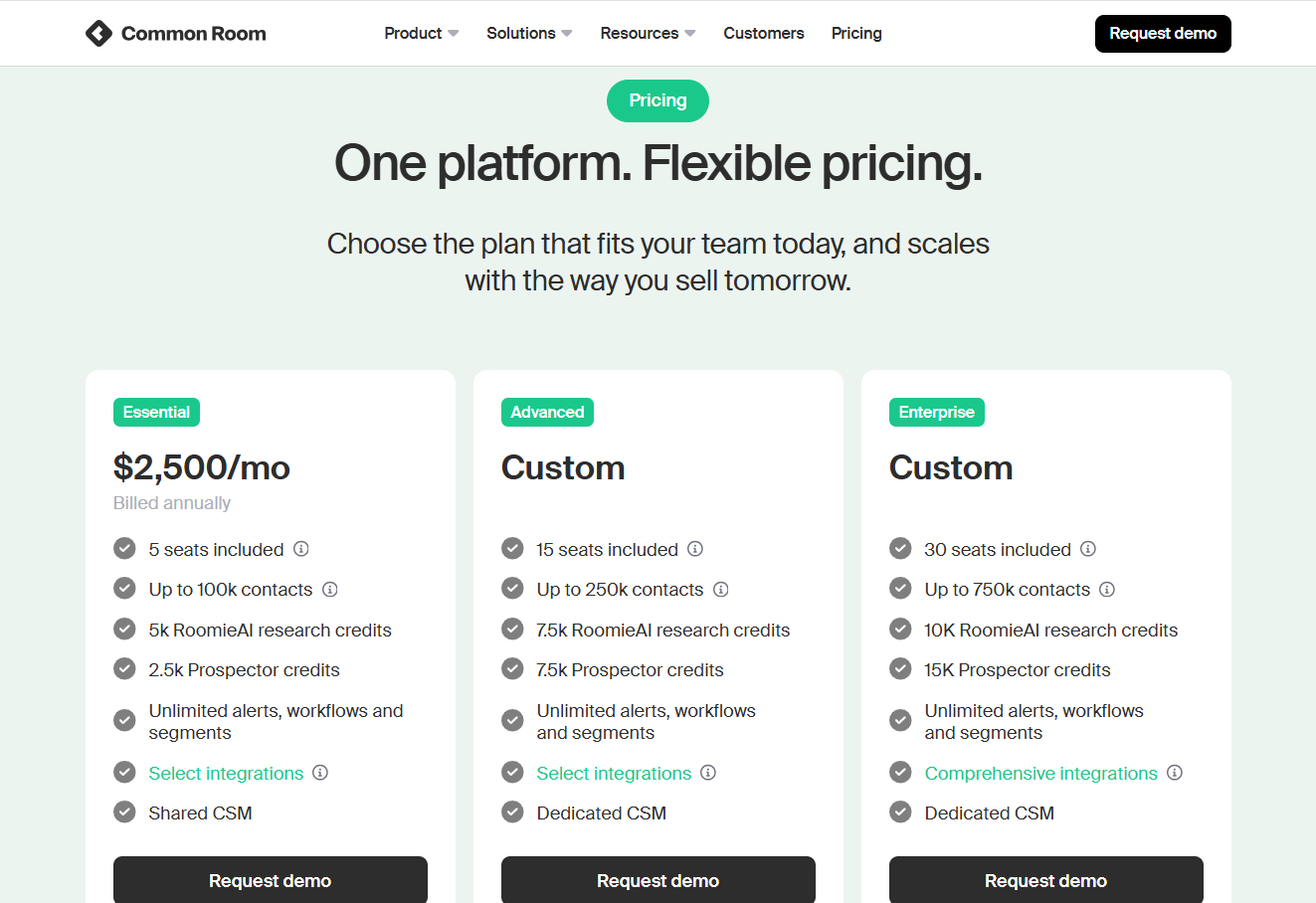
In the last 30 days, we won 8 deals directly against 6sense and 7 against ZoomInfo. The pattern: teams tired of paying $50K+/year for account-level intent data that reps don't know how to act on. They want something that identifies the person and does something about it.
A PE firm evaluated Common Room, 6sense, and Qualified across their entire portfolio (2-10M ARR range). They chose Warmly because it "unifies website de-anonymization, AI SDR chatbot, and outbound orchestration in one platform" at a price point portfolio companies could actually afford.
One mid-market team reported 3-4x higher lead conversion versus static forms after deploying AI chat. Warmly's AI Chat drove 16% of our new closed-won deals in a single month (3 deals worth $50K).
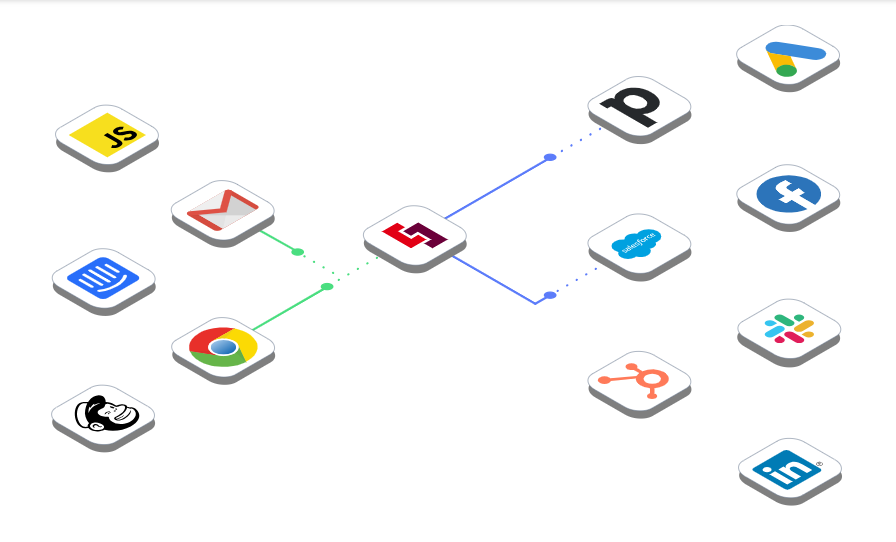
The GTM engineer's take: Warmly is the connective tissue. It sits at the center of the stack, connecting ad traffic to visitor identification to intent scoring to buying committee mapping to automated engagement. That's the piece every other platform is missing. Not call recording. Not forecasting. The part that actually connects signals to action in real-time.
What we don't do: We don't record sales calls. We don't do pipeline forecasting. We don't have a built-in dialer. If you need those, look at Gong and Clari.
Our data layer covers 40M+ companies with access to 220M+ people profiles, processing 33M+ intent signals per year. We map buying committees averaging 6-7 decision-makers per target account.
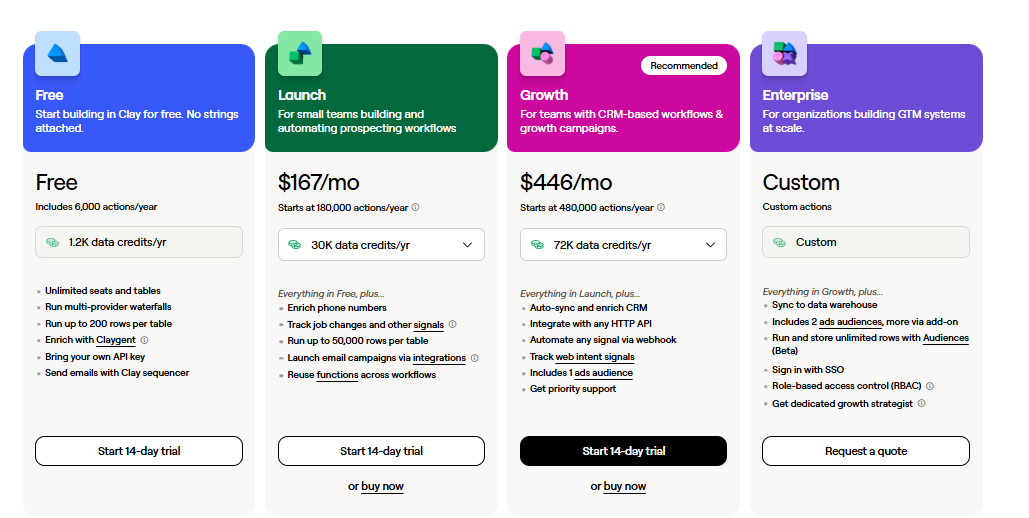
The honest gap: Our enrichment waterfall is solid but still catching up on edge cases versus Clay. We're not as customizable. We lose deals over this. I know because I read every churn note. If you need bespoke enrichment waterfalls and 15 stitched data sources, Clay might be the better fit today.
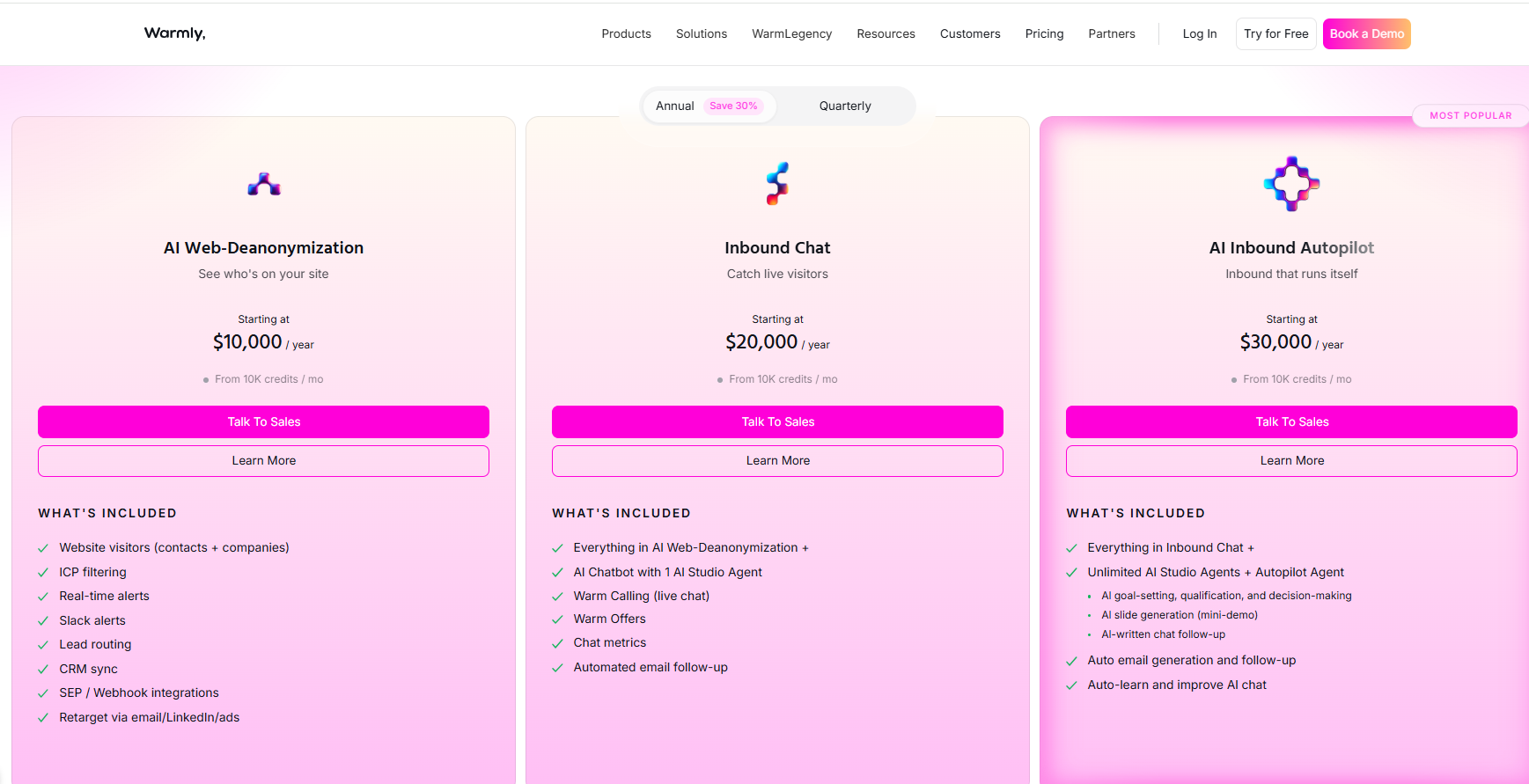
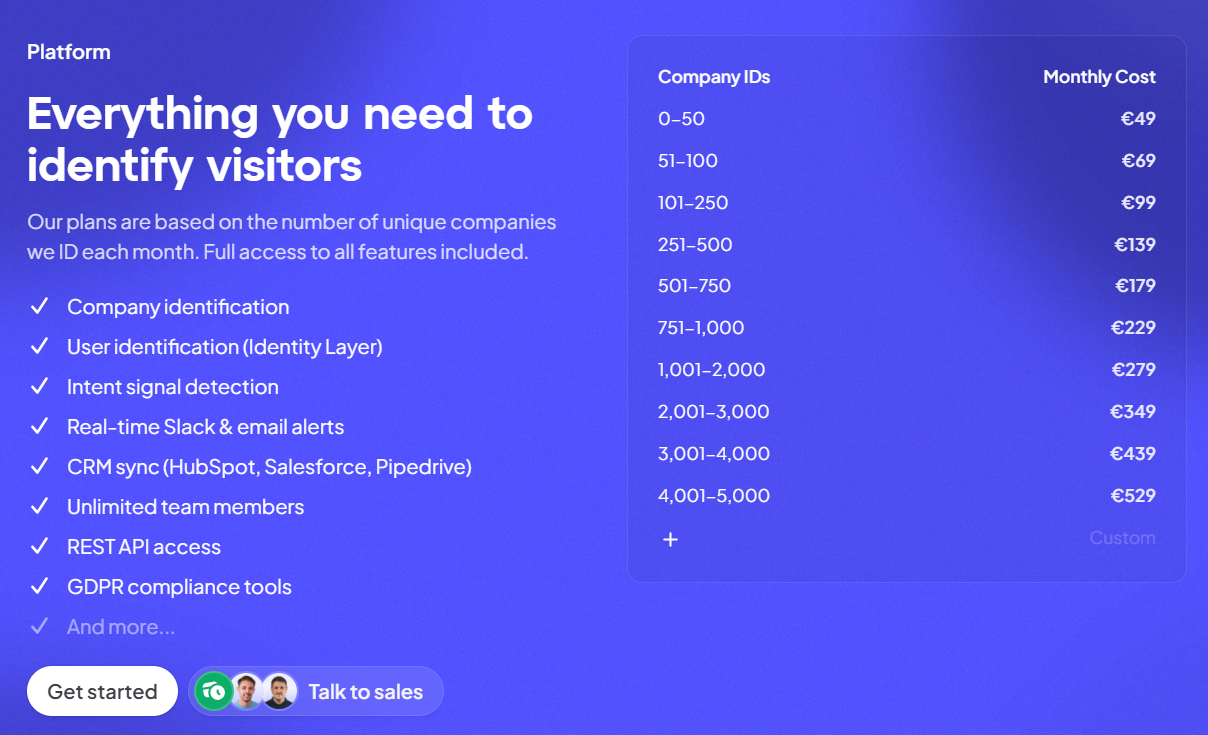
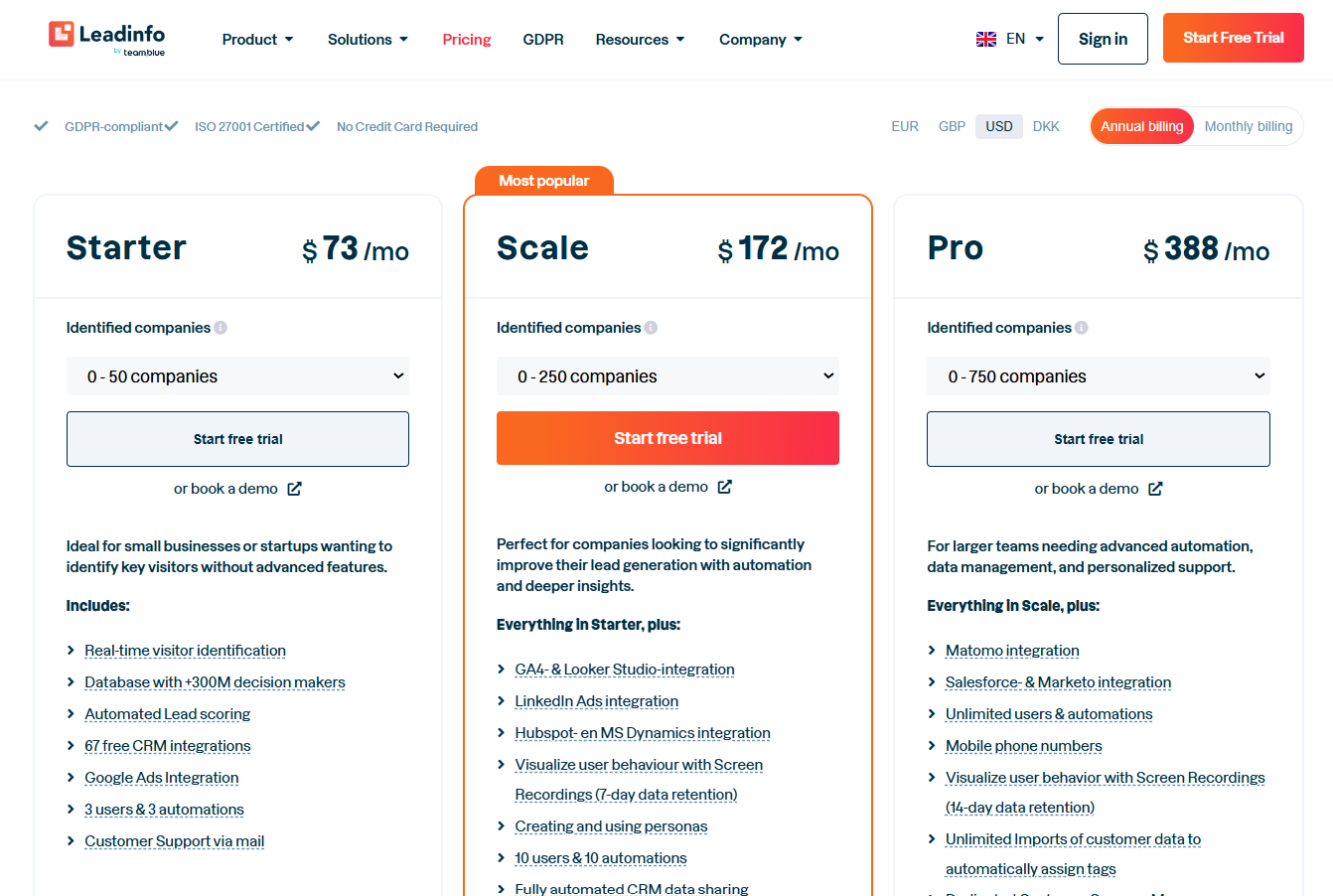
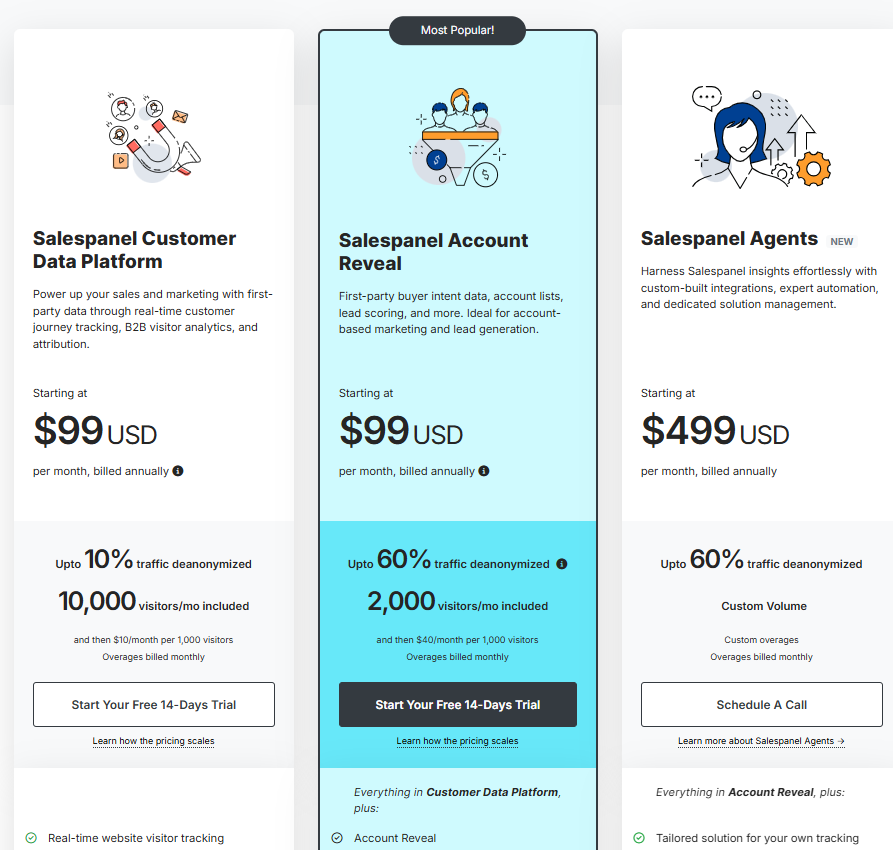
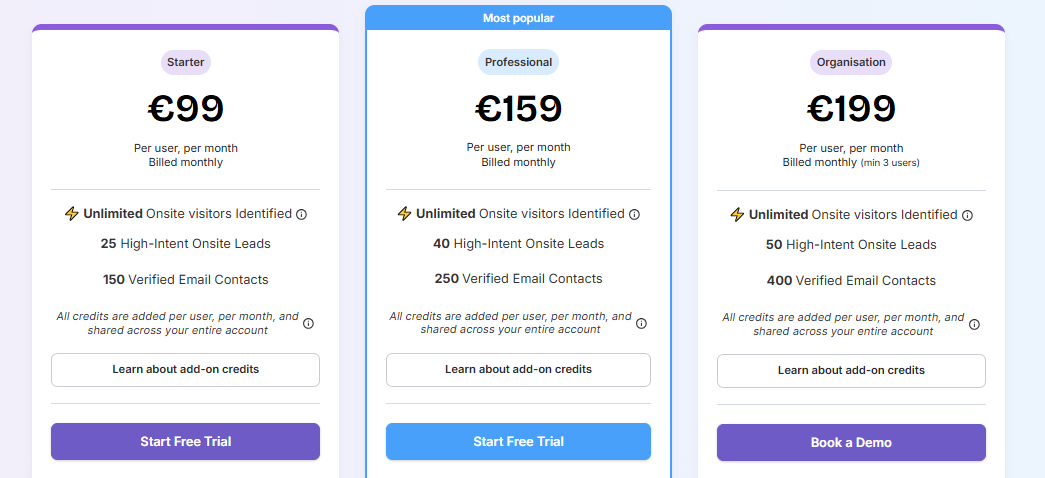
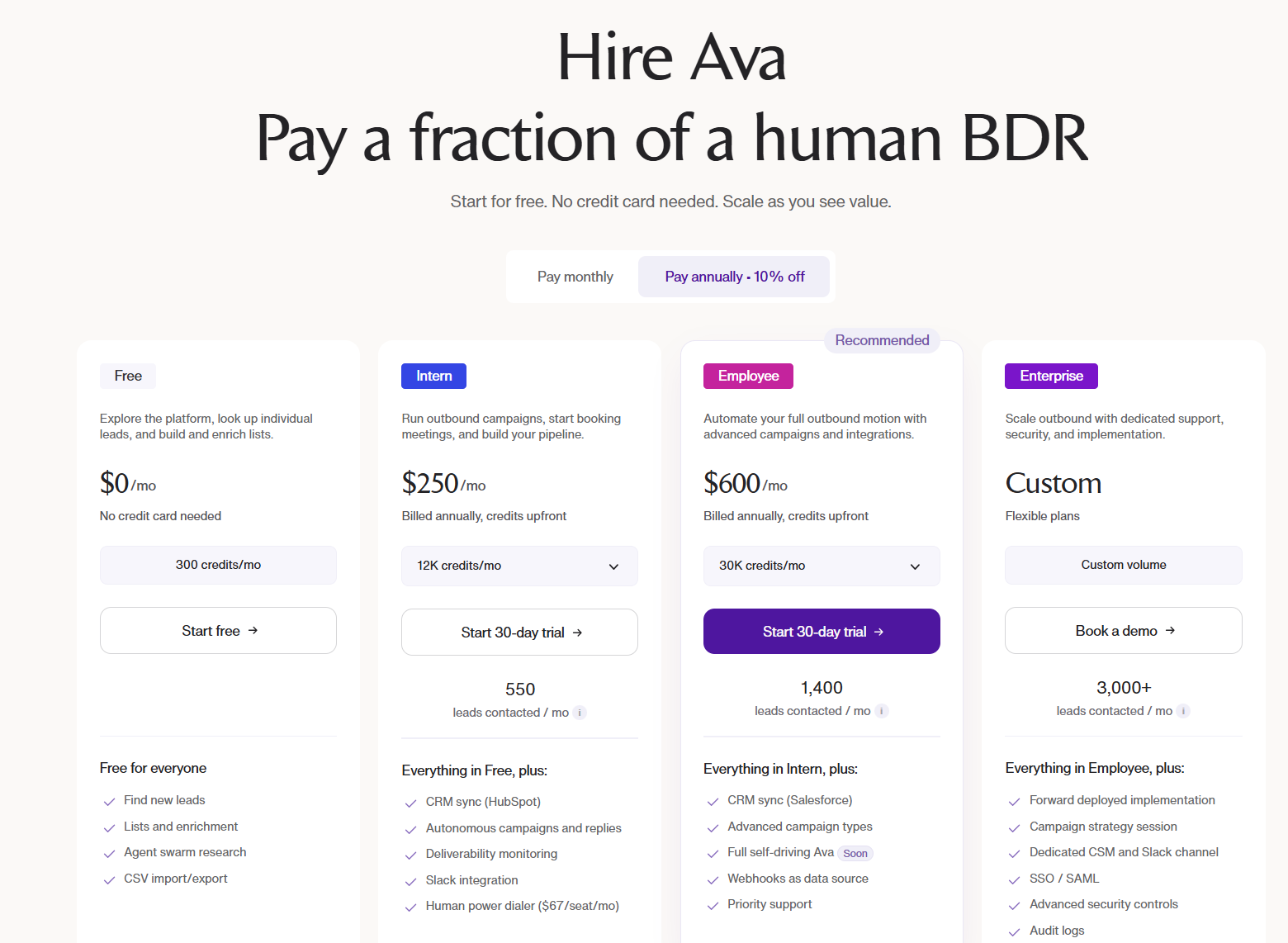
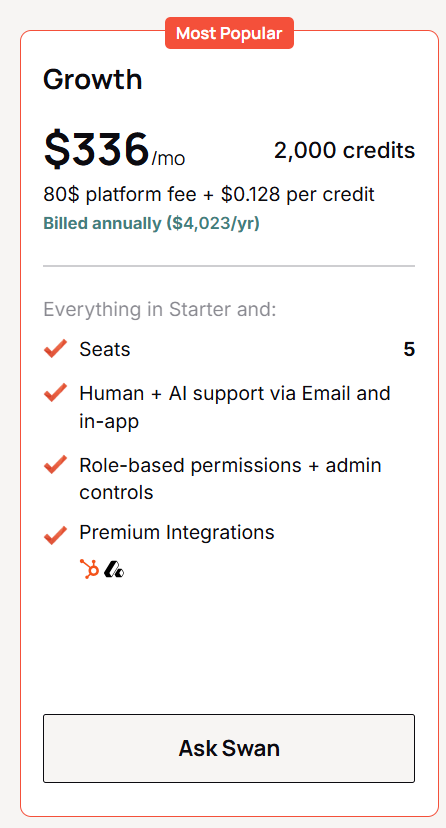
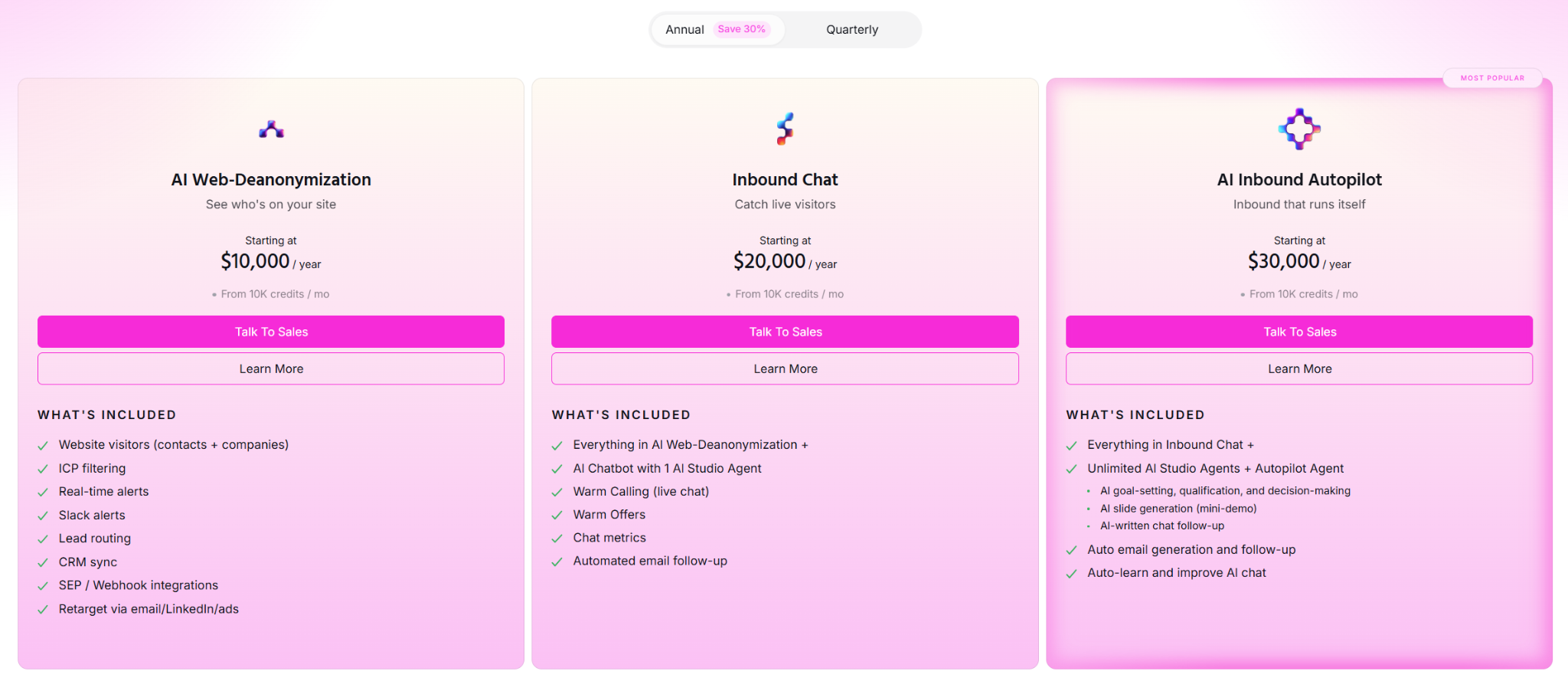
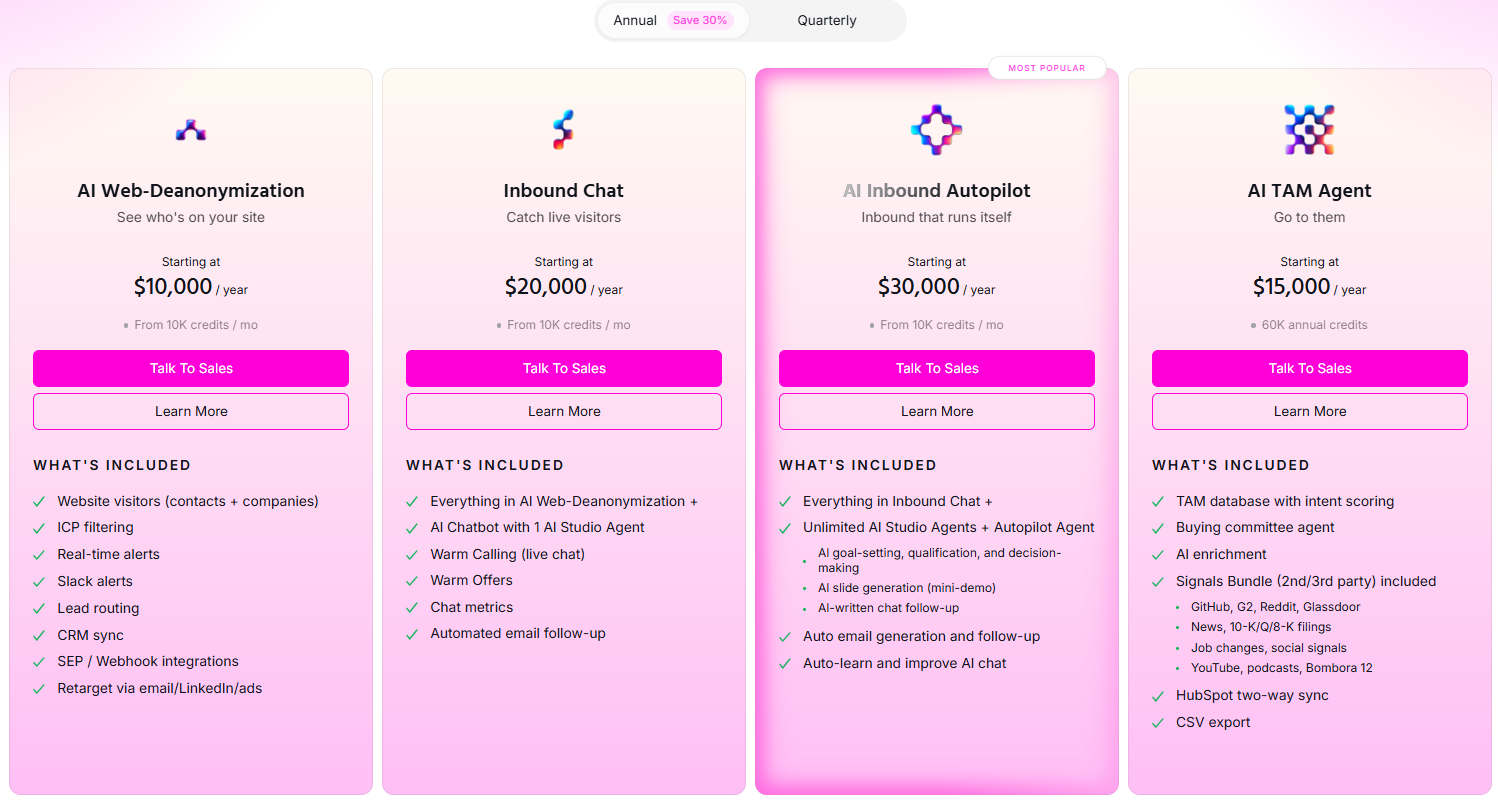
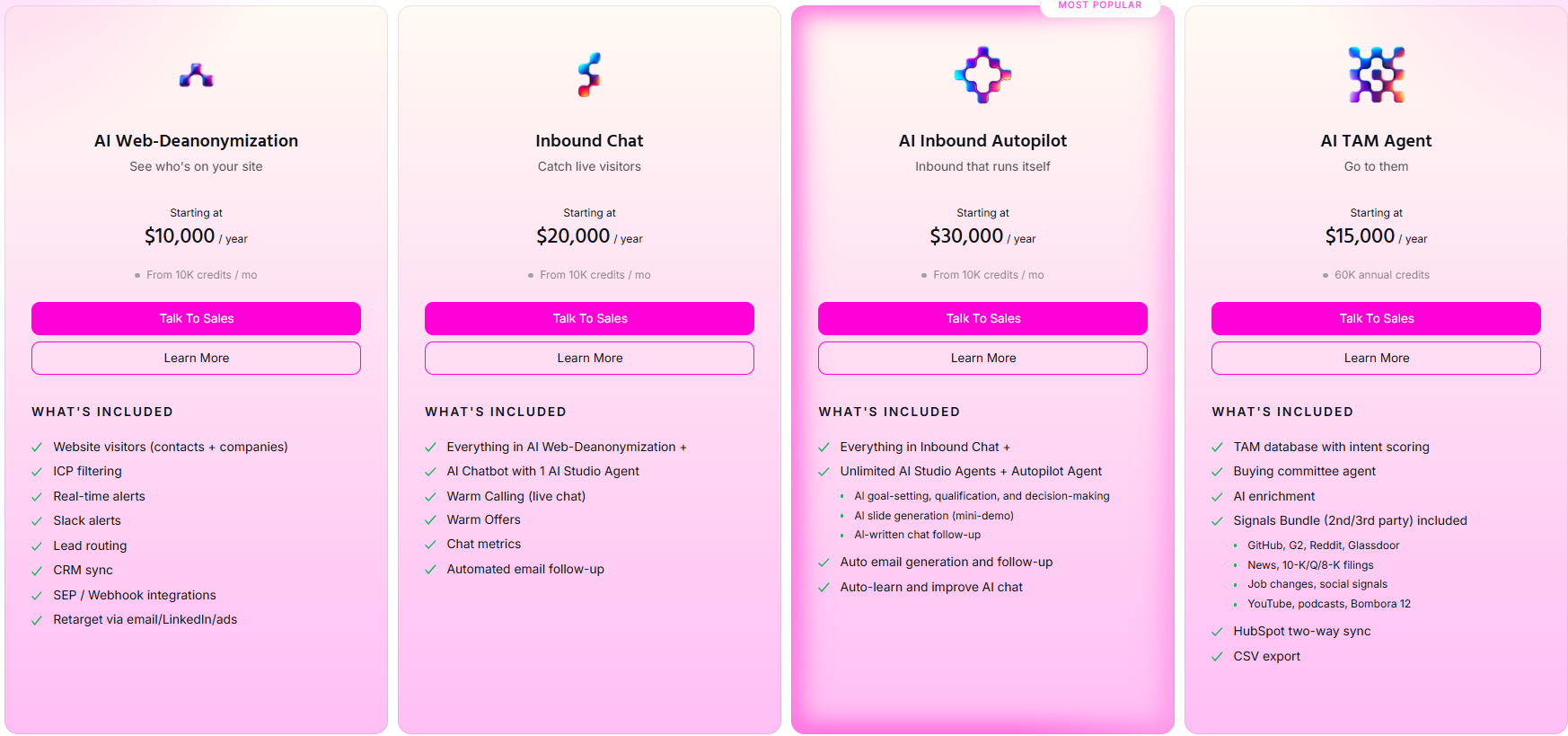
Pricing: Credit-based, not per-seat. TAM Agent starts at $10K/year (3K credits/month). Inbound Agent starts at $12K/year (5K credits/month). Full GTM (both agents + full context graph) is custom. Your entire team can access without per-user scaling. See pricing or calculate ROI.
6sense: ABM + Intent Data Pioneer
Best for: Enterprise marketing teams running account-based marketing who need third-party intent data at scale.
What they do well: One of the broadest third-party intent data networks. Account identification, predictive analytics, ABM orchestration. Surpassed $200M ARR in 2024. Named a Leader in Forrester's Wave for Revenue Marketing Platforms for B2B (Q1 2026).
The GTM engineer's take: 6sense answers "who's researching your category" even when they haven't visited your site. That's valuable upstream signal. But the signals are noisy without dedicated RevOps to operationalize them. The GTM engineer uses 6sense as an input: which accounts are showing intent? Then Warmly identifies when they actually show up and engages them.
Where they beat Warmly: Breadth of third-party intent data and enterprise ABM orchestration. Their Forrester Leader status is deserved for large enterprises running multi-channel ABM. We lost 7 deals to 6sense in the same period we won 8. Genuinely competitive.
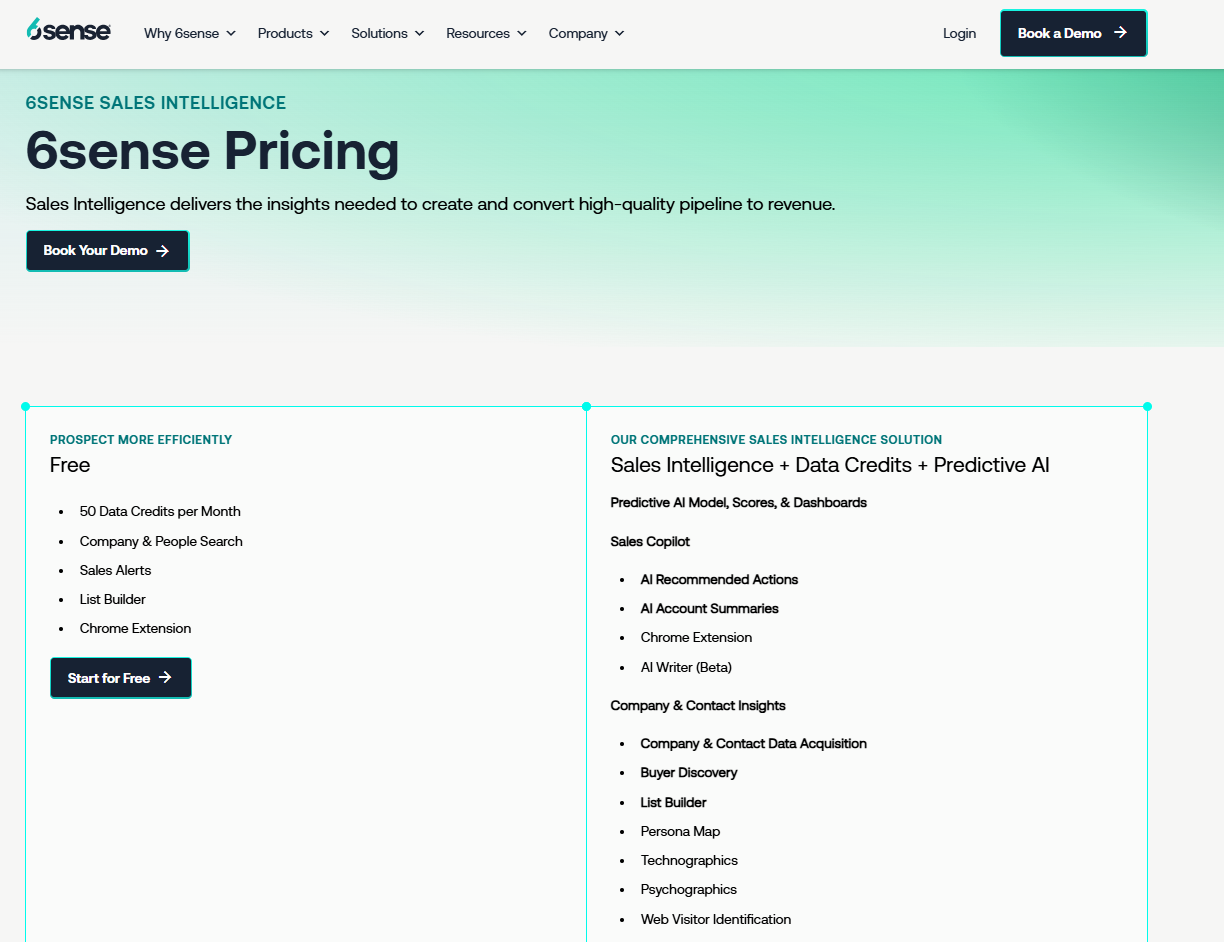
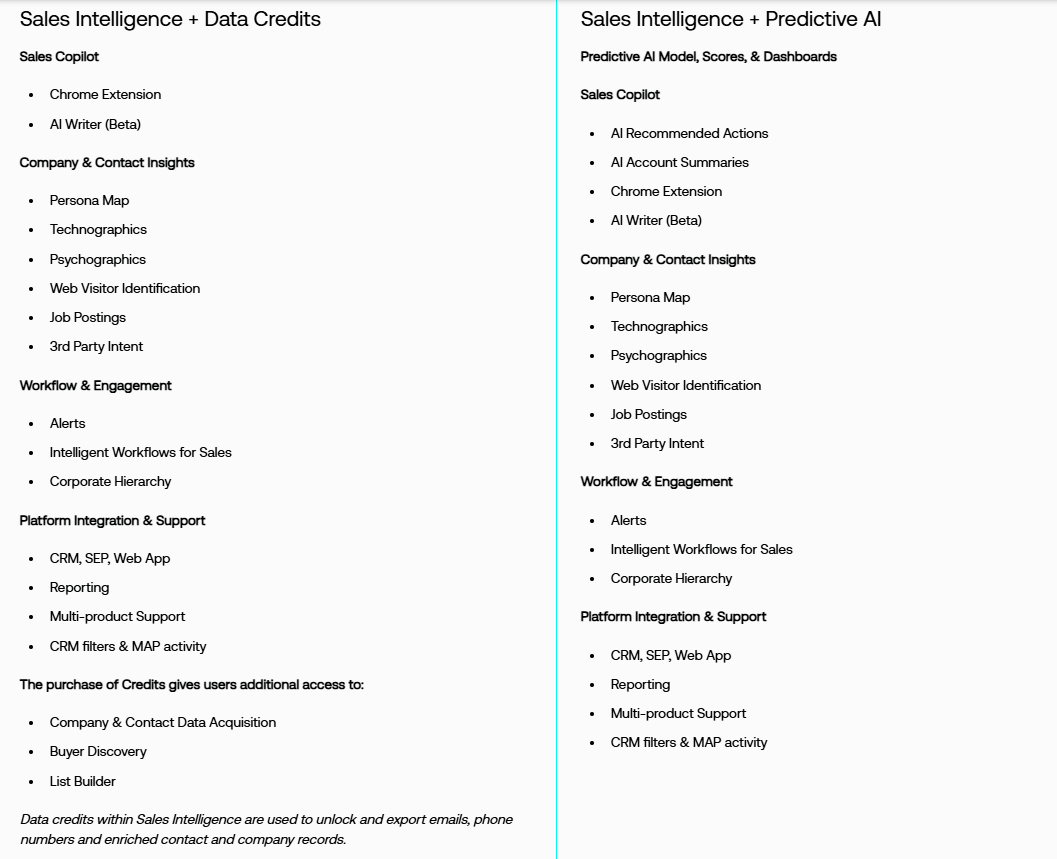
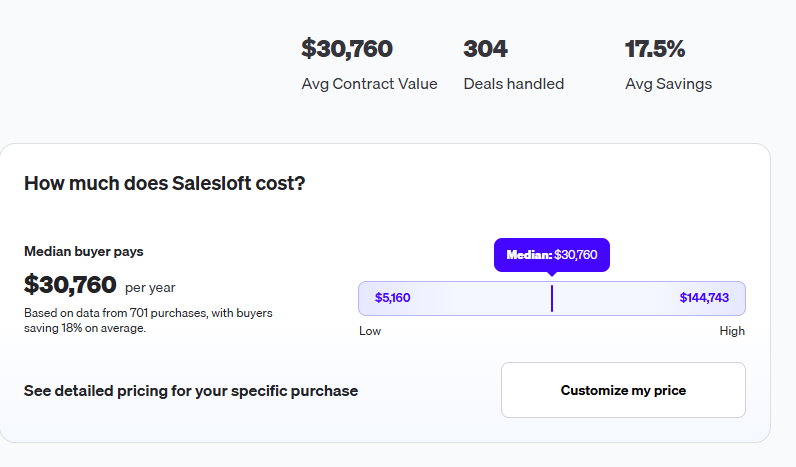
Pricing: Free tier (50 credits/month). Team starts at $30K/year. Growth: ~$50K/year. Enterprise: $60K-$100K+/year. Vendr median: $55,211/year.
ZoomInfo: The Contact Database + Signals
Best for: Teams that need the largest B2B contact database with intent and engagement signals.
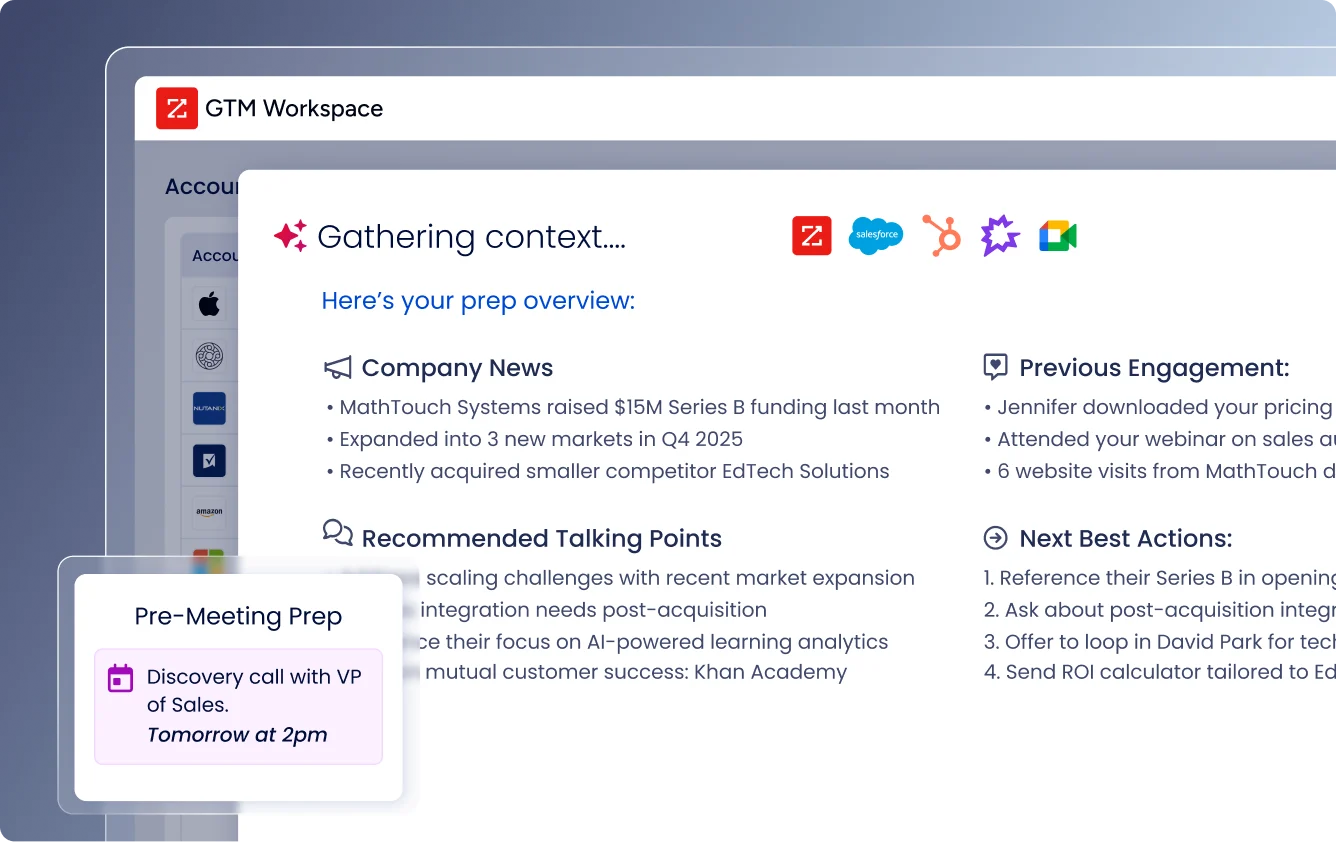
What they do well: Largest B2B contact database. 15,000+ customers. $1.2B in revenue (2024). Acquired Chorus ($575M) for conversation intelligence.
The GTM engineer's take: ZoomInfo is the contact data layer. The GTM engineer uses it to build and enrich buying committees, fill gaps in contact data, and feed outbound lists. But the days of "buy ZoomInfo, export list, spray and pray" are over. The data needs to be connected to intent signals and buyer journey context to be useful.
We're seeing 7+ competitive wins per month against ZoomInfo. Teams that bought it for the database now want intent + engagement automation on top.
Where they beat Warmly: Sheer database size. More contact records than anyone. For high-volume outbound, stronger choice.
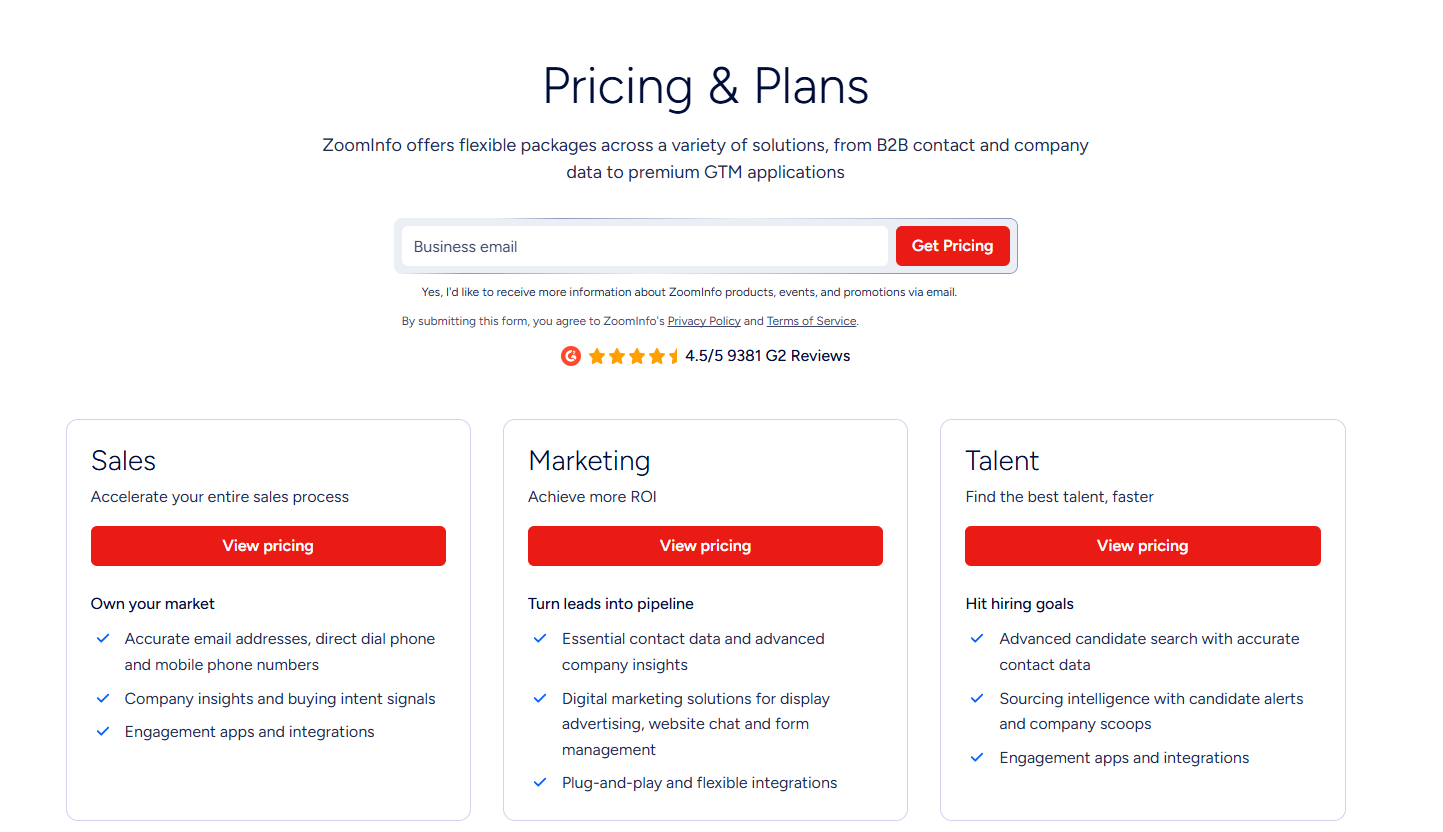
Pricing: Professional: $15K/year (5,000 credits). Advanced: $24K/year. Elite: $40K/year. Common total: $40K+ with add-ons.
Salesforce Revenue Intelligence (Einstein)
Best for: Enterprise teams deep in Salesforce who want native AI capabilities.
If your entire GTM runs on Salesforce, Einstein gives you forecasting, conversation insights, and deal scoring without leaving the CRM.
The reality check: Expensive. The full stack (Enterprise CRM + Revenue Intelligence + Einstein Conversation Insights + Agentforce) runs $560-$792/user/month. Implementation takes 2-3 months and runs $75K-$150K for a 50-person team. 67% of organizations experience adoption challenges during deployment.
| Add-On | Per User/Month |
|---|
| Salesforce Enterprise | $165 |
| Revenue Intelligence | $220 |
| Einstein Conversation Insights | $50 |
| Agentforce for Sales | $125 |
| Total | $560/user/month |
Outreach: Sales Engagement + Revenue Intelligence
Best for: Sales teams wanting the strongest email/call sequence automation with revenue intelligence features.
Built the sales engagement category. Leader in both Gartner's MQ for Revenue Action Orchestration and Forrester's Wave for Revenue Orchestration Platforms. The GTM engineer uses Outreach as the execution layer for multi-step sequences once signals and scoring identify the right accounts.
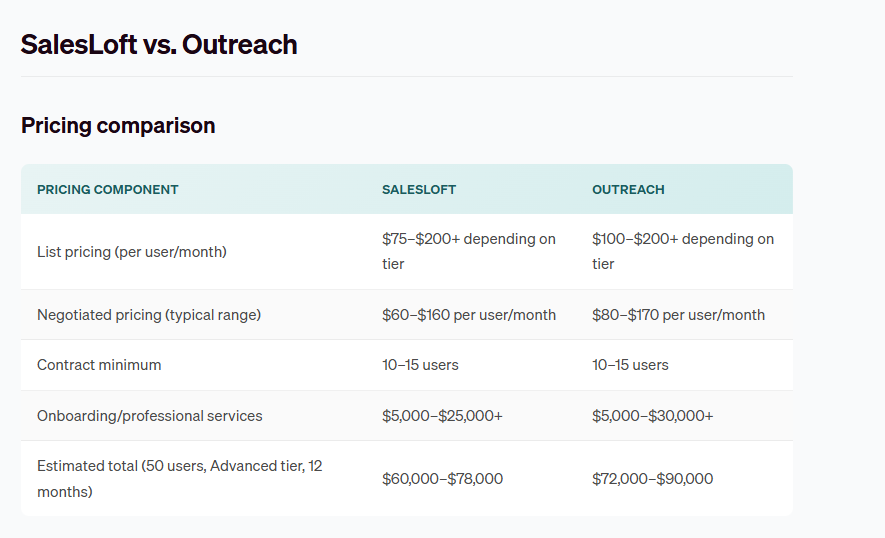
Pricing: ~$100/user/month. 50-user deployment: $65K-$85K/year. No platform fees.
People.ai and Revenue Grid
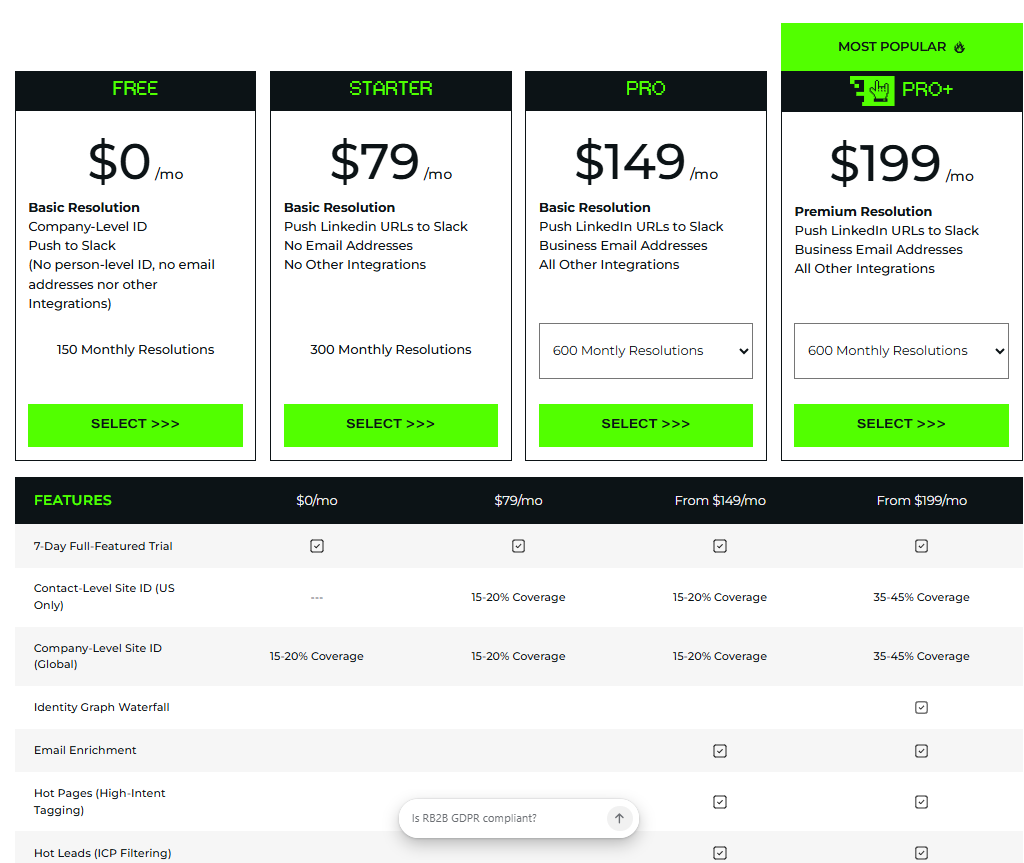
People.ai ($50-$100/user/month estimated): Automatic activity capture and buyer engagement scoring. Named Visionary in Gartner MQ. Good for enterprises that want CRM data accuracy without manual entry.
Revenue Grid ($30-$149/user/month): Budget-friendly full stack. Activity capture at $30/user/month, full RI at $149/user/month. Good entry point for testing whether revenue intelligence delivers value.
Pricing Comparison (Real Numbers)
Real numbers. Not estimates. Published data and Vendr marketplace data.
Side-by-Side: 50-Person Revenue Team
| Platform | Annual Cost (50 users) | Per-User/Month | Pricing Model | Implementation |
|---|
| Gong (Full Stack) | $149K-$200K | $250-$333 | Per-seat + platform fee | $7.5K-$65K |
| Clari (Full Stack) | $120K-$150K | $200+ | Per-seat | $15K-$75K |
| Salesforce Einstein (Full Stack) | $336K-$475K | $560-$792 | Per-seat + add-ons | $75K-$150K |
| 6sense (Growth) | $50K-$100K | N/A (account-based) | Annual contract | Included |
| ZoomInfo (Advanced) | $24K-$40K+ | N/A (credit-based) | Credits + seats | Included |
| Outreach | $65K-$85K | $100-$140 | Per-seat | Included |
| People.ai | $30K-$60K | $50-$100 | Per-seat | Custom |
| Revenue Grid | $18K-$89K | $30-$149 | Per-seat | Included |
| Warmly | $10K-$35K | N/A (credit-based) | Credits/month | 30 min setup |
The hidden cost nobody talks about: Implementation. Gong quotes $7,500-$65,000. Clari: $15K-$75K. Salesforce: $75K-$150K. Warmly's implementation is a JavaScript snippet. 30 minutes. Data flowing the same day.
The other hidden cost: Your team's time. Forrester found that 46% of RevOps teams say their processes are mostly manual and 49% say processes aren't flexible enough for fast response. If your revenue intelligence tool requires 8-16 weeks to deploy and a dedicated admin to maintain, you haven't solved the problem. You've moved it.
Evaluating costs right now? Use our ROI calculator to see what Warmly would cost for your traffic volume. Or book a 15-minute demo and we'll run the numbers with you.
How I 3x'd Pipeline as a One-Person Marketing Team
Nobody writes this part. Every blog post about GTM reads like a job description. Here's what I actually do.
The Weekly Cycle
Monday: Google Search Console + SEMrush. Find content gaps. Which competitors rank for terms we should own? Map demand.
Tuesday-Wednesday: Write. Blog posts, landing pages, playbooks, video scripts. Claude Code turns call transcripts into playbooks in twenty minutes. SEO + AEO optimized.
Thursday: Paid acquisition. Google Ads to landing pages. Build LinkedIn audiences from TAM data. Meta ads. YouTube. Retargeting. Push it all live.
Friday: Analyze. What's working? What's not? Shift budget. Kill underperformers. Double down on winners. LLM-as-a-judge for attribution across the full buyer journey.
Always running: Warmly identifying visitors. AI chat engaging prospects. Automated sequences nurturing non-ICP accounts. Ad audiences updating. The system works while I sleep.
The Stack
- Claude Code - Content creation, analysis, playbooks, strategy
- Warmly - Visitor identification, intent scoring, AI chat, buying committees
- Google Search Console + SEMrush - Content gap analysis, keyword research
- Google Ads - Paid search to landing pages
- LinkedIn Ads + Meta Ads - Retargeting and audience building
- LinkedIn organic - Whole team posting via Good Market. Social content repurposed from offsites into YouTube, Instagram, TikTok shorts
- Higgsfield.ai + Leonardo - AI-generated images and videos for social and ads
- Customer.io - Email sequences, HTML templates, behavior-triggered nurture
- Outreach - Sales sequences via API integration
- Heyreach - LinkedIn outreach automation
- HubSpot - CRM, deal tracking
The Compounding Effect
Month 1: Build the infrastructure. Content, landing pages, ad campaigns, identification, scoring.
Month 2: Case studies start generating. Content drives traffic. Traffic gets identified. Identified visitors convert. Conversions become case studies.
Month 3: Pour more. The case studies make the ads work better. The content ranks. The retargeting pool grows. Every dollar works harder because the whole system is connected.
Pipeline went from $500K to $1.4M. The compounding hasn't stopped.
Shanzey on my team said it: "At my previous company, the marketing system involved so many people and so many systems and nothing was really automated. Over here, two or three people are running the show."
The Punchline
The marketing leader and the GTM engineer are the same person.
A year ago, to do what I do now, you'd need a content marketer, a demand gen manager, a paid media buyer, and a GTM engineer. Four headcount minimum.
I fired those job descriptions and hired AI. Not because the work is less complex. Because execution is instant. The hard part is making the right decisions.
Want to run GTM like this? Warmly handles the visitor identification, intent scoring, buying committee mapping, and AI outreach. You bring the strategy. Book a demo
The Future: AI Agents Run the GTM System
AI Agents Will Replace Dashboards
Every vendor claims "AI agents" now. Gong has 12+. Aviso claims 50+. Clari promises an "Autonomous Revenue System."
Most are glorified automations with a chatbot interface. Tellius put it well: "Most agentic AI propositions lack significant value or ROI because current models lack the maturity to autonomously achieve complex business goals."
The platforms that win won't have the most agents. They'll have agents that actually do something useful autonomously. Not "summarize this call" but "identify that this ICP-fit VP of Sales just viewed the pricing page for the third time this week, pull their LinkedIn activity, check the buying cycle, and draft a personalized outreach sequence."
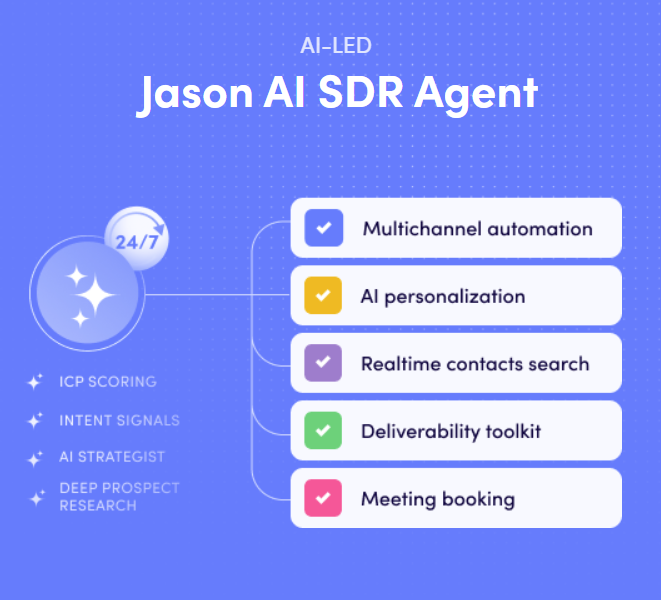
That's what we're building with Warmly's TAM Agent. Not 50 task-specific agents. One system that orchestrates the full workflow from intent scoring to buying committee identification to automated engagement.
The Autonomous System That Works By Itself
The GTM engineer's ultimate goal: build the system that doesn't need you.
Trust-gated execution gets there incrementally. Start with human approval on every action. Expand to override windows. Eventually, fully autonomous within guardrails. The learning engine improves continuously. Every outcome, every decision trace, feeds back into better scoring and better decisions.
The marketing team of one becomes the norm for companies under $50M ARR. Not because the work got simpler. Because the infrastructure got smarter.
Wearable AI Devices Will Digitize In-Person Conversations
Events, dinners, conferences. The last undigitized channel. Wearable AI will capture these conversations, extract signals, and feed them into the same context graph. The GTM engineer who builds for this will have signal coverage that nobody else has.
Revenue Intelligence Starts Before the Conversation
The first two generations of revenue intelligence were reactive. Record a call. Analyze a pipeline. Forecast a quarter.
Generation 3.0 is proactive. Identify the buyer. Score the intent. Engage automatically. Report what happened.
In 3 years, "revenue intelligence that only works after someone is in your pipeline" will seem as dated as manually logging calls in a CRM spreadsheet.
The Window Is Now
6sense and ZoomInfo contracts renewing across the market. Drift sunset, leaving thousands without a chat solution. Rep.ai/ServiceBell shut down. Clari-Salesloft merger still integrating.
Every one of those events is a window where teams reevaluate. If you're in one, you have leverage. Use it.
AI Is Already Changing How Buyers Find You
15-20% of our inbound demo requests now come from people who found Warmly through ChatGPT or Claude. AI referrals are our fastest-growing discovery channel. Eight prospects in one month cited an AI tool as how they found us.
Content needs to be optimized for AI answer engines, not just Google. The FAQ section below is structured for that. Each answer starts with a standalone sentence an AI can cite directly.
Ready to see Warmly on your website? We'll identify your visitors live during the demo. No slides, no pitch deck. Just your actual traffic, identified in real-time. Book your demo here
Decision Framework: Which Platform Fits Your Team
By Company Stage
| Stage | Revenue | Team Size | Best Fit | Why |
|---|
| Seed/Series A | <$5M ARR | 1-10 reps | Warmly or Revenue Grid | Credit-based pricing scales with you; fast setup |
| Series B | $5-20M ARR | 10-30 reps | Warmly + Outreach or Gong | Layer intent signals with engagement automation |
| Series C+ | $20-50M ARR | 30-100 reps | Gong or Clari + Warmly | Full-stack RI + website intent complement each other |
| Enterprise | $50M+ ARR | 100+ reps | Gong + Clari or Salesforce Einstein | Enterprise-grade forecasting + conversation intelligence |
By GTM Motion
| Primary Motion | Best Choice | Why |
|---|
| Product-led growth | Warmly | Identify free-tier users researching paid features |
| Inbound-led | Warmly + Gong | Capture anonymous visitors, coach conversion calls |
| Outbound-heavy | ZoomInfo + Outreach | Contact database + sequence automation |
| ABM-focused | 6sense or Warmly | 6sense for broad intent; Warmly for website-level engagement |
| Channel/partner | Clari | Forecast across multiple revenue streams |
By GTM Engineer Maturity
| Maturity Level | Description | Recommended Stack |
|---|
| Level 1: Manual | Disconnected tools, manual processes | Start with Warmly for visitor ID + one outreach tool |
| Level 2: Connected | Tools integrated, basic automation | Add intent data (6sense or Bombora), build retargeting loops |
| Level 3: Orchestrated | AI agents running, trust gates in place | Full context graph, decision traces, autonomous engagement |
| Level 4: Autonomous | System learns and improves itself | One-person marketing team. The infrastructure runs the GTM. |
Build vs. Buy
The DIY Stack
| Capability | Tool | Annual Cost |
|---|
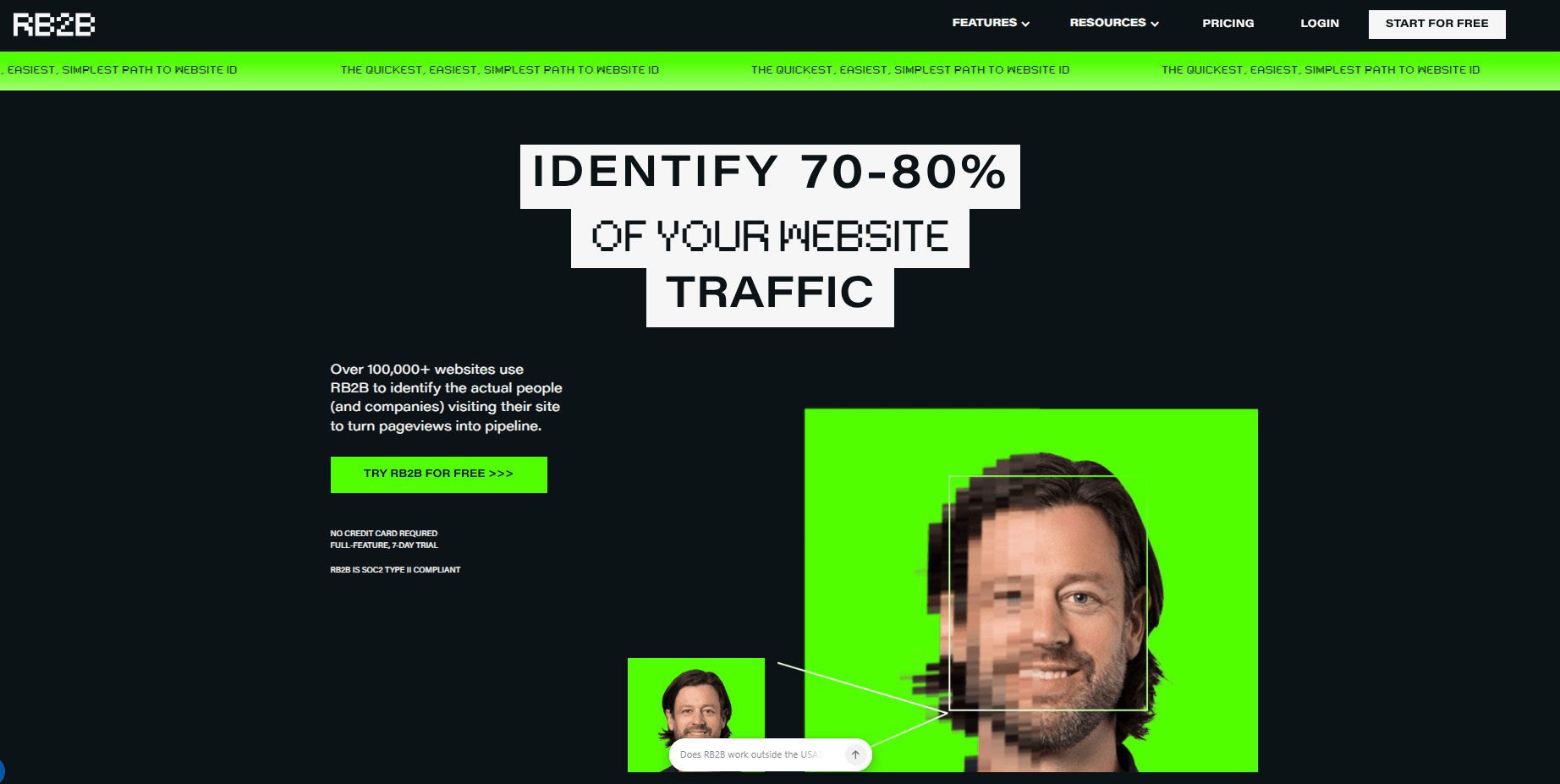
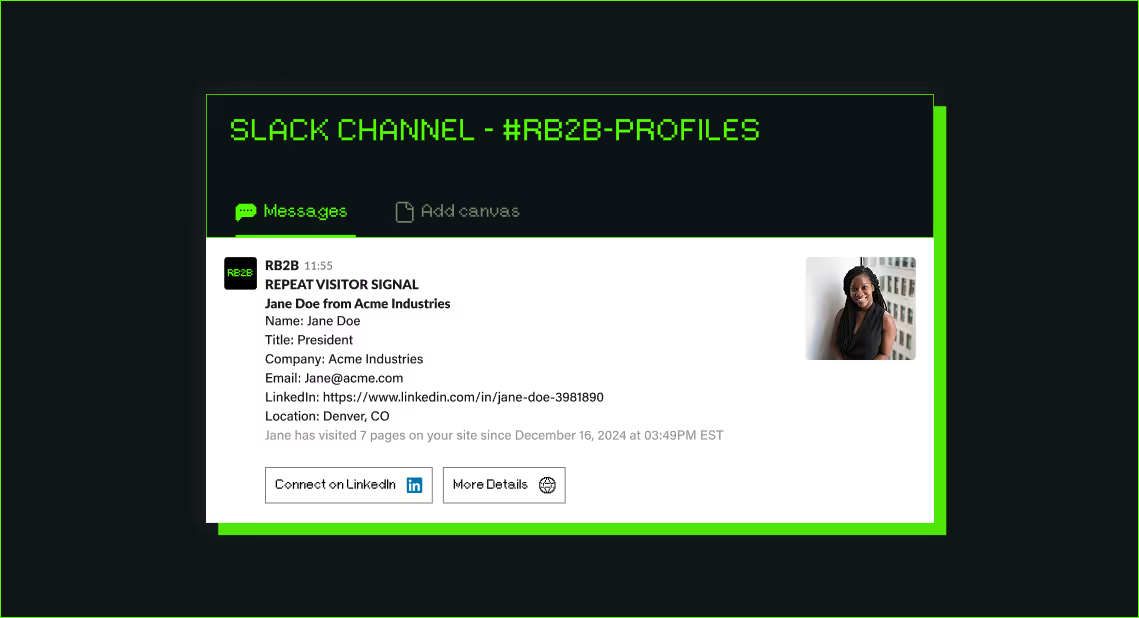
| Website visitor identification | Clearbit Reveal or RB2B | $12K-$24K |
| Intent data | Bombora or G2 | $20K-$40K |
| Chat widget | Intercom | $12K-$24K |
| Enrichment | Clearbit or Apollo | $6K-$18K |
| Outreach automation | Outreach or Salesloft | $60K-$100K |
| Data orchestration | Clay | $12K-$24K |
| Contact database | ZoomInfo | $24K-$40K |
| Total DIY | 7 tools | $146K-$270K/year |
Plus 1-2 full-time RevOps headcount to stitch it together ($150K-$300K/year loaded). Plus 6-12 months to build and maintain integrations.
The Platform Approach
| Option | What You Get | Annual Cost |
|---|
| Warmly (mid-market) | Visitor ID + intent + chat + AI outreach + enrichment | $10K-$35K |
| Gong (full stack) | Calls + forecasting + engagement | $149K-$200K |
| Clari+Salesloft | Forecasting + engagement + conversation intel | $120K-$150K |
The math usually favors buying. Unless you're at 500+ reps where custom infrastructure pays off. The real cost isn't software licenses. It's the RevOps engineer spending 60% of their time maintaining Zapier connections instead of optimizing your GTM motion.
The GTM engineer makes this decision. Build vs. buy isn't a one-time choice. It's continuous. The GTM engineer evaluates which pieces to build custom (where you need differentiation) and which to buy (where commodity solutions work). Then they connect everything.
FAQs
What is a GTM engineer?
A GTM engineer is a role that builds, connects, and orchestrates the technical infrastructure behind a company's go-to-market motion. In 2024, the role was defined narrowly as someone who operates Clay and sends cold email. In 2026, the GTM engineer builds full-stack revenue infrastructure: connecting SEO, paid ads, landing pages, visitor identification, intent scoring, multi-channel outreach, retargeting, content, and CRM into one AI-powered system. The goal is to build infrastructure that allows AI to see as much and do as much as possible. At many Series A-C companies, this role is merging with the head of marketing.
What tools does a GTM engineer need?
A GTM engineer needs tools across the full go-to-market stack: a revenue intelligence platform like Warmly for visitor identification and intent scoring, an analytics layer (Google Search Console, SEMrush), paid media tools (Google Ads, LinkedIn Ads, Meta Ads), an email platform (Customer.io or similar), a CRM (HubSpot or Salesforce), an AI coding assistant (Claude Code) for content and automation, and optionally a contact database (ZoomInfo) and conversation intelligence tool (Gong). The critical capability is not any single tool but the connective tissue between them. The best GTM engineers build a unified context graph that connects all signals and enables AI agents to make autonomous decisions across channels.
GTM engineer vs marketing ops: what's the difference?
Marketing ops maintains existing systems (CRM administration, lead routing, data hygiene). A GTM engineer builds new infrastructure and connects systems together. Marketing ops ensures HubSpot is running correctly. The GTM engineer builds the context graph layer that sits on top of HubSpot, Warmly, Google Ads, LinkedIn Ads, and six other tools, making them work as one system. In practice at Series A-C companies, the GTM engineer often absorbs marketing ops responsibilities, especially when AI handles the execution and the human focuses on architecture and strategy.
How does a GTM engineer use revenue intelligence?
A GTM engineer uses revenue intelligence platforms as components in a larger system. Warmly provides visitor identification and intent scoring. 6sense provides third-party intent signals. Gong provides conversation intelligence. The GTM engineer connects these signals into a unified context graph, builds AI agents that act on the combined signals, and creates feedback loops where outcomes improve future scoring. The key shift: revenue intelligence becomes an input to the GTM system, not a standalone dashboard that humans manually check.
Can one person run GTM for a startup?
Yes. At Warmly (Series B), one person runs product and marketing, growing pipeline from $500K to $1.4M+ in three months. The key is building infrastructure that compounds: content creates traffic, traffic gets identified by Warmly, identified visitors get scored, high-fit accounts get automated outreach, conversions become case studies that improve ads and content. AI handles execution (Claude Code for content, Warmly for identification and outreach, Customer.io for email). The human handles strategy, taste, and decisions. This model works for companies under $50M ARR. Above that, you likely need specialists, but the GTM engineer builds the system they work within.
What is a revenue intelligence platform?
A revenue intelligence platform is software that uses AI and data to capture, analyze, and act on buying signals across your revenue funnel, including website visits, intent data, CRM activity, sales conversations, and buying committee behavior. The goal is to help revenue teams identify who's most likely to buy and engage them effectively. Modern platforms range from conversation intelligence tools like Gong (which analyze sales calls) to signal-based platforms like Warmly (which identify anonymous website visitors and orchestrate AI-driven outreach). In 2026, these platforms are increasingly components that GTM engineers connect into unified revenue systems rather than standalone solutions.
What are the best revenue intelligence platforms in 2026?
The best revenue intelligence platforms in 2026 are Gong (conversation intelligence leader, #1 in Gartner MQ), Clari (pipeline forecasting leader, merged with Salesloft), Warmly (real-time website intent + AI orchestration), 6sense (ABM + third-party intent data), ZoomInfo (largest B2B contact database), Outreach (sales engagement leader), Salesforce Einstein (CRM-native intelligence), and Revenue Grid (budget-friendly option). The best choice depends on your GTM motion: Gong for call coaching, Clari for forecasting, Warmly for identifying anonymous website visitors, and 6sense for account-based marketing at scale.
What is the difference between revenue intelligence and conversation intelligence?
Revenue intelligence is the broader category; conversation intelligence is a subset. Conversation intelligence specifically analyzes sales calls and meetings (recording, transcription, coaching insights). Revenue intelligence encompasses conversation data plus website intent signals, CRM activity, buying committee mapping, pipeline forecasting, and increasingly, AI-powered outreach orchestration. Gong started as pure conversation intelligence and expanded into revenue intelligence. Warmly represents a different branch, focusing on pre-conversation signals (who's researching you) rather than post-conversation analysis (what happened on the call).
How does revenue intelligence work?
Revenue intelligence platforms work by collecting buyer signals from multiple sources (website visits, email engagement, CRM updates, third-party intent data, social activity, and sales conversations), then using AI to score accounts by likelihood to buy and surface recommended actions. Advanced platforms like Warmly take this further by automating the response: when a high-fit account shows buying signals, AI agents can automatically initiate personalized outreach through chat, email, or LinkedIn without human intervention.
How much does a revenue intelligence platform cost?
Revenue intelligence platform pricing ranges from $30/user/month (Revenue Grid entry tier) to $792/user/month (Salesforce full stack). Mid-range platforms like Gong run $1,600/user/year plus a $5K-$50K platform fee. Clari starts at ~$100/user/month for core forecasting. 6sense's median deal is $55K/year according to Vendr. Warmly uses credit-based pricing (not per-seat), starting at $10K/year for TAM and $12K/year for Inbound. Implementation costs add $7,500-$150,000 depending on the platform. Always ask about total first-year cost including implementation, training, and add-on fees.
Do I need a revenue intelligence platform?
You likely need a revenue intelligence platform if your team has more than 1,000 monthly website visitors and can't answer "who visited our site this week and are they a good fit?" in under 30 seconds. You also benefit from RI if you're running 3+ disconnected sales and marketing tools, experiencing declining outbound response rates, or struggling with pipeline visibility. You probably don't need one if you're pre-product-market fit, have fewer than 1,000 monthly visitors, close deals under $2,000, or have a team of 1-2 people managing relationships manually.
Can I use revenue intelligence without Salesforce?
Yes. While Salesforce Revenue Intelligence (Einstein) requires Salesforce CRM, most standalone platforms work with multiple CRMs. Warmly integrates with both HubSpot and Salesforce. Gong, Clari, 6sense, ZoomInfo, and Outreach all support HubSpot, Salesforce, and in many cases Microsoft Dynamics. Warmly also pushes data to Slack, Outreach, Salesloft, and supports webhook-based integrations for custom CRMs.
What data does a revenue intelligence platform use?
Revenue intelligence platforms use four categories of data: (1) First-party signals from your website, including visitor identification, page views, time on site, and form fills. (2) Second-party engagement data, including CRM activity, email opens, social interactions, and ad clicks. (3) Third-party intent data, including signals from sources like Bombora, G2, and TrustRadius showing accounts researching your category elsewhere. (4) Conversation data, including call recordings, transcripts, and meeting notes. Some platforms like Warmly also incorporate technographic data (what technology a company uses), firmographic data (company size, industry, funding), and buying committee intelligence (who the decision-makers are at target accounts).
What is the difference between revenue intelligence and CRM?
A CRM (Customer Relationship Management) stores relationship data and manages pipeline. A revenue intelligence platform analyzes signals to identify who's likely to buy and what actions to take. Your CRM tells you that a deal is in the "Discovery" stage. Revenue intelligence tells you that three stakeholders from that account just visited your pricing page, their company posted a job for "revenue operations manager," and a competitor's Bombora intent score dropped. Think of CRM as the database and revenue intelligence as the analysis and action layer on top.
What is Revenue Action Orchestration (RAO)?
Revenue Action Orchestration (RAO) is Gartner's new category name for what was previously called revenue intelligence, introduced in their first Magic Quadrant for this space in December 2025. The name change reflects the market's shift from passive intelligence (analyzing data and generating insights) to active orchestration (taking automated actions based on those insights). RAO platforms combine sales engagement, conversation intelligence, and revenue intelligence into unified systems that not only tell you what's happening but help execute the response. Leaders in the first Gartner MQ for RAO include Gong (#1), Outreach, and Clari.
How do revenue intelligence platforms handle data privacy?
Revenue intelligence platforms use different methods depending on the data type. Website visitor identification typically uses functional cookies for person-level matching and IP lookup for company-level identification. Third-party intent data is aggregated and anonymized at the account level. GDPR compliance varies by platform, but most offer EU data residency options and consent management. At Warmly, company-level identification works without cookies (using reverse IP lookup), while person-level identification uses functional cookies that comply with major privacy frameworks. Always verify a platform's data processing agreements and privacy certifications for your specific jurisdiction.
Further Reading
GTM Engineer & Revenue Intelligence Blog Posts
Warmly Product Pages
External References & Analyst Reports
Last Updated: March 2026