Best customer support chatbot AI with visitor identification (Q4 2025)
Customer support chatbots with visitor identification can recognize and personalize conversations for the 95% of B2B website visitors who never fill out forms. Leading platforms like Warmly combine de-anonymization with AI chat to greet visitors by name, pull CRM history, and route high-intent leads instantly. This technology transforms anonymous browsing into qualified pipeline worth millions by matching IP addresses and behavioral signals to real accounts.
Key Facts
• Only 2-5% of website visitors typically identify themselves through forms, leaving 95-98% as anonymous traffic that traditional chatbots cannot personalize for
• Visitor identification platforms achieve varying accuracy rates, with most solutions correctly identifying visitors only 5-30% of the time
• Companies using de-anonymization report significant results: 10x faster qualification rates, 150% increases in MQLs, and $7 million in qualified pipeline
• The live chat software market is projected to grow from $1.14 billion in 2025 to $2.09 billion by 2033, driven by demand for personalized engagement
• Compliance requirements including CCPA and ADMT regulations require businesses to disclose visitor identification practices and provide opt-out mechanisms
• By 2029, agentic AI is predicted to autonomously resolve 80% of common customer service issues, reshaping how visitor identification integrates with support automation
Most chatbots still greet roughly 95% of website traffic as complete strangers. That gap between anonymous browsing and meaningful conversation costs B2B teams serious revenue. When 96% to 98% of website visitors never identify themselves, every chat session that starts with "Hi, how can I help you?" is a missed opportunity to personalize, route, and convert.
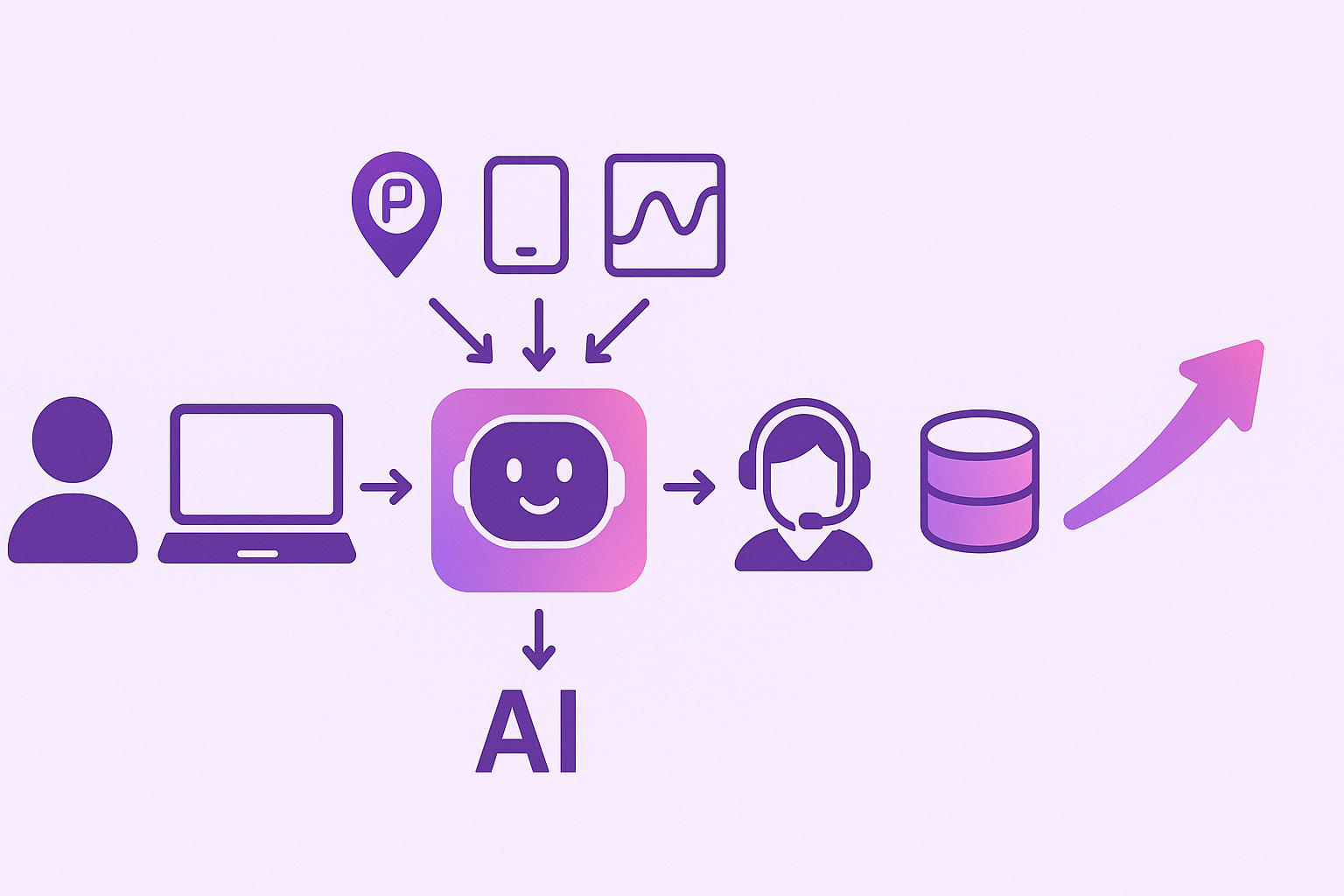
A customer support chatbot with visitor identification closes that gap. By matching IP addresses, device signals, and behavioral data to real accounts, the chatbot can greet visitors by name, pull CRM history, and route high-intent leads to the right rep before a form ever gets filled out.
This guide breaks down why de-anonymization matters, which platforms actually deliver it, and how to evaluate them for your stack in 2025.
Why most chatbots still talk to strangers
The de-anonymization gap is not a minor inconvenience. It is a revenue leak. According to Salespanel, up to 98% of potential revenue can be lost simply because businesses cannot see who is browsing their site.
Even for well-optimized campaigns, only 5% of web visitors will submit a form. The other 95% browse, evaluate, and leave without ever raising their hand. Traditional chatbots treat every one of those visitors identically, missing the chance to engage high-intent buyers with relevant context.
The live chat software market reflects this opportunity. The global market is projected to grow from $1.14 billion in 2025 to $2.09 billion by 2033, growing at 7.86% annually. That growth is driven by businesses recognizing that real-time engagement requires more than scripted responses. It requires knowing who you are talking to.
Without visitor identification, chatbots default to generic qualifying questions. With it, they can skip the friction and move straight to value.
How visitor identification turbo-charges customer support
When a chatbot knows who is on the other end of the conversation, everything changes.
Personalization at first contact. Clearbit's advanced personalization solution ties anonymous visitors to accounts, enabling businesses to show the ideal headline, CTA, and content to convert them. Instead of asking "What company are you with?", the chatbot can reference the visitor's industry, company size, or even open opportunities in the CRM.
Faster routing to the right rep. Warmly's AI chat uses Warm Intent Signals to match each lead's specific needs. If a prospect absolutely needs to speak with a person, the system can loop an SDR or sales rep directly into a live chat or video call session on the site.
Higher conversion through qualification. According to Salesforce, chatbots qualify leads by asking targeted questions, analyzing user responses, and assessing their potential to convert. When that qualification happens against enriched visitor data rather than cold asks, conversion rates climb.
The result is a support experience that feels less like a form and more like a conversation with a colleague who already knows the context.
Key capabilities to look for in 2025 chatbots
Not every chatbot with "AI" in the name delivers real visitor identification. Here are the capabilities that separate genuine de-anonymization platforms from basic live chat:
| Capability |
Why It Matters |
| Real-time intent signals |
Platforms like Amplemarket track 20+ signals including website activity, company news, product usage, and CRM updates to prioritize high-intent leads |
| CRM sync |
Seamless integration with Salesforce, HubSpot, and other systems ensures visitor data flows directly into existing workflows |
| Human hand-off |
When complexity exceeds the chatbot's scope, instant routing to live reps preserves momentum |
| Multilingual analysis |
Twilio's Conversational Intelligence analyzes 100% of conversations across languages with automated PII redaction for compliance |
| Accuracy verification |
Industry accuracy varies wildly. Most visitor ID solutions get identities right 5-30% of the time, making verification methodology critical |
Key takeaway: Prioritize platforms that combine multiple signal types with native CRM integration rather than bolting identification onto generic chat infrastructure.
Staying compliant in a cookie-less world
Visitor identification brings regulatory considerations that cannot be ignored. As cookie-based tracking fades, compliance requirements are expanding.
CCPA and the Notice at Collection. Under California regulations, a business shall not collect categories of personal information other than those disclosed in its Notice at Collection. Any visitor identification must be disclosed upfront.
ADMT obligations. The California Privacy Protection Agency's regulations define Automated Decisionmaking Technology (ADMT) as "any technology that processes personal information and uses computation to execute a decision, replace human decisionmaking, or substantially facilitate human decisionmaking." Businesses using such technology must provide consumers with a Pre-use Notice.
Data broker registration. California's Delete Act requires registration for businesses that qualify as data brokers. The penalty is an administrative fine of $200 for each day the data broker fails to register.
Compliance checklist for visitor identification:
• Disclose data collection categories in privacy notices
• Provide ADMT opt-out mechanisms where required
• Verify data sources use consent-based collection methods
• Document data retention and deletion policies
• Monitor evolving state-level regulations beyond CCPA
Which customer support chatbots identify visitors in real time?
The market includes platforms ranging from pure visitor identification tools to full conversational AI suites. Here is how the leading options compare:
| Platform |
Primary Strength |
Match Rate / Accuracy |
Starting Price |
| Warmly |
De-anonymization + AI chat + live video |
Account and person-level identification |
Contact for pricing |
| Customers.ai |
Visitor ID accuracy verification |
2-7x more accurate than typical solutions |
Contact for pricing |
| Knock AI |
Multichannel B2B sales chat |
Contact and account-level IDs |
$499/month |
Warmly
Warmly combines visitor identification with conversational AI specifically built for B2B sales teams. The platform identifies anonymous traffic and ties them to real opportunities and target accounts in your CRM.
A sales team using Warmly reported "sourcing $7,000,000 of qualified pipeline" by reaching the right leads at the right time. The platform's AI chat leverages intent signals to deliver personalized conversations matched to each lead's specific needs.
Warmly also enables live video chat when prospects need human interaction. The platform claims users can qualify 10x faster and convert far more sales qualified leads than traditional approaches.
For B2B SaaS companies focused on website visitor identification and intent-based outbound, Warmly delivers the deepest integration of de-anonymization with conversational engagement.
Customers.ai differentiates on accuracy verification. The company conducted independent testing and found that most visitor ID solutions get identities right 5-30% of the time, while their solution claims 2-7x higher accuracy with a 2-18x higher True Match Rate.
The platform's G2 rating of 4.8 out of 5 from 429 reviews reflects strong user satisfaction. One reviewer noted: "Customers.ai has changed the way we view anonymous traffic and our customer interactions."
Customers.ai is particularly relevant for e-commerce and DTC brands using Klaviyo, where accurate visitor identification feeds directly into email automation workflows.
Knock AI
Knock AI focuses on converting buyer intent into qualified sales conversations across multiple channels. The platform identifies buyer intent in real time and understands who is reaching out, automatically routing conversations to the right sales rep or AI agent.
Case studies show meaningful funnel improvements:
Knock AI supports multichannel conversations across website chat, LinkedIn, WhatsApp, Slack, and Telegram, making it suitable for teams that engage buyers across platforms.
What kind of ROI can you expect?
The ROI from de-anonymized chat varies by implementation quality and go-to-market motion. Here are benchmarks from published case studies:
McKinsey research provides broader context on AI-driven personalization impact: AI-driven personalization can enhance customer satisfaction by 15 to 20 percent, increase revenue by 5 to 8 percent, and reduce the cost to serve by up to 30 percent.
The Ada case study illustrates how these gains compound. The company's VP of Growth noted: "People are hungry for dynamic brand interactions. Static landing pages and forms don't cut it anymore. In just a few months, Ada has lifted our conversion rate from lead to pipeline by 150%."
Implementation tips & hidden pitfalls
Deploying a visitor identification chatbot requires more than installing a script. Here are the challenges that trip up most teams:
Invest in NLP capabilities. One of the main challenges is the chatbot's ability to understand and respond to complex inquiries. Basic keyword matching fails when buyers ask nuanced questions. Prioritize platforms with robust natural language processing.
Monitor for AI issues. Twilio recommends using conversational intelligence to detect hallucinations, toxicity, and undesirable behaviors in AI responses. Automated monitoring catches problems before they damage customer relationships.
Differentiate in a crowded market. The conversational AI market is crowded, with vendors needing to understand rapidly evolving buyer needs and stand out from dozens of alternatives. The same applies to buyers evaluating platforms.
Implementation checklist:
• Map chatbot flows to existing sales qualification criteria
• Configure CRM field mappings before launch
• Establish baseline metrics for conversion comparison
• Train reps on hand-off protocols and context review
• Set up monitoring for accuracy degradation over time
• Document escalation paths for edge cases
How will agentic AI reshape support in 2026 and beyond?
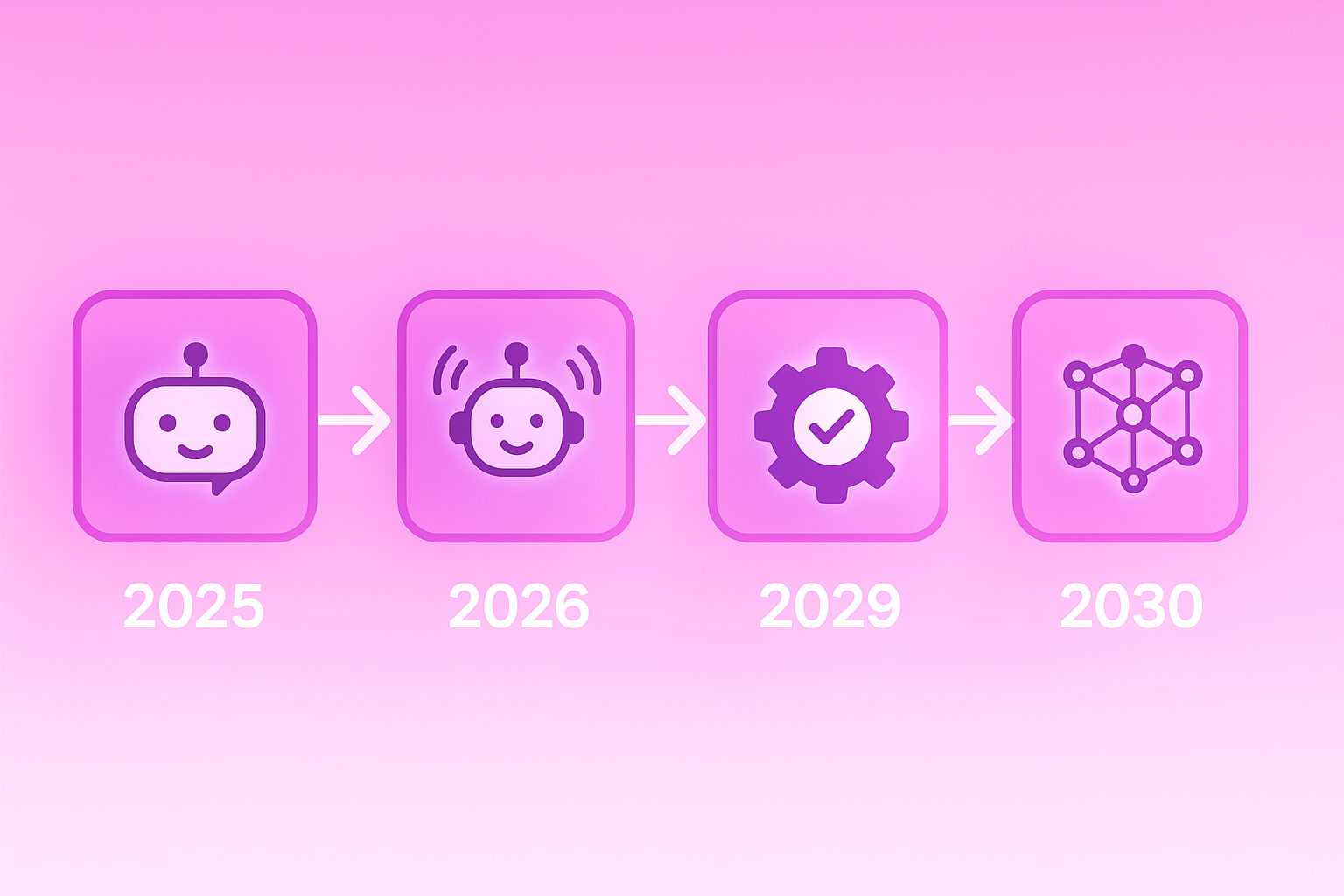
The conversational AI landscape is shifting from chatbots that answer questions to agents that take action. Gartner predicts that by 2029, agentic AI will autonomously resolve 80% of common customer service issues without human intervention, leading to a 30% reduction in operational costs.
By 2030, 45% of organizations will orchestrate AI agents at scale, embedding them across business functions. The near-term milestone: by 2026, 40% of all G2000 job roles will involve working with AI agents.
McKinsey frames the opportunity in dollar terms: agentic AI will power more than 60 percent of the increased value that AI is expected to generate from deployments in marketing and sales. Early applications suggest gen AI could unlock $2.6 to $4.4 trillion in annual value.
The practical implication for 2025 buyers: choose platforms with clear roadmaps toward agentic capabilities. As McKinsey notes, "Gen AI agents eventually could act as skilled virtual coworkers, working with humans in a seamless and natural manner."
Key takeaways
Most chatbots still treat 95% of website visitors as strangers, creating a revenue gap that visitor identification directly addresses. The platforms that combine de-anonymization with conversational AI enable personalized engagement, faster routing, and higher conversion rates.
When evaluating options:
• Verify match rate claims with independent accuracy testing
• Prioritize native CRM integration over third-party connectors
• Confirm CCPA and ADMT compliance capabilities
• Look for clear agentic AI roadmaps for future-proofing
Warmly offers B2B sales teams a purpose-built solution that greets ideal buyers with AI chatbots when they land on the site, combining visitor identification with intent signals and seamless human hand-off. For teams looking to convert anonymous traffic into qualified pipeline, it is worth exploring how Warmly's AI Chat can integrate with your existing sales workflow.
Frequently Asked Questions
What is visitor identification in chatbots?
Visitor identification in chatbots involves using data like IP addresses and behavioral signals to recognize and personalize interactions with website visitors, enhancing engagement and conversion rates.
Why is de-anonymization important for chatbots?
De-anonymization allows chatbots to personalize interactions by identifying visitors, which can significantly increase conversion rates and improve customer engagement by providing relevant context and faster service.
How does Warmly's AI chat enhance customer support?
Warmly's AI chat uses visitor identification and intent signals to personalize interactions, route high-intent leads to the right representatives, and enable live video chats, improving conversion rates and customer satisfaction.
What are the compliance considerations for visitor identification?
Compliance considerations include adhering to regulations like CCPA, which requires disclosing data collection practices and providing opt-out mechanisms for automated decision-making technologies.
What capabilities should you look for in a 2025 chatbot?
Key capabilities include real-time intent signals, CRM integration, human hand-off, multilingual analysis, and accuracy verification to ensure effective visitor identification and engagement.
Sources