Best GTM agents for de-anonymizing traffic: Match rate guide
GTM agents for de-anonymizing website traffic achieve vastly different match rates, with Warmly delivering 65%+ company-level and 15-25% person-level identification through its data waterfall approach, while competitors like Leadpipe reach 30-40% using deterministic matching. The most realistic 2026 benchmarks for B2B companies range from 30-65% for company identification and 5-20% for person-level matches.
At a Glance
• Top performers achieve 30-65% company-level match rates, with Warmly reaching 65%+ through multi-source data aggregation
• Person-level identification remains limited at 5-20% across most platforms due to privacy constraints and remote work complexities
• 98% of website visitors leave without filling out a form, making match rate the critical metric for capturing lost pipeline
• Deterministic matching (like Leadpipe) trades coverage for accuracy, while probabilistic approaches (like Warmly) maximize reach
• B2B SaaS companies see 35-45% match rates on average, while B2C traffic drops to 5-15%
• Remote work has complicated IP-based identification, with nearly half of traffic now coming from home networks
Here is a reality that keeps B2B marketing teams up at night: 98% of website visitors leave without filling out a form. That means the vast majority of your hard-won traffic disappears into the void, taking their buying intent with them.
For any website visitor identification software to deliver value, its match rate becomes the make-or-break KPI. Match rate is the percentage of sessions a tool can confidently tie to a company or person. Get this number wrong, and you are flying blind. Get it right, and you unlock a pipeline of warm leads your competitors never see.
This guide breaks down what match rates actually mean, benchmarks realistic 2026 expectations, and compares how leading GTM agents stack up so you can make an informed decision.
Why Do Match Rates Matter When You De-Anonymize Website Traffic?
The anonymous traffic problem is staggering. According to industry research, 97% of website visitors leave without identifying themselves. Traditional web analytics tell you how many people visited and what pages they viewed, but they cannot tell you who those visitors are or whether they are ready to buy.
This matters because B2B buyers complete about 57% of their purchase journey before ever speaking to a sales representative. If you cannot identify who is researching your solution, you miss the window to engage them at their moment of highest intent.
Match rate is the lever that determines how much of this lost pipeline you can reclaim. A tool with a 30% match rate on 10,000 monthly visitors gives you 3,000 identified accounts to work with. A tool with a 65% match rate gives you 6,500. That difference compounds into significant pipeline impact over time.
Key takeaway: Match rate directly determines how much of your anonymous traffic converts into actionable sales intelligence.
What Is Match Rate & How Is It Calculated?
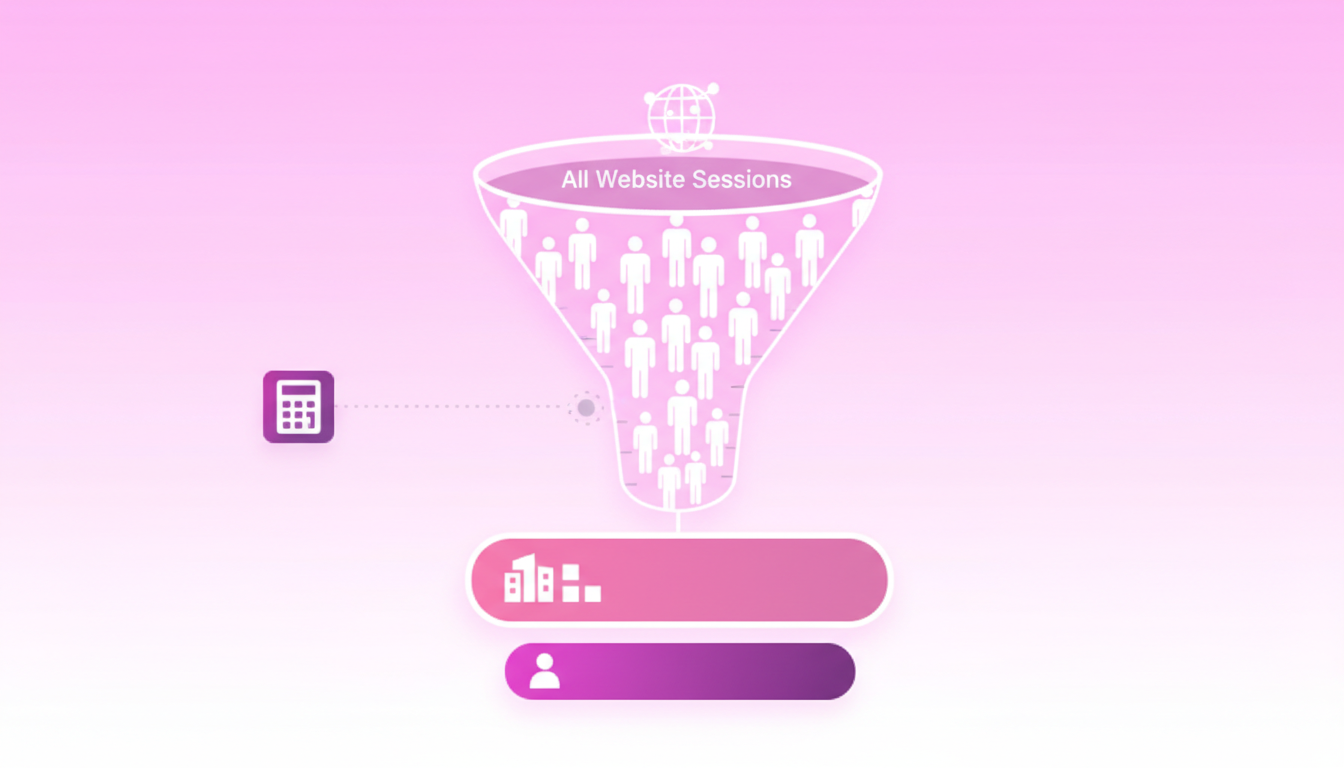
Match rate is the percentage of visitors a tool can identify. Website visitor identification uses IP address matching, first-party cookies, and data partnerships to match anonymous website visitors to known contact records.
However, not all matches are created equal. Understanding the difference between company-level and person-level identification is critical:
| Match Type |
What It Reveals |
Typical Accuracy |
| Company-level |
The organization visiting your site |
30-65% |
| Person-level |
The specific individual browsing |
5-20% |
| Combined |
Company with person fallback |
60-80% |
The formula buyers should use is straightforward: take the number of identified visitors divided by total visitors, then evaluate whether those identifications are company-level, person-level, or both.
Deterministic Matching
"Deterministic matching uses verified, first-party data signals to confirm visitor identity." This approach relies on hashed emails, mobile advertising IDs (MAIDs), and firmographic IP databases to create high-confidence matches.
The advantage of deterministic matching is precision. When you get a match, you can trust it. The tradeoff is coverage. Because deterministic methods require verified signals, they typically cap out at lower overall match rates. Tools using this approach often achieve 30-40% match rates but with significantly higher accuracy.
Probabilistic Matching
"Probabilistic matching uses statistical models to guess who a visitor might be based on IP addresses, device fingerprints, and behavioral patterns." This approach trades some precision for broader coverage.
Probabilistic methods can extend reach to visitors who would otherwise remain anonymous, but they require careful calibration to avoid false positives. The best implementations include confidence scoring and validation layers to flag lower-certainty matches.
Realistic 2026 Benchmarks: What's a 'Good' Match Rate?
Vendor marketing often paints an optimistic picture, but industry experts caution against inflated expectations. As one comprehensive guide puts it: "Don't believe vendors claiming 80%+ match rates."
Here is what is actually achievable in 2026:
- Company-level identification: 30-65 %
- Person-level identification: 5-20 %
These ranges vary significantly based on your traffic mix. Different industries see different results:
| Industry |
Expected Match Rate |
| B2B SaaS |
35-45% |
| Professional Services |
30-40% |
| Manufacturing |
25-35% |
| Local Services |
15-25% |
| B2C / Consumer |
5-15% |
Why the variation? B2B traffic typically comes from corporate networks with cleaner IP data, while B2C traffic includes more residential IPs that are harder to match. Remote work has complicated this further, with nearly half of website traffic now coming from home offices and personal devices.
How Does Warmly Achieve 65 %+ / 15-25 % Match Rates?
Warmly takes a multi-layered approach to visitor identification that combines first-party, second-party, and third-party data sources. The platform identifies 65%+ of companies visiting your website through what it calls a data waterfall methodology.
The data waterfall works by querying multiple identification sources in sequence. If the first source does not return a match, the system automatically tries the next, and so on. This layered approach delivers higher coverage than any single data provider could achieve alone.
Warmly aggregates intent signals from multiple sources including website behavior, job changes, third-party research intent data, and competitor keyword monitoring. The platform is built for enterprise scale with over 220 million people profiles and 40 million company profiles.
Company vs. Person-Level Reveal
Warmly's match rates break down across two tiers. Company-level identification catches roughly 65%+ of B2B traffic, providing firmographic data about the visiting organization.
Individual-level identification has a narrower hit rate, typically 10-25 %, but produces higher-intent signals. When Warmly can identify the specific person browsing your site, that contact is demonstrably more valuable for outbound follow-up.
As one user noted: "Company matches are solid. We get about 70% of our B2B traffic identified to an account. Individual matches are around 15%."
The combination of broad company coverage with targeted person-level identification makes Warmly particularly effective for teams running both account-based marketing and direct outbound motions.
How Other GTM Agents Stack Up on Match Rate & Price
The visitor identification market includes several players with different strengths. Here is how the landscape breaks down:
Leadpipe – 30-40 % Deterministic
Leadpipe consistently delivers 30-40% match rates using deterministic matching. The platform emphasizes accuracy over coverage, using verified data signals to confirm visitor identity.
Leadpipe's pricing starts at $149/month for 500 identified visitors, making it one of the more accessible options for teams prioritizing precision. The tradeoff is a lower overall match rate compared to probabilistic approaches.
Factors.ai – 75 % Account Reveal via Waterfall
Factors uses a waterfall model that combines multiple data sources, identifying more than 75% of anonymous website visitors at the account level.
The platform follows a privacy-first approach, using only first-party cookies and IP-to-company matching while maintaining GDPR and SOC2 Type II compliance. Factors offers a free plan that includes basic company identification, making it accessible for teams testing the waters.
Opensend – 73 % Consumer Match for E-commerce
Opensend Connect targets B2C use cases with a 73% USA shoppers match rate across 180 million shoppers. The platform claims clients achieve 12-33x ROI within 30-90 days.
Opensend offers month-to-month pricing flexibility with credits that roll over, charging $0.21-0.25 per identity depending on tier. This makes it well-suited for e-commerce businesses with high traffic volumes.
VisitorMatch – Usage-Based Pricing for SMBs
VisitorMatch offers tiered pricing starting at $192/month for 500 website visitor identity matches. The Pro plan provides 2,000 matches for $696/month, while Enterprise offers 7,000 matches for $2,088/month.
Additional matches can be purchased at varying rates: $0.50/match on Starter, $0.34/match on Pro, and $0.29/match on Enterprise. This usage-based model works well for businesses with variable traffic patterns.
MarketBetter – SDR Workflow Automation
MarketBetter takes a different approach by combining visitor identification with SDR workflow automation. The platform does not just identify visitors; it "identifies them, finds the decision-maker, scores the opportunity, and creates a prioritized task" complete with AI-generated outreach.
This orchestration layer sits atop identification capabilities in the 30-65% company-level range, adding value through workflow automation rather than raw match rates.
How Should You Evaluate a Visitor Intelligence Partner?
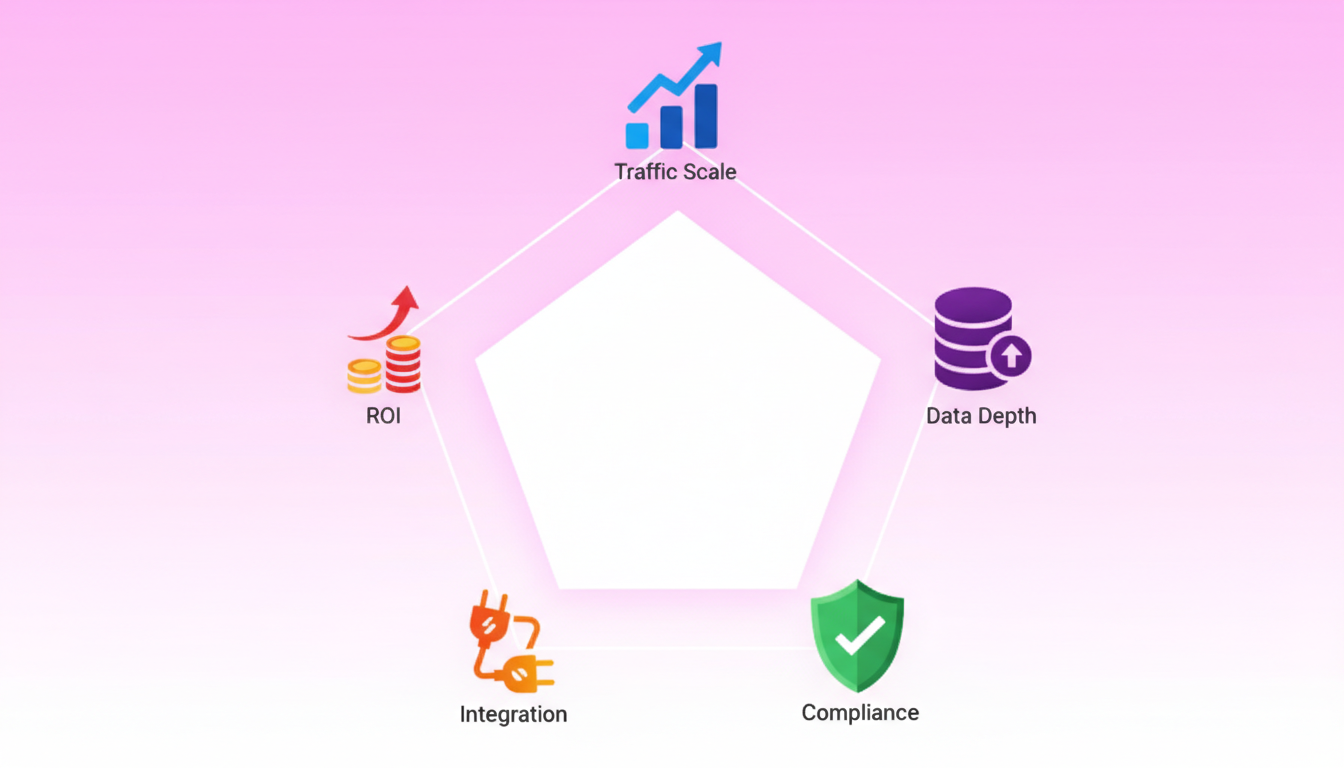
Selecting the right visitor identification solution requires evaluating multiple factors beyond headline match rates. Here is a GDPR-aware checklist for your evaluation:
Traffic Scale Requirements
- What is your monthly visitor volume?
- Does the platform's pricing align with your traffic?
- How does the platform handle traffic spikes?
Data Depth & Quality
- Does the platform provide company-level, person-level, or both?
- What enrichment data is included (firmographics, technographics, intent)?
- How fresh is the underlying data?
Consent & Compliance
Effective visitor intelligence systems include several key components: IP Address Identification, Behavioral Tracking, Intent Signal Detection, Data Enrichment, and Real-time Alerts. However, privacy-compliant implementation requires proper consent mechanisms and adherence to GDPR/CCPA regulations.
Adopt a privacy-first approach: use consent-based activation for non-essential tracking, minimize and pseudonymize personal data, prefer first-party collection, and validate legal bases per jurisdiction.
Integration Requirements
Integration with existing marketing automation and CRM systems maximizes the value of visitor intelligence data. Ensure the platform connects to your:
- CRM (Salesforce, HubSpot, etc.)
- Marketing automation platform
- Sales engagement tools
- Slack or Teams for real-time alerts
ROI Measurement
Expect faster campaign launches, tighter CRM flows, and improved lead quality. However, treat numeric uplifts and pipeline claims cautiously. Validate with baselines, A/B tests, and proper attribution before relying on them.
What Pitfalls Undermine Match-Rate Accuracy & How Can You Fix Them?
Even the best visitor identification tools face inherent limitations. Understanding these pitfalls helps you set realistic expectations and optimize performance.
Inflated Vendor Claims
As industry experts warn, numbers above 80% usually blend partial or duplicate signals and spike false positives. "The AI emails are better than generic templates but not as good as a skilled SDR writing from scratch." Apply the same skepticism to match rate claims.
Remote Worker IP Gaps
Traditional visitor identification works great when someone visits from a corporate office. Their IP address maps directly to their company. But with remote work, nearly half of traffic comes from home networks that are much harder to match.
Solutions include:
- Prioritizing platforms that combine IP matching with cookie-based identification
- Using first-party data collection to supplement third-party matches
- Focusing on person-level identification for remote-heavy audiences
Data Decay
40% of CRM data becomes obsolete annually, creating significant match rate challenges. The average person uses 6.58 connected devices and carries 12 different identifiers, making perfect matching mathematically impossible.
Combat data decay by:
- Choosing platforms with continuous data refresh
- Implementing regular data hygiene processes
- Cross-referencing matches against multiple sources
Optimization Tactics
- Run a 10-30 day pilot before committing to annual contracts
- Track match rates by traffic source to identify high-performing channels
- Layer intent signals on top of identification to prioritize outreach
- Test multiple platforms simultaneously if budget allows
Key Takeaways on Match Rates & Next Steps
Match rate is the foundational metric for any visitor identification investment, but context matters. A 65% company-level match rate with 15-25% person-level identification, like Warmly delivers, provides both breadth for account-based plays and depth for direct outbound.
Here is what to remember:
Realistic benchmarks exist: 30-65% company-level and 5-20% person-level are achievable ranges. Be skeptical of claims above 80%.
Deterministic vs. probabilistic: Understand the tradeoff between precision and coverage. The best platforms layer both approaches.
Traffic mix matters: B2B SaaS sites will see higher match rates than B2C. Remote work has complicated IP-based identification.
Compliance is non-negotiable: Ensure your chosen platform handles GDPR and CCPA requirements properly.
Warmly delivers clear value for B2B companies with sufficient website traffic, a defined ICP, and an outbound motion that benefits from speed-to-lead on intent signals. The combination of high match rates, intent signal aggregation, and real-time engagement capabilities makes it worth evaluating for teams serious about converting anonymous traffic into pipeline.
Ready to see how Warmly's match rates perform on your specific traffic? Start with a pilot to benchmark results against your current baseline.
Frequently Asked Questions
What is a match rate in website visitor identification?
Match rate is the percentage of website visitors a tool can identify, either at the company or individual level. It is crucial for converting anonymous traffic into actionable sales intelligence.
How does Warmly achieve high match rates?
Warmly uses a multi-layered approach combining first-party, second-party, and third-party data sources. This includes a data waterfall methodology that queries multiple identification sources sequentially to achieve over 65% company-level match rates.
What are the differences between deterministic and probabilistic matching?
Deterministic matching uses verified data signals for high-confidence matches, offering precision but lower coverage. Probabilistic matching uses statistical models for broader coverage but requires careful calibration to avoid false positives.
What are realistic match rate benchmarks for 2026?
In 2026, realistic match rate benchmarks are 30-65% for company-level identification and 5-20% for person-level identification, varying by industry and traffic type.
How does remote work affect match rates?
Remote work complicates IP-based identification as nearly half of website traffic now comes from home networks, which are harder to match compared to corporate networks.
Sources
- https://www.marketbetter.ai/blog/best-website-visitor-identification-tools-2026/
- https://www.leadpipe.com/blog/top-10-visitor-identification-softwares
- https://markets.financialcontent.com/dptribune/article/abnewswire-2026-1-26-best-website-visitor-identification-software-2026-complete-guide
- https://www.landbase.com/blog/how-to-use-visitor-intelligence-to-identify-hidden-opportunities
- https://www.openpr.com/news/4363304/best-website-visitor-identification-software-2026-complete
- https://www.demandsense.com/blog/how-to-identify-website-visitors
- https://www.clay.com/blog/web-intent
- https://marketbetter.ai/blog/marketbetter-vs-warmly/
- https://therevopsreport.com/tools/warmly/
- https://www.factors.ai/product/website-visitor-identification
- https://opensend.com/post/warmly-ai-alternatives
- https://visitormatch.com/pricing
- https://www.landbase.com/blog/crm-match-rate-statistic