


How It Works

The Architecture Behind Intelligent GTM

Context Graph is Warmly's unified data layer — connecting every signal, contact, account, and engagement into one real-time system. Here's how it works and why it matters for your GTM motion.
4.8/5 based on 200+ reviews | GDPR Compliant
Crush your quota

How does Context Graph work?

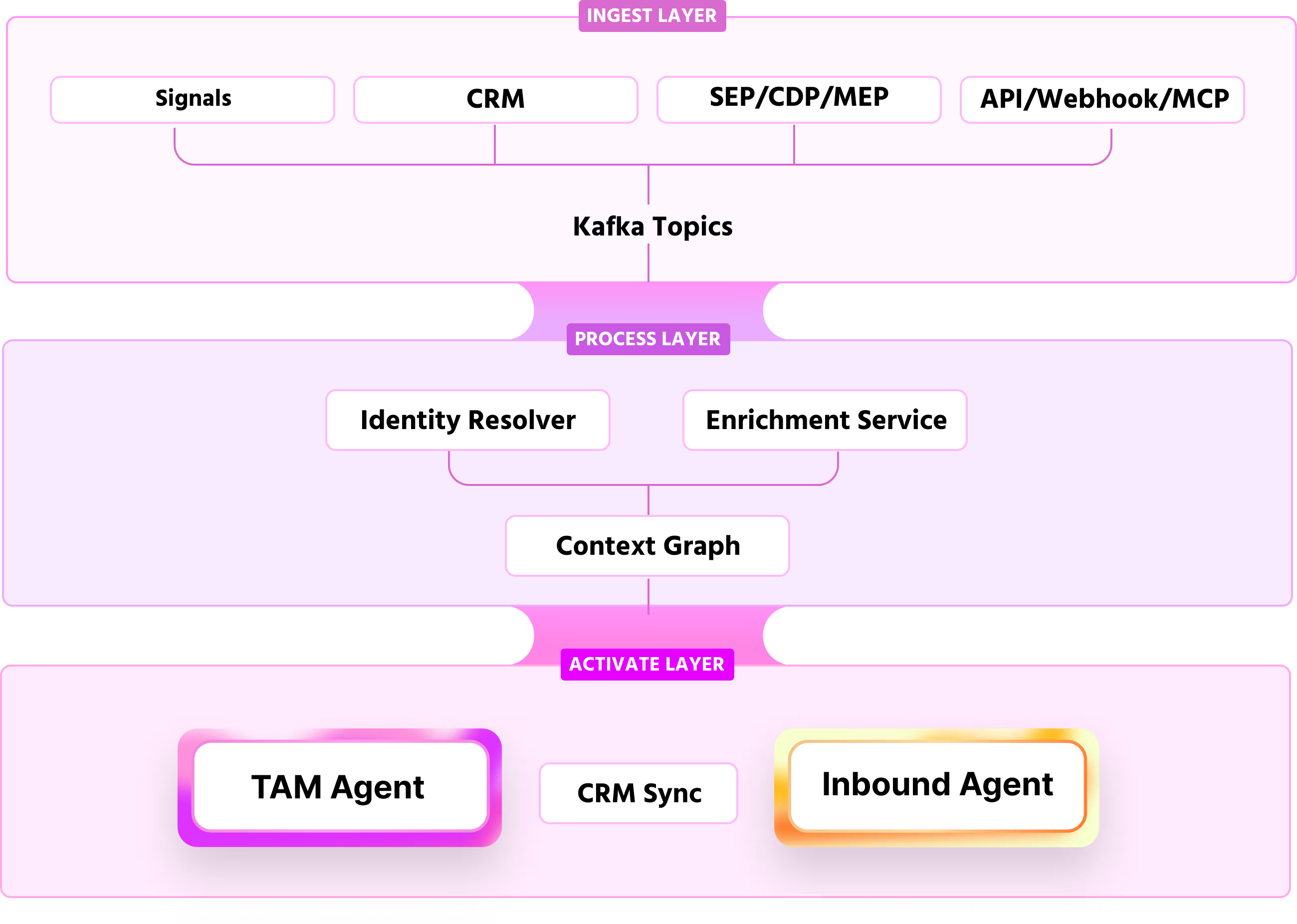
Context Graph operates in four continuous stages
01 Ingest
Signals from first-party, second-party, and third-party sources flow in continuously
02 Resolve
Identities are matched and unified (person to account, signal to contact)
03 Enrich
Records are enhanced with firmographic, technographic, and contact data
04 Activate
Unified context powers real-time actions through Inbound Agent and TAM Agent
Key capabilities
Real-time processing
Signals resolve in seconds, not hours
Identity resolution
Person-level matching across sources
Deduplication
Single source of truth for each account/contact
Bidirectional sync
Writes back to CRM with full attribution
What makes it different
Not a data warehouse (it's real-time, not batch)
Not a CDP (it's purpose-built for B2B GTM)
Not just enrichment (it connects and activates)

Your GTM Data Is Scattered

The typical B2B stack
Intent data in one tool
Website analytics in another
CRM with incomplete records
Enrichment vendor for firmographics
Marketing automation with its own contacts
Sales engagement with sequence data
Not just enrichment (it connects and activates)
The problems
No unified view
Same contact exists in 5 systems, none complete
Manual reconciliation
Ops spends hours connecting dots
Stale data
Batch processing means yesterday's signals
Broken attribution
Can't connect touchpoints to outcomes
Siloed actions
Marketing nurtures while sales sequences — same person
Context Graph solves this by being the connective layer.

Continuous Signal Ingestion

Context Graph ingests data continuously from multiple sources:
Crush your quota
Key design
Real-time streaming (not batch)
Normalized to common schema
Full event history retained
Source tracking for attribution

Identity Resolution at Scale

Matching signals to people and people to accounts:
Crush your quota
Resolution methods
IP-to-company matching
Cookie identity persistence
Email pixel matching
LinkedIn data graph
CRM contact matching
Deterministic + probabilistic matching

Complete Records, Not Partial

Once resolved, Context Graph enriches:
Account enrichment
Firmographics (industry, size, revenue)
Technographics (current tech stack)
Social presence
Funding and financial data
Contact enrichment
Title and seniority
Email and phone
LinkedIn profile
Role classification (persona)
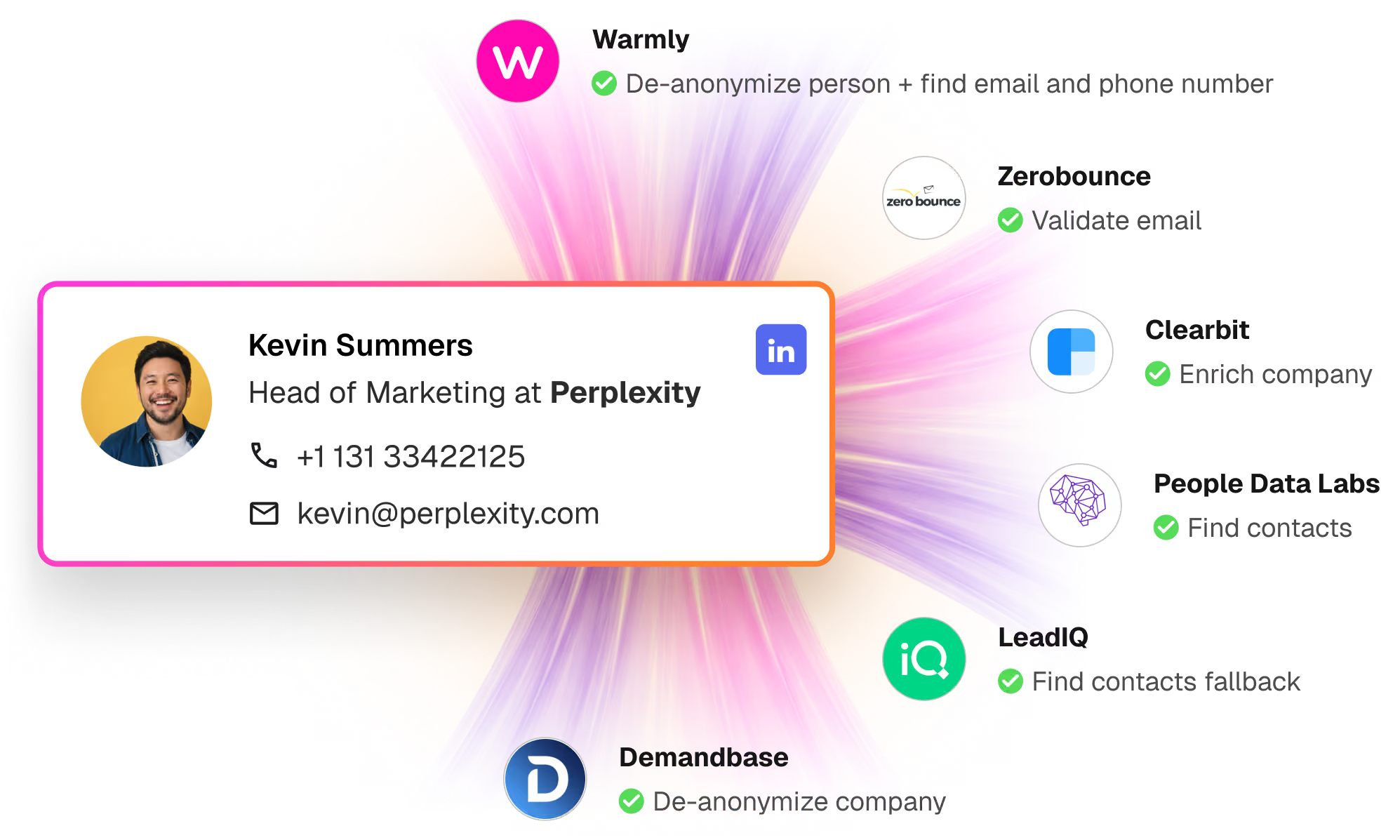
Enrichment approach
Multi-vendor waterfall (best data wins)
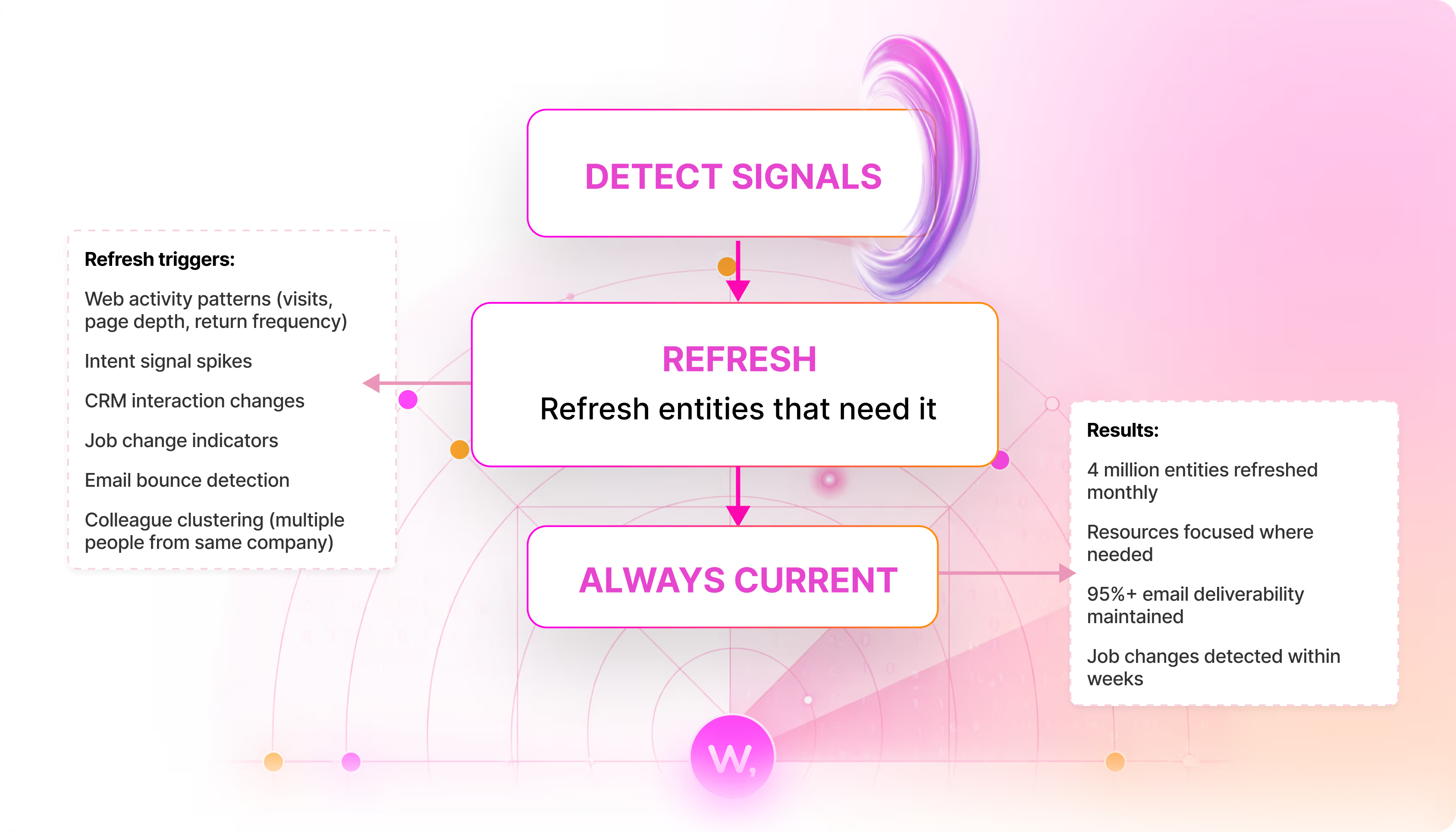
Continuous refresh (not one-time)
Human-verified critical data
Confidence scoring

Context Powers Action

The unified context immediately activates:
Inbound Agent uses context to:
Personalize chat by account and persona
Route conversations to the right rep
Trigger warm experiences
Book meetings with context
TAM Agent uses context to:
Score intent accurately
Build dynamic audiences
Trigger outbound at the right moment
Sync targeting to LinkedIn Ads
CRM receives:
Unified activity timeline
Updated contact records
Intent scores
Attribution data

Why Seconds Matter (Not Hours)

Crush your quota
Why real-time matters
Chat needs context NOW (visitor is on-site)
Hot signals cool quickly
First-responder advantage is real
Batch processing = missed opportunities

One Account, One Contact, One Truth

Context Graph maintains a single record per entity:
Account deduplication
Domain normalization (www., subdomains)
Name matching (Acme Inc = Acme = ACME Corp)
Hierarchy handling (subsidiaries, parents)
Merge logic for acquisitions
Contact deduplication
Email as primary key
Name + company fuzzy matching
LinkedIn profile deduplication
Job change handling (same person, new company)
Result
No more "which record is right?"
Single timeline per account/contact
Clean data flows to CRM
Attribution connects to real entities

Bidirectional, Not Just Push

Context Graph syncs with your CRM both ways:
Pull from CRM
Existing contacts and accounts
Opportunity data
Custom fields and properties
Owner assignments
Push to CRM
New contacts discovered
Activity timeline
Intent scores
Engagement events
Sync design
Real-time (not scheduled)
Conflict resolution rules
Field mapping customization
Full history retained

What Context Graph Enables

Single source of truth for all GTM data
Real-time context for every action
Full attribution across all touchpoints
One Source of Truth
"We had 5 different 'versions' of the same account across tools. Context Graph unified everything — now sales, marketing, and ops all see the same data, updated in real-time."
— VP Revenue Operations, Enterprise SaaS

Unified Data in Days

Connect CRM
Salesforce or HubSpot integration
Install pixel
First-party signal collection
Configure enrichment
Which data to auto-enhance
Set sync rules
How data flows to CRM
Go live
Context Graph starts unifying

Common Questions

How is Context Graph different from a CDP?
Does Context Graph replace my CRM?
How does deduplication work?
What's the latency for real-time processing?
Can I customize what syncs to CRM?
How is data quality maintained?
What about data privacy?

Connect with Our Experts

Book a 15-minute conversation with a customer of ours and discover how Metric transforms their GTM strategy.