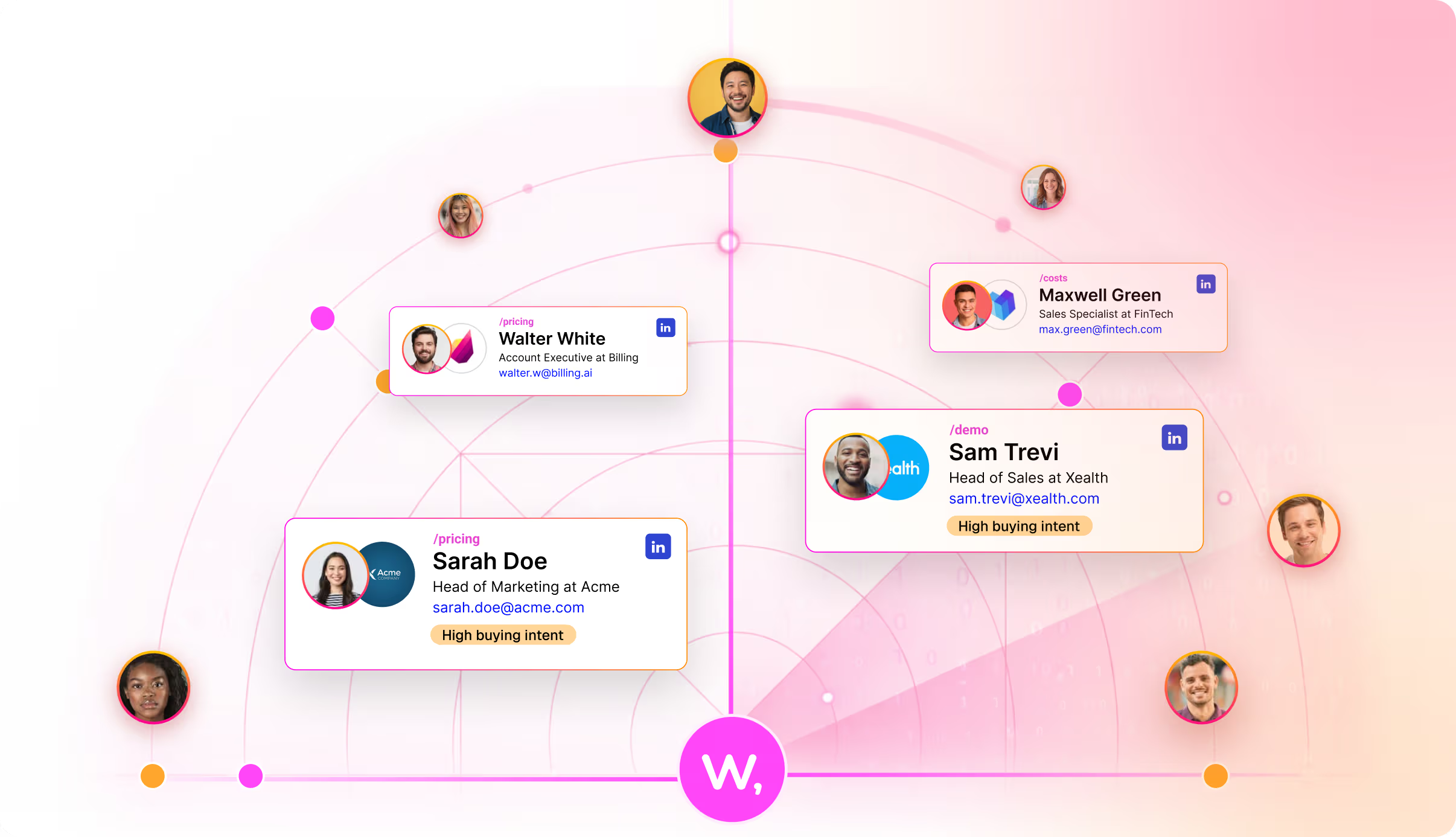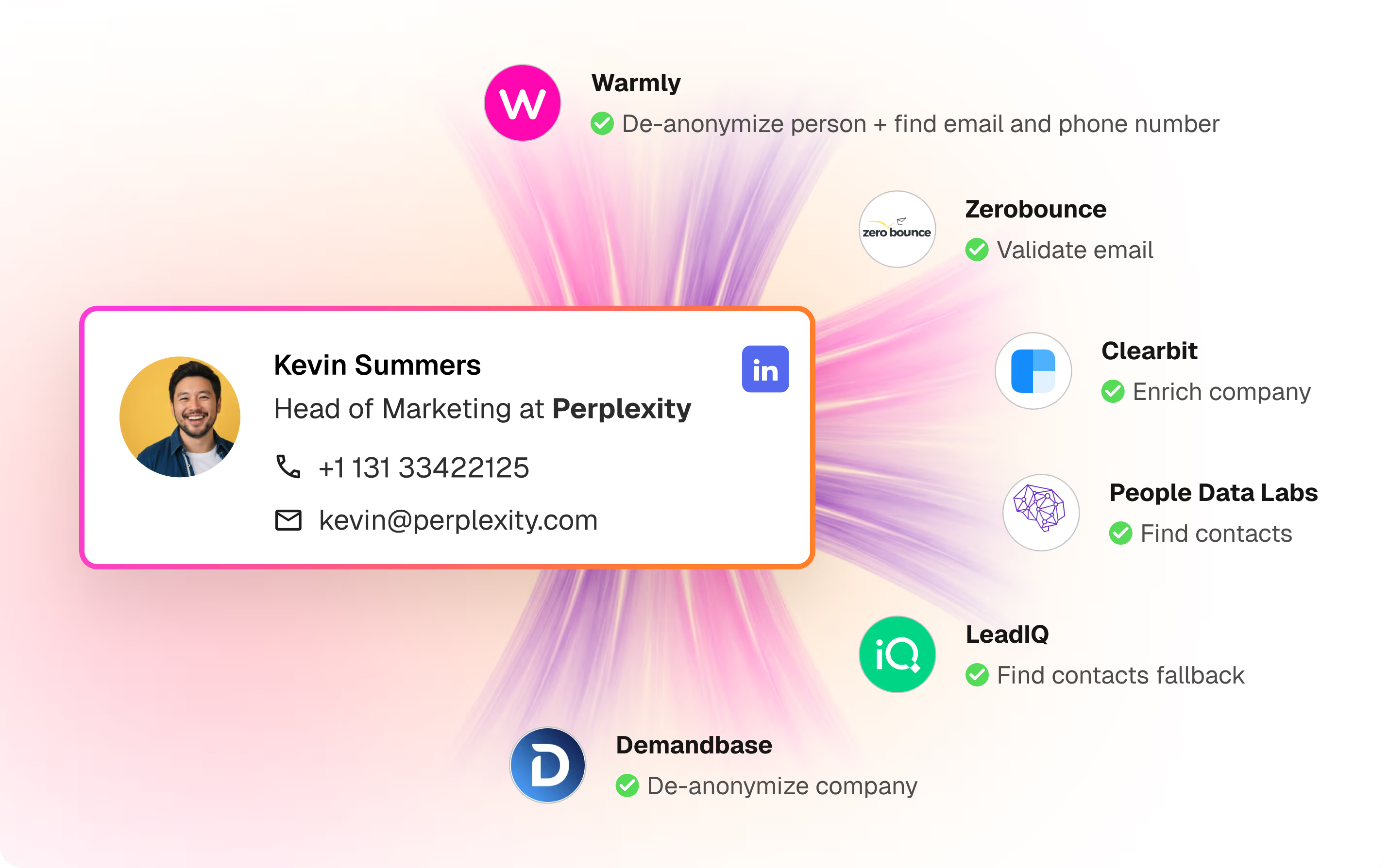





Website visitor identification software reveals who is browsing your B2B website by matching anonymous traffic to real companies and contacts. The best tools go beyond basic IP-to-company matching and identify individual people — including name, work email, job title, and LinkedIn profile. Warmly combines person-level visitor identification with real-time AI engagement, so you don't just see who visited — you can act on it instantly.
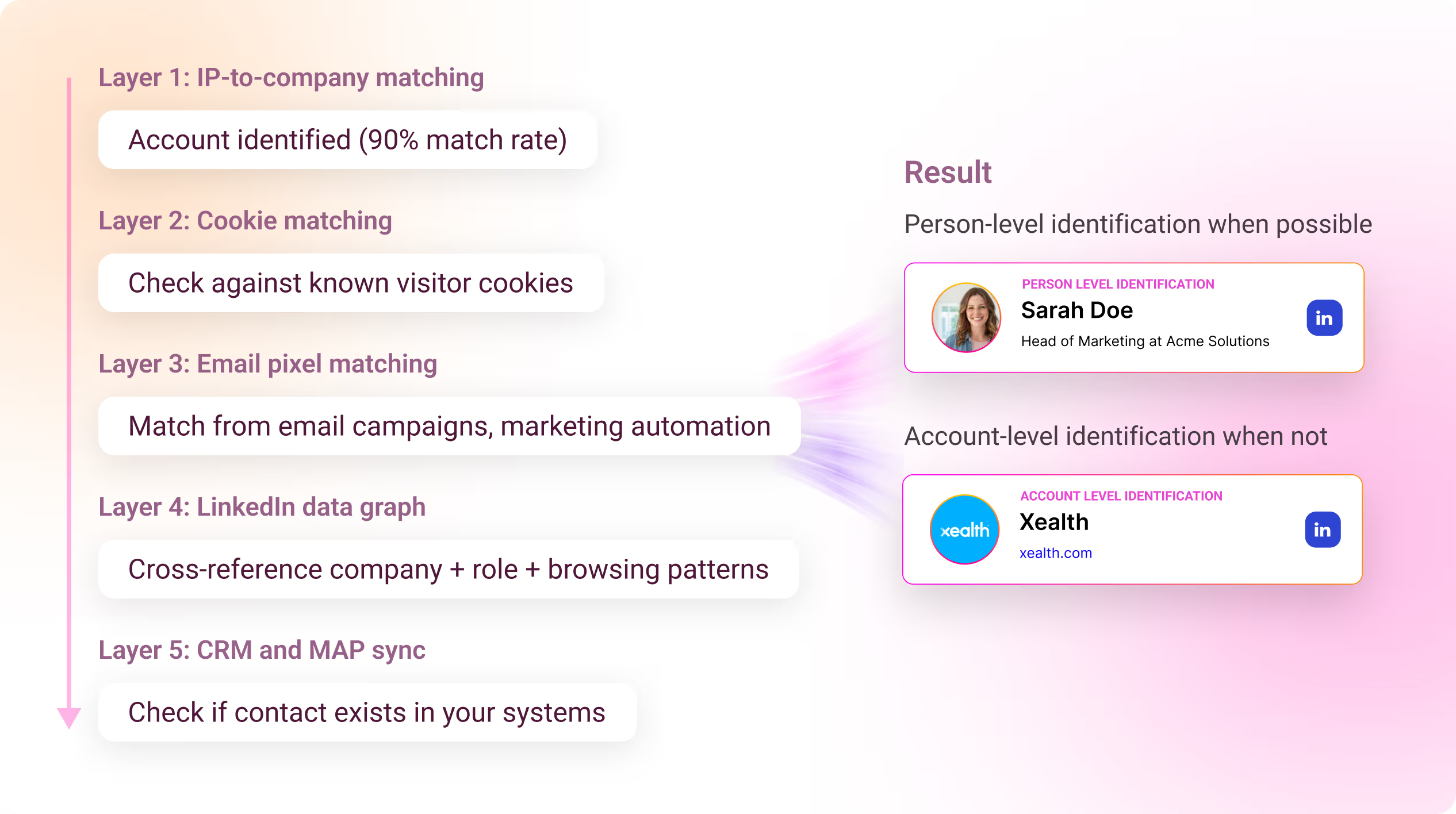
Person-level website visitor identification uses a combination of first-party pixel data, deterministic identity matching, and third-party data partnerships to resolve anonymous website sessions to individual contacts. When someone visits your site, Warmly's pixel captures session data and cross-references it against identity graphs containing billions of records. The result is a match to a specific person — not just their company — including work email, job title, seniority, and LinkedIn profile.
Company-level identification (used by tools like Leadfeeder and Dealfront) matches a visitor's IP address to a company name. You learn that "someone from Dropbox visited your pricing page." Person-level identification (used by Warmly and RB2B) goes further, telling you that Sarah Chen, VP of Marketing at Dropbox, visited your pricing page at 2:14pm and spent 4 minutes there. Person-level data gives your sales team a specific person to contact with specific context.
Warmly's website visitor identification is designed with privacy compliance in mind. The platform uses publicly available business data and consent-based identity resolution methods. Warmly does not track personal browsing activity outside your website, and all data processing follows standard B2B data practices. Customers can configure identification to comply with regional privacy requirements, including GDPR and CCPA, with options for consent management and data retention policies.
Accuracy depends on the tool and the type of identification. Company-level identification typically achieves 30-60% match rates on B2B traffic. Person-level identification is more selective, with Warmly achieving 15-30% identification rates on typical B2B website traffic. The tradeoff is intentional: every identified person includes verified contact data (name, email, title) rather than probabilistic guesses. Warmly continuously improves match rates through expanded data partnerships and identity graph coverage.
Most B2B websites see 15-30% of their traffic identified at the person level with Warmly. Identification rates vary based on your traffic composition — B2B traffic from known business IP ranges identifies at higher rates than traffic from residential IPs or mobile devices. Company-level identification runs higher (30-60%), but person-level data is far more actionable for sales teams. Even at 15%, if you get 10,000 monthly visitors, that's 1,500 identified contacts with work emails your team can reach out to.
Both Warmly and RB2B offer person-level website visitor identification. The key difference is what happens after identification. RB2B identifies visitors and sends the data to your Slack or CRM. Warmly identifies visitors AND engages them automatically — with AI chat while they're still on your site, automated email sequences, rep routing, and real-time alerts. Warmly also layers in third-party intent data, buying committee mapping, and firmographic enrichment that RB2B doesn't offer.
Leadfeeder (now part of Dealfront) provides company-level website visitor identification — it tells you which companies visited, not which people. Warmly identifies individual contacts at the person level, including name, work email, job title, and LinkedIn profile. Warmly also adds real-time AI engagement (chatbot, alerts, routing) and intent signal layering that Leadfeeder doesn't offer. If you need to know the specific person browsing your site and engage them instantly, Warmly is the upgrade from company-level tools.
Website visitor identification supplements form fills — it doesn't fully replace them. Forms capture explicit intent ("I want a demo"), while visitor identification captures implicit intent ("this VP viewed pricing three times this week"). The real power is using both: forms for high-intent conversions, and visitor identification for the 97% of visitors who research but never fill out a form. Warmly captures both, giving your sales team a complete picture of who's engaging with your site.
Warmly's identification doesn't rely solely on third-party cookies. The platform uses first-party pixel data combined with server-side identity resolution and deterministic matching against identity graphs. This approach is more resilient than cookie-based tracking, which is increasingly blocked by browsers and ad blockers. First-party signals collected by Warmly's pixel persist across sessions, enabling return visitor recognition even when cookies are cleared.
The entire pipeline — pixel capture, identity resolution, enrichment, context assembly, and scoring — runs in under 3 seconds from the moment a visitor loads your page. For high-intent ICP visitors, AI chat can engage within seconds of identification. Real-time alerts hit your rep's Slack channel simultaneously.